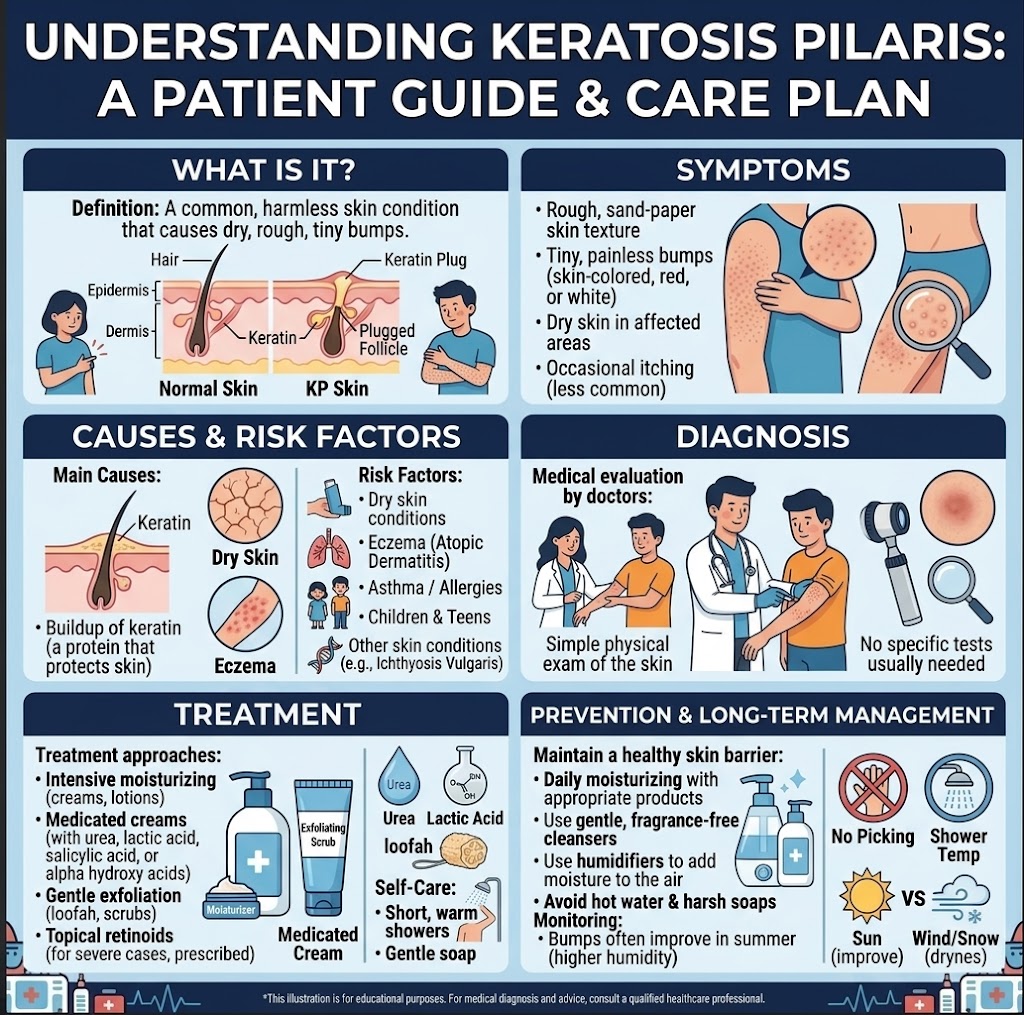
Keratosis pilaris (pronounced ker-uh-TOE-sis pih-LAIR-is) is a very common and harmless skin condition. It typically causes patches of dry, rough skin with tiny bumps, most often seen on the upper arms, thighs, cheeks, or buttocks. These bumps generally don't cause pain or itching. While there's no way to prevent or completely cure keratosis pilaris, its appearance can often be improved with moisturizers and specialized creams. The condition frequently fades away on its own by early adulthood, usually around age 30.
Understanding the Condition
Understanding Keratosis Pilaris: Bumpy Skin Explained
Understanding the Condition
Common Symptoms
Tiny, Painless Bumps: Small, raised bumps that do not hurt, commonly found on the upper arms, thighs, cheeks, or buttocks.
Dry, Rough Skin Patches: The areas with bumps often feel dry and rough to the touch.
Sandpaper-Like Texture: The skin with bumps can feel similar to sandpaper or resemble 'goose flesh'.
Seasonal Worsening: Symptoms may become more noticeable or severe during times of low humidity and dry skin, such as in colder months.
Consultation Guide
Which Specialist to Meet
Before your visit, consider noting down your symptoms, including when they started, what makes them better or worse, and any other skin conditions you or your family members have. Be ready to discuss your current skincare routine, any products you use, and any questions you have for the doctor.
Book a doctor visit near me
During the visit, your healthcare provider will carefully examine the affected areas of your skin, such as your arms, thighs, or face. They may gently touch the bumps to assess their texture. They will also ask you questions about your symptoms, including how long you've had them, if they cause any discomfort, what treatments you've tried, and if anyone else in your family has similar skin concerns. This information helps the doctor confirm the diagnosis and rule out other conditions.
Understand Natural Improvement: Remember that keratosis pilaris often improves significantly or disappears completely by adulthood, so continue managing symptoms until then.
Consultation Guide
Keratosis pilaris (pronounced ker-uh-TOE-sis pih-LAIR-is) is a very common and harmless skin condition. It typically causes patches of dry, rough skin with tiny bumps, most often seen on the upper arms, thighs, cheeks, or buttocks. These bumps generally don't cause pain or itching. While there's no way to prevent or completely cure keratosis pilaris, its appearance can often be improved with moisturizers and specialized creams. The condition frequently fades away on its own by early adulthood, usually around age 30.
Wear Loose, Breathable Clothing: Tight clothing can cause friction and irritation, potentially worsening the appearance of bumps.
Use a Humidifier: In dry environments, especially during winter months, a humidifier can add moisture to the air and help keep your skin from becoming overly dry.
Diagnostic Procedures
You can start by consulting your primary healthcare provider. If further specialized care or diagnosis is needed, they may refer you to a dermatologist, who is a doctor specializing in skin conditions.
Preparations Before Your Visit
Physical Examination and Medical History
Keratosis pilaris is typically diagnosed through a visual examination of the skin and by reviewing your medical history. There are usually no specific laboratory tests or imaging procedures required.
What to Expect
Treatment Options
Regular Moisturizing: Applying a thick, fragrance-free moisturizer regularly helps to hydrate the skin and reduce dryness and roughness. Look for moisturizers containing ingredients like urea, lactic acid, or alpha hydroxy acids. (Duration: Ongoing, usually twice daily or as needed.)
Gentle Exfoliation: Using a soft washcloth or a mild exfoliating scrub can help loosen and remove dead skin cells. Avoid harsh scrubbing, which can irritate the skin. (Duration: Typically 2-3 times per week.)
Lukewarm Showers and Baths: Limiting shower and bath time and using lukewarm water instead of hot water can help prevent skin from drying out. (Duration: Daily practice.)
Medications (Topical)
Exfoliating Creams: Prescription creams containing stronger concentrations of ingredients like alpha hydroxy acids, lactic acid, salicylic acid, or urea can help loosen and remove keratin plugs and smooth the skin. (Duration: Several weeks to months for initial improvement, ongoing for maintenance as directed by a healthcare provider.)
Retinoid Creams: Creams derived from vitamin A, known as topical retinoids, can help prevent hair follicles from becoming clogged and promote skin cell turnover. (Duration: Several weeks to months for initial improvement, ongoing for maintenance as directed by a healthcare provider.)
Laser Therapy: For persistent redness or more severe cases, certain types of laser therapy can be used to reduce discoloration and improve skin texture. This is generally considered when other treatments haven't provided sufficient improvement. (Duration: Multiple sessions over several weeks or months, as determined by a specialist.)
Patience and Consistency: Improving keratosis pilaris takes time and consistent effort. Adhere to your treatment plan and daily care routine for best results.
Avoid Picking or Scratching: Resist the urge to pick at the bumps, as this can lead to irritation, infection, and scarring.
Regular Professional Check-ups: If you are concerned about your skin or if treatments aren't effective, schedule follow-up appointments with your healthcare provider or dermatologist to adjust your management plan.
Prevention & Long-Term Wellbeing
Daily Care and Prevention
Moisturize Consistently: Apply a good quality moisturizer, especially after showering, to keep the skin hydrated and prevent dryness which can worsen keratosis pilaris.
Gentle Skin Cleansing: Use mild, non-drying soaps or cleansers and avoid harsh scrubbing with abrasive sponges or brushes. Pat your skin dry gently rather than rubbing vigorously.
Limit Hot Water Exposure: Take shorter, lukewarm showers or baths to prevent stripping natural oils from your skin.
Tags & Topics
Notice an error or need an update?
Help us keep medical information accurate. Report incorrect info or suggest an edit.


