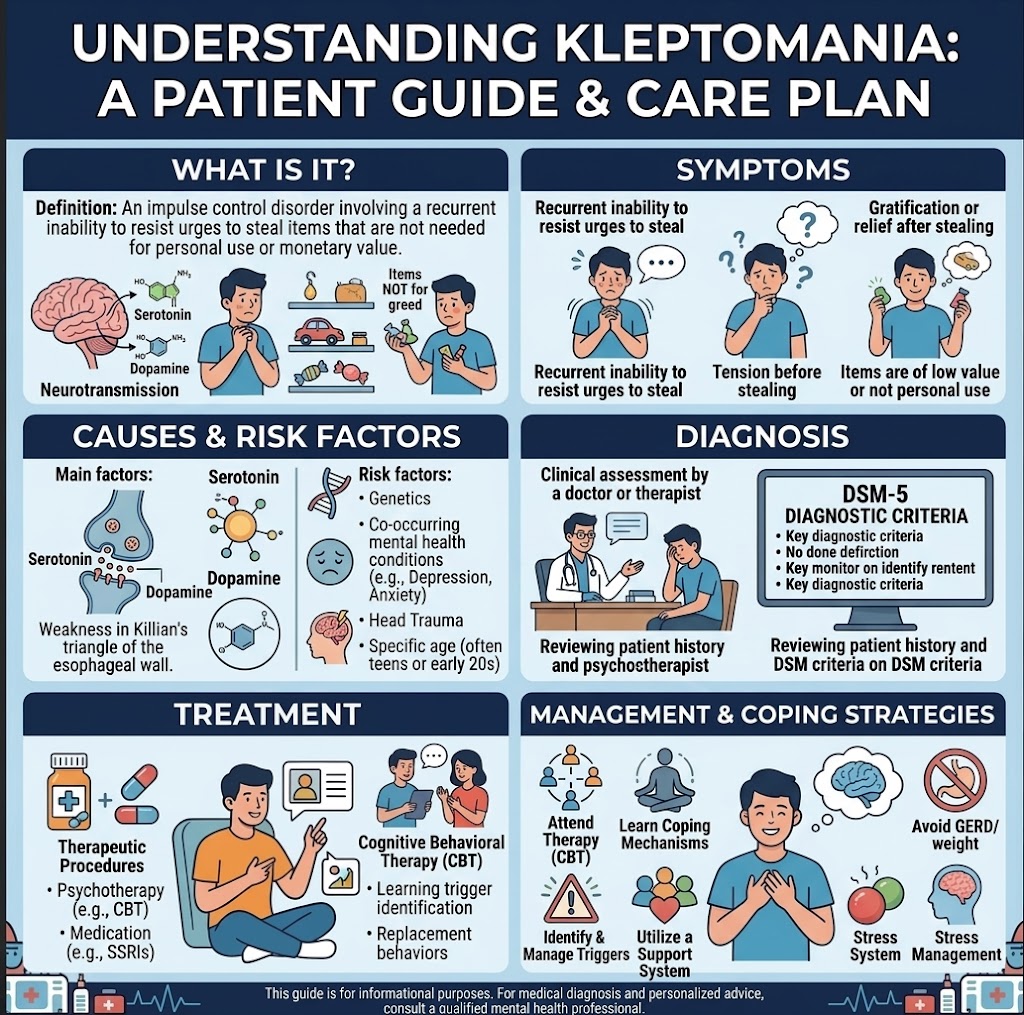
Kleptomania (klep-toe-MAY-nee-uh) is a serious but rare mental health condition marked by an ongoing, powerful inability to resist urges to steal items that are generally not needed or have little personal or monetary value. Often, individuals could afford to buy these items. This disorder is a type of 'impulse control disorder,' meaning it involves significant difficulty controlling emotions or behaviors, particularly resisting strong temptations to perform acts that could be excessive or harmful. Many who experience kleptomania suffer in silence due to feelings of shame and fear of judgment, often delaying vital mental health treatment. While there isn't a definitive cure, effective treatments such as specialized therapy and medication can significantly help manage the urges and break the cycle of compulsive stealing, preventing severe emotional pain, legal problems, and relationship strain.The exact causes are not fully understood, but theories suggest connections to imbalances in brain chemicals like serotonin (affecting mood and impulses) and dopamine (associated with pleasure and reward, potentially reinforcing stealing as an addictive behavior). An imbalance in the brain's opioid system, which regulates urges, might also play a role. Additionally, the relief felt after giving in to an urge can reinforce stealing as a learned habit. Risk factors include a family history of kleptomania or other addictive disorders, and the presence of other mental health conditions like anxiety, depression, or substance use disorders. Kleptomania often begins in the teen years or young adulthood, and approximately two-thirds of diagnosed cases are female.
Understanding the Condition
Kleptomania: Understanding Compulsive Stealing
Understanding the Condition
Common Symptoms
Irresistible Urges: Powerful, overwhelming urges to steal items that are not truly needed and often have little monetary value, despite being able to afford them.
Pre-Theft Tension: Increasing feelings of tension, anxiety, or heightened excitement just before the act of stealing.
During-Theft Relief: A sense of pleasure, relief, or satisfaction experienced while stealing.
Post-Theft Distress: Overwhelming feelings of guilt, remorse, self-loathing, shame, or fear of being caught after the theft.
Repetitive Cycle: The urges return, leading to a continuation of the stealing cycle. Unlike typical theft, the act is not for personal gain, revenge, or on a dare, but driven by the uncontrollable urge itself. Episodes are usually sudden, unplanned, and items are often hidden, unused, or even returned.
Consultation Guide
Which Specialist to Meet
Before your visit, consider making a list of your symptoms, including details about the urges, the stealing incidents, and your feelings before and after. Note any other mental or physical health conditions you have, and list any medications or supplements you're currently taking. Write down any questions you have for the specialist to ensure all your concerns are addressed.
Book a doctor visit near me
Diagnosing kleptomania involves a comprehensive evaluation by a mental health professional. This assessment focuses on your symptoms, behaviors, and personal history to determine if your experiences meet the specific criteria for kleptomania as outlined in diagnostic manuals like the DSM-5 (Diagnostic and Statistical Manual of Mental Disorders). This process helps differentiate kleptomania from other types of theft or other mental health conditions.
During the assessment, you will have a confidential discussion with the mental health specialist. They will ask detailed questions about your stealing urges, the circumstances surrounding the thefts, your thoughts and feelings before, during, and after these events, and the impact of these behaviors on your life. They may also inquire about your family medical history and any co-occurring mental health issues like anxiety or depression. You might be asked to complete questionnaires to further assess your symptoms. This thorough evaluation is essential for an accurate diagnosis and to guide appropriate treatment.
Consistent Treatment Adherence: Regularly attending therapy sessions and diligently taking any prescribed medications as advised by your healthcare provider are crucial steps for managing symptoms, preventing relapse, and achieving lasting recovery.
Building a Strong Support System: Connecting with trusted family members, friends, or participating in support groups can provide understanding, emotional encouragement, and reduce feelings of isolation and shame. Sharing your experiences in a safe environment can be incredibly beneficial.
Developing Coping Strategies: Learning to identify personal triggers (situations, emotions, or thoughts that provoke stealing urges) is key. Once triggers are recognized, developing healthy alternative coping mechanisms, such as practicing relaxation techniques, engaging in hobbies, or talking to a trusted person, can help resist impulses.
Consultation Guide
Kleptomania (klep-toe-MAY-nee-uh) is a serious but rare mental health condition marked by an ongoing, powerful inability to resist urges to steal items that are generally not needed or have little personal or monetary value. Often, individuals could afford to buy these items. This disorder is a type of 'impulse control disorder,' meaning it involves significant difficulty controlling emotions or behaviors, particularly resisting strong temptations to perform acts that could be excessive or harmful. Many who experience kleptomania suffer in silence due to feelings of shame and fear of judgment, often delaying vital mental health treatment. While there isn't a definitive cure, effective treatments such as specialized therapy and medication can significantly help manage the urges and break the cycle of compulsive stealing, preventing severe emotional pain, legal problems, and relationship strain.The exact causes are not fully understood, but theories suggest connections to imbalances in brain chemicals like serotonin (affecting mood and impulses) and dopamine (associated with pleasure and reward, potentially reinforcing stealing as an addictive behavior). An imbalance in the brain's opioid system, which regulates urges, might also play a role. Additionally, the relief felt after giving in to an urge can reinforce stealing as a learned habit. Risk factors include a family history of kleptomania or other addictive disorders, and the presence of other mental health conditions like anxiety, depression, or substance use disorders. Kleptomania often begins in the teen years or young adulthood, and approximately two-thirds of diagnosed cases are female.
Talk Therapy (Psychotherapy): This involves working with a mental health professional to understand the root causes and triggers of your stealing urges. Cognitive Behavioral Therapy (CBT) is often used, helping you identify and change unhelpful thought patterns and behaviors associated with stealing. You learn coping strategies to resist urges, manage stress, and address underlying emotional issues. Family therapy may also be beneficial to help loved ones understand and support the individual. (Duration: Typically involves regular sessions (e.g., weekly) over several weeks to many months, or even longer for ongoing support, depending on the individual's progress and needs.)
Early Treatment: Given that the exact causes of kleptomania are still being researched, the most effective prevention strategy is early intervention. Seeking professional help as soon as compulsive stealing behaviors or urges emerge can prevent the condition from escalating and reduce the risk of severe emotional, legal, and relational consequences.
Long-Term Management & Support
Diagnostic Procedures
A mental health professional is the primary specialist to consult. This includes psychiatrists (medical doctors specializing in mental health who can prescribe medication), psychologists, or other licensed therapists who specialize in behavioral health. They can provide an accurate diagnosis and develop a personalized treatment plan.
Preparations Before Your Visit
Clinical Assessment and Interview
What to Expect
Treatment Options
Therapies
Medications
Prescription Medications: While no specific medication is approved solely for kleptomania, certain prescriptions can help manage the intense urges or treat co-existing mental health conditions frequently seen with kleptomania, such as depression, anxiety disorders, or obsessive-compulsive disorder. These may include specific types of antidepressants or other mood-stabilizing medications. Medication is usually most effective when combined with therapy. (Duration: Duration varies greatly, from several months to ongoing use, always under the strict guidance and supervision of a prescribing doctor.)
Prevention & Long-Term Wellbeing
Prevention
Prioritizing Overall Well-being: Adopting a healthy lifestyle, including regular physical activity, a balanced diet, adequate sleep, and effective stress management techniques, contributes significantly to overall mental health and can help in managing impulsive behaviors.
Tags & Topics
Notice an error or need an update?
Help us keep medical information accurate. Report incorrect info or suggest an edit.


