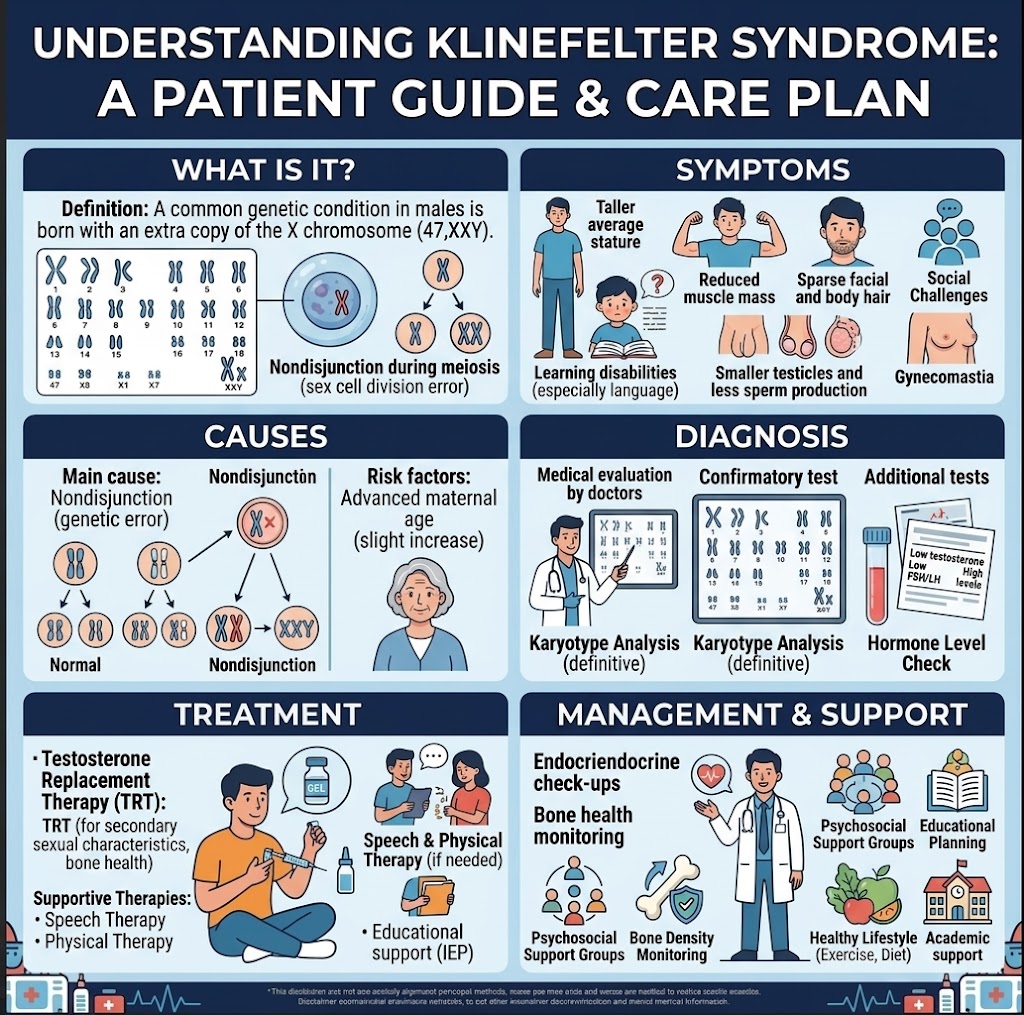
Klinefelter syndrome is a genetic condition that occurs when a person assigned male at birth is born with an extra copy of the X chromosome, resulting in an XXY chromosome pattern instead of the typical XY. While present from birth, this condition is often not diagnosed until puberty or adulthood. The extra chromosome can affect testicular development, leading to lower levels of testosterone, smaller testicles, reduced muscle mass, less body and facial hair, and enlarged breast tissue. Symptoms vary widely from person to person; some experience mild effects, while others face developmental or fertility challenges. Although most individuals with this syndrome produce little to no sperm, modern reproductive technologies can still make biological fatherhood possible for many.
Understanding the Condition
Klinefelter syndrome is a genetic condition that occurs when a person assigned male at birth is born with an extra copy of the X chromosome, resulting in an XXY chromosome pattern instead of the typical XY. While present from birth, this condition is often not diagnosed until puberty or adulthood. The extra chromosome can affect testicular development, leading to lower levels of testosterone, smaller testicles, reduced muscle mass, less body and facial hair, and enlarged breast tissue. Symptoms vary widely from person to person; some experience mild effects, while others face developmental or fertility challenges. Although most individuals with this syndrome produce little to no sperm, modern reproductive technologies can still make biological fatherhood possible for many.
Common Symptoms
Developmental Delays: Infants and toddlers may experience slow motor development, such as taking longer to sit up, crawl, and walk, as well as speaking later than typical peers.
Learning and Language Challenges: Children and young adults may have difficulties with reading, writing, spelling, expressing thoughts, or processing mathematics.
Physical Development Differences: Individuals often present with taller than average height, longer legs, a shorter torso, narrower shoulders, and broader hips compared to peers.
Before your visit, compile a complete medical history, noting developmental milestones (e.g., when your child sat up, spoke, or entered puberty). Write down all current symptoms, physical changes, and any learning or emotional difficulties. Bring a list of all current medications, vitamins, and supplements. Prepare a list of questions regarding hormone therapy options, fertility preservation, and school or workplace accommodations.
Book a doctor visit near me
Consultation Guide
A healthcare provider will draw a sample of blood from a vein in your arm. This sample is sent to a laboratory where cells are cultured and examined under a microscope. The blood draw takes just a few minutes and may cause mild, temporary bruising at the puncture site.
Diagnostic Procedures
Klinefelter Syndrome: Understanding the Condition, Diagnosis, and Management
Understanding the Condition
Reduced Testosterone Features: After puberty, individuals may have less muscle mass, less facial and body hair, low energy levels, and increased belly fat.
Enlarged Breast Tissue (Gynecomastia): The development of noticeable, excess breast tissue during or after puberty due to hormonal imbalances.
Reproductive Anatomical Differences: The presence of small, firm testicles, a small penis, or a history of undescended testicles at birth.
Fertility and Sexual Challenges: A very low sperm count or a total absence of sperm, often accompanied by a lower than typical sex drive.
Consultation Guide
Which Specialist to Meet
You should meet with an endocrinologist (hormone specialist), a urologist or reproductive endocrinologist (fertility specialist), a medical geneticist, a speech-language pathologist, and a mental health provider (psychologist or psychiatrist) to manage the physical and emotional aspects of the condition.
Preparations Before Your Visit
Karyotype Analysis (Chromosome Testing)
This is the definitive test used to diagnose Klinefelter syndrome. It analyzes the shape, size, and number of chromosomes in a cell sample to confirm the presence of the extra X chromosome.
What to Expect
Blood tests are performed to evaluate hormone levels in the body, specifically checking for low testosterone and elevated levels of hormones that attempt to stimulate testosterone production (such as luteinizing hormone and follicle-stimulating hormone).
What to Expect
Similar to genetic testing, a standard blood sample is drawn from a vein in your arm. It is often recommended to perform this test in the morning when testosterone levels are naturally at their highest.
Prenatal Genetic Screening
Non-invasive prenatal testing (NIPT) or invasive diagnostic tests (such as amniocentesis or chorionic villus sampling) can detect the extra X chromosome in a fetus during pregnancy.
What to Expect
NIPT requires a simple blood draw from the pregnant parent. Amniocentesis involves using a long, thin needle inserted through the abdomen into the uterus under ultrasound guidance to withdraw a small amount of amniotic fluid. This invasive procedure carries a very small risk of pregnancy loss.
Testosterone Replacement Therapy: Administration of testosterone via gels, skin patches, injections, or implants to promote masculine physical traits (such as deeper voice, muscle mass, and hair growth) and improve bone density. (Duration: Typically initiated at the onset of puberty and continued lifelong to maintain hormonal balance.)
Reproductive Interventions
Assisted Reproductive Technology (ART): Procedures such as Microdissection Testicular Sperm Extraction (MicroTESE), which surgically retrieves viable sperm directly from the testicular tissue for use in In Vitro Fertilization (IVF). (Duration: Performed as a discrete medical procedure during adulthood when the individual wishes to pursue biological children.)
Therapies and Counseling
Physical, Occupational, and Speech Therapy: Targeted therapies to build muscle tone, improve coordination, and overcome speech, language, or learning difficulties in childhood. (Duration: Varies from several months to several years, depending on the severity of developmental delays.)
Psychotherapy (Talk Therapy): Professional counseling or cognitive behavioral therapy to help manage emotional difficulties, low self-esteem, anxiety, depression, and social challenges. (Duration: Short-term (weeks to months) to address specific life transitions, or ongoing throughout life as a coping support.)
Treatment Options
Male Breast Reduction Surgery: A surgical procedure (mastectomy or plastic surgery) to remove excess glandular breast tissue and fat, restoring a flatter chest profile. (Duration: A one-time outpatient surgical procedure with a recovery period of approximately 2 to 6 weeks.)
Prevention & Long-Term Wellbeing
Prevention of Complications
Early Intervention Services: Securing speech, physical, and educational support early in childhood to prevent long-term learning and social difficulties.
Cardiovascular and Metabolic Monitoring: Undergoing annual checks for blood pressure, cholesterol, and blood sugar levels to prevent and manage the risks of type 2 diabetes and heart disease.
Long-Term Wellbeing
Bone Density Management: Receiving periodic bone density scans (DEXA) to monitor for osteoporosis and taking calcium and vitamin D supplements alongside regular weight-bearing exercise.
Diet and Physical Activity: Maintaining a balanced, nutrient-rich diet and engaging in regular physical exercise to manage body fat, increase muscle mass, and prevent metabolic syndrome.
Mental Health and Support Groups: Proactively addressing self-esteem, anxiety, and social dynamics by connecting with counselors and joining peer support communities dedicated to Klinefelter syndrome.
Tags & Topics
Notice an error or need an update?
Help us keep medical information accurate. Report incorrect info or suggest an edit.


