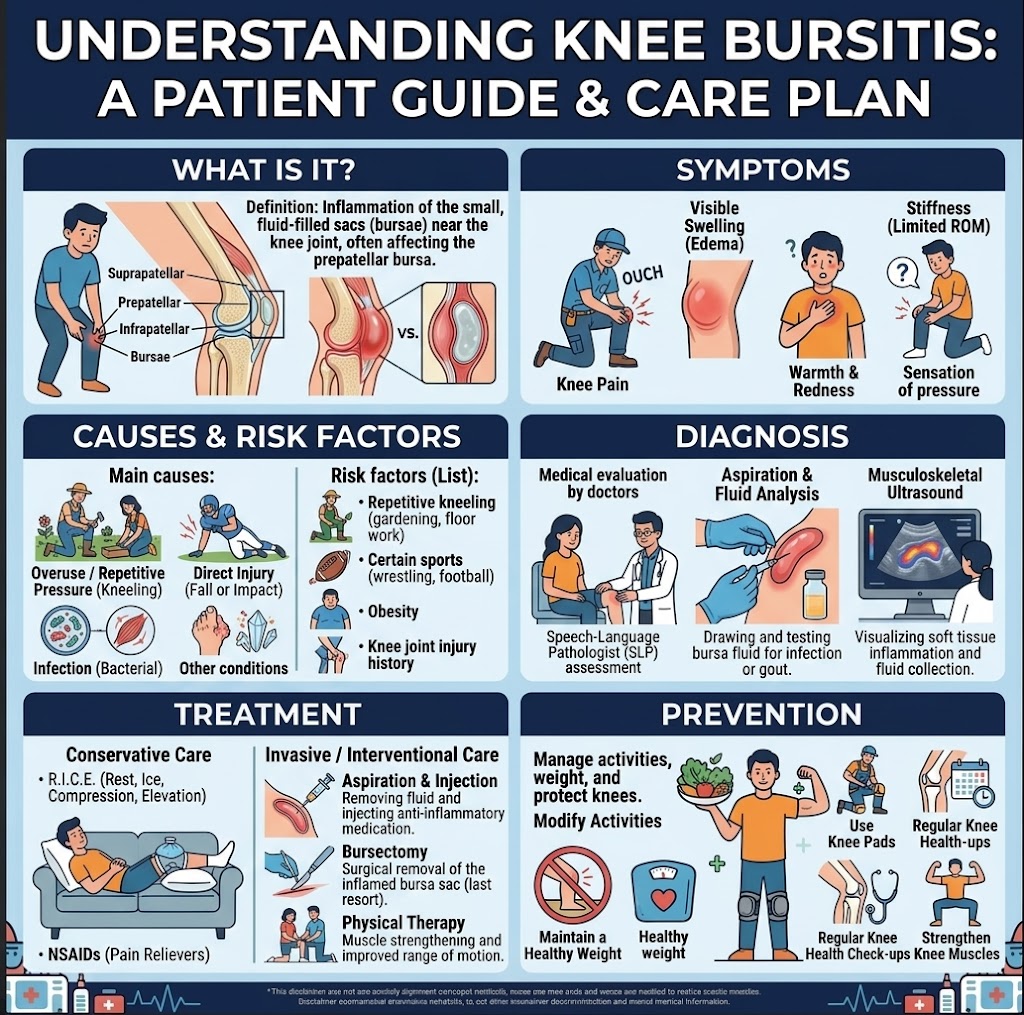
Knee bursitis is a condition where small, fluid-filled sacs (bursae) near your knee joint become swollen and irritated. Bursae act as cushions, reducing friction and pressure between bones, tendons, muscles, and skin. Most commonly, it affects the bursa over the kneecap or on the inner side of the knee. This causes pain and can limit movement; treatment involves self-care and medical therapies to ease discomfort and swelling.
Understanding the Condition
Knee Bursitis: Understanding Swelling and Pain
Understanding the Condition
Common Symptoms
Warmth, Tenderness, Swelling: The affected area of your knee may feel warm, sensitive, and appear swollen. These are common signs of bursa irritation.
Onset of Symptoms: Symptoms can start quickly after a direct knee injury, or develop slowly over time from repeated rubbing or pressure (e.g., frequent kneeling), worsening gradually.
Signs of Infection (Urgent Care): If the kneecap bursa is infected, seek immediate medical attention for fever/chills with increased knee pain/swelling, persistent swelling, skin color change, or difficulty moving your knee.
Consultation Guide
Which Specialist to Meet
Start with your primary care doctor. If necessary, they may refer you to an orthopedic specialist or physical therapist.
Preparations Before Your Visit
Before your visit: Note symptoms, recent injuries, activities, and all medications. Prepare questions for your doctor.
Book a doctor visit near me
Rest and Activity Modification: Avoid activities worsening pain (e.g., kneeling) to allow healing and reduce swelling. (Duration: Days to weeks, based on symptom improvement.)
Ice Application: Apply ice packs (wrapped in cloth) to reduce pain and inflammation. (Duration: 15-20 minutes, several times daily, especially in the first few days.)
Compression and Elevation: Use a snug bandage and elevate your knee to help reduce swelling and fluid buildup. (Duration: Compression as needed for days to a week; elevation often when resting.)
Consultation Guide
Knee bursitis is a condition where small, fluid-filled sacs (bursae) near your knee joint become swollen and irritated. Bursae act as cushions, reducing friction and pressure between bones, tendons, muscles, and skin. Most commonly, it affects the bursa over the kneecap or on the inner side of the knee. This causes pain and can limit movement; treatment involves self-care and medical therapies to ease discomfort and swelling.
Pain (Rest or Movement): You might experience pain whether your knee is still or moving. The feeling varies based on the affected bursa and cause.
A quick, painless test using radiation to image bones. It helps rule out other causes of knee pain like fractures or arthritis.
Diagnostic Procedures
Your doctor will examine your knee for tenderness, swelling, and assess your range of motion.
What to Expect
The doctor will visually inspect, gently touch, and guide your leg through movements. This is quick, with mild discomfort if your knee is already painful.
Ultrasound (Sonography)
Uses sound waves to create live images of soft tissues like bursae, showing swelling or fluid buildup.
What to Expect
You'll lie down. Warm gel is applied to your knee, and a small handheld device (transducer) is moved across your skin. Generally painless, with slight pressure.
What to Expect
You'll be positioned for images from different angles. Stay still briefly per image. The process is quick and painless, though positioning might be uncomfortable if sore.
Fluid Aspiration (Draining): A needle drains excess fluid from a swollen bursa, relieving pressure. Fluid may be tested for infection. (Duration: A single procedure; relief lasts until or unless fluid re-accumulates.)
Physical Therapy: Exercises improve flexibility and strengthen knee-supporting muscles, preventing future episodes. (Duration: Several weeks of sessions, followed by a home exercise program.)
Treatment Options
Home Remedies and Self-Care
Medications
Over-the-Counter Pain Relievers: Nonsteroidal anti-inflammatory drugs (NSAIDs) help manage pain and reduce swelling. (Duration: Used short-term (days to weeks) as needed.)
Antibiotics: Prescribed if the bursa is infected, to fight bacterial infection. (Duration: Typically 7-14 days, as directed.)
Procedures and Therapies
Corticosteroid Injections: Doctor injects medication directly into the bursa for rapid inflammation and pain reduction, if other treatments fail. (Duration: Provides relief for weeks to months; not done frequently.)
Bursa Removal (Bursectomy): Rarely, for severe, persistent cases unresponsive to other treatments, the affected bursa may be surgically removed. (Duration: A single procedure with several weeks to months of recovery.)
Prevention & Long-Term Wellbeing
Prevention
Use Protective Kneepads: Wear padded kneepads during activities with frequent kneeling (e.g., gardening, plumbing) to protect against pressure and friction.
Take Regular Breaks: During prolonged kneeling, take frequent breaks to stand, stretch, and rest your knees, reducing continuous pressure.
Maintain a Healthy Weight: A healthy body weight reduces stress on knee joints, lowering bursitis risk, especially types linked to obesity.
Warm-up and Stretch: Proper warm-up and stretching before sports or strenuous activity improve flexibility and prepare knees, reducing strain.
Long-Term Wellbeing
Listen to Your Body: Heed early signs of knee pain/discomfort; modify activities or rest to prevent worsening bursitis.
Strengthen Leg Muscles: Regular exercises strengthening knee-supporting muscles enhance joint stability and help prevent recurrence. Consult a physical therapist.
Tags & Topics
Notice an error or need an update?
Help us keep medical information accurate. Report incorrect info or suggest an edit.


