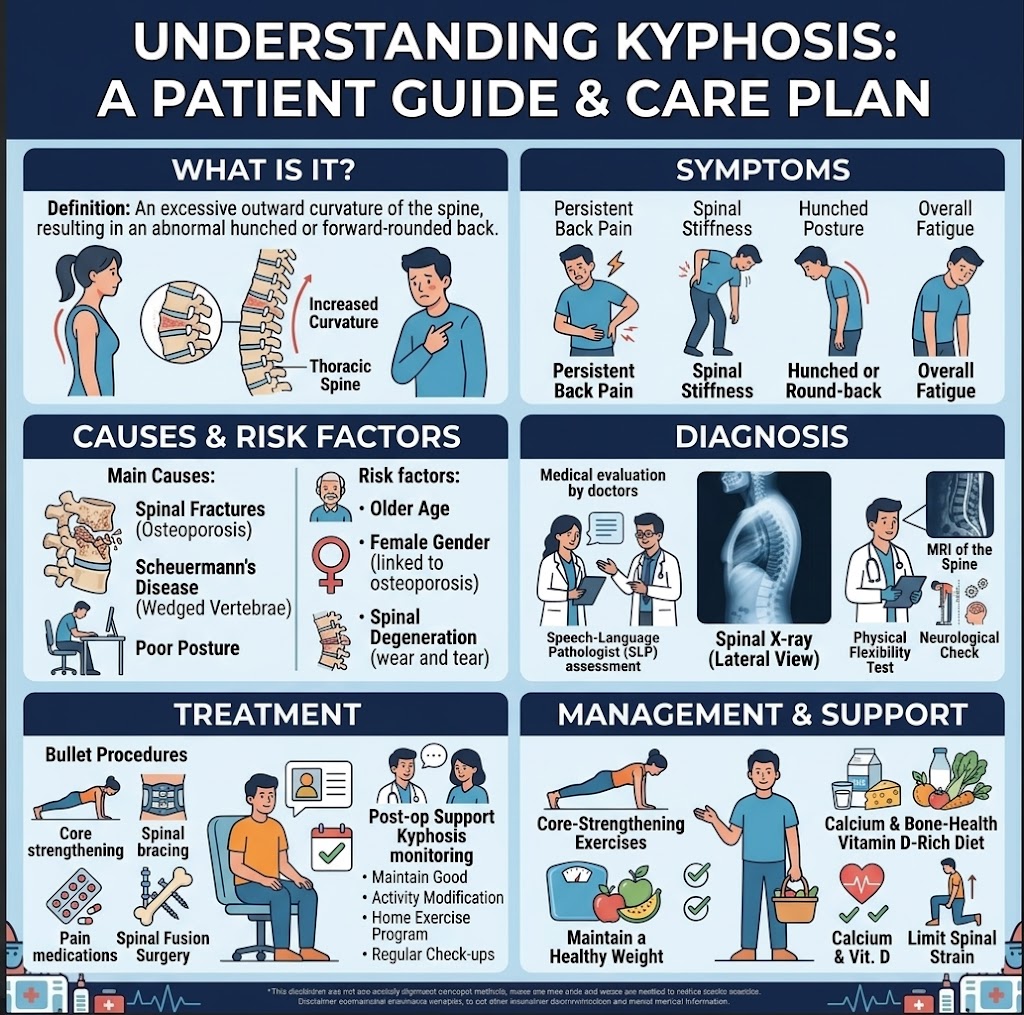
Kyphosis is a condition characterized by an excessive forward rounding of the upper back. While a slight natural curve exists in the upper spine, kyphosis refers to a curve that is noticeably exaggerated. In older adults, it often results from weakening or compression fractures in the spinal bones. In infants or teenagers, it can be due to spinal malformation or the wedging of spinal bones over time. Mild kyphosis may cause few issues, but more severe cases can lead to pain and visible disfigurement. Treatment approaches vary depending on a person's age, the underlying cause, and the severity of the spinal curvature.
Understanding the Condition
Kyphosis: Understanding and Managing a Rounded Upper Back
Understanding the Condition
Common Symptoms
Subtle or Absent Symptoms: Mild kyphosis may not produce any noticeable signs. The upper back naturally has a gentle forward curve, and mild increases may go undetected.
Back Pain and Stiffness: Individuals with a more pronounced curvature often experience discomfort, aching, or stiffness in the back, particularly in the upper and middle regions.
Visible Rounded Back: A noticeable hump or increased rounding of the upper back can be a visual symptom, which might worsen over time.
Consultation Guide
Which Specialist to Meet
If you notice an increased curve in your upper back or your child's spine, start by consulting your primary care physician. They may refer you to a specialist such as an orthopedist (a doctor specializing in bones and joints), a neurosurgeon (if nerve involvement or surgical options are considered), or a physical therapist. For children, a pediatric orthopedist is often recommended.
Preparations Before Your Visit
Before your appointment, prepare a list of your symptoms, including when they started and how they affect your daily activities. Gather information about your medical history, any existing conditions, and all medications, vitamins, or supplements you are currently taking. Be ready to discuss your family's medical history, especially concerning bone or spinal conditions. For the physical examination, wear comfortable, loose-fitting clothing. If you have any previous X-rays or imaging results related to your back, bring them with you.
Book a doctor visit near me
Pain Management Techniques: Use heat or cold packs, gentle stretching, and over-the-counter pain relievers for mild discomfort as needed. (Duration: As needed for symptom relief)
Posture Awareness: Consciously practice and maintain good posture while sitting, standing, and engaging in daily activities. (Duration: Ongoing, daily practice)
Physical Therapy: A physical therapist can guide you through specific exercises to strengthen core and back muscles, improve posture, and increase spinal flexibility and range of motion. (Duration: Weeks to months, with ongoing home exercise program)
Bracing: For adolescents with specific types of kyphosis (like Scheuermann's disease) whose bones are still growing, a back brace can be worn to help correct the curvature and prevent it from worsening. (Duration: Typically worn 18-24 hours daily for several months to a few years, until growth stops)
Consultation Guide
Kyphosis is a condition characterized by an excessive forward rounding of the upper back. While a slight natural curve exists in the upper spine, kyphosis refers to a curve that is noticeably exaggerated. In older adults, it often results from weakening or compression fractures in the spinal bones. In infants or teenagers, it can be due to spinal malformation or the wedging of spinal bones over time. Mild kyphosis may cause few issues, but more severe cases can lead to pain and visible disfigurement. Treatment approaches vary depending on a person's age, the underlying cause, and the severity of the spinal curvature.
You will be asked to stand or lie on a table in specific positions. A technician will position the X-ray machine over the area to be examined. You will need to remain still for a few seconds while the images are taken. The procedure is generally quick and causes no discomfort, though you might be asked to hold your breath briefly.
CT Scan (Computed Tomography Scan)
A CT scan uses advanced X-ray technology and computer processing to create detailed cross-sectional images, or 'slices,' of bones, blood vessels, and soft tissues inside the body. It provides more detailed views than standard X-rays, helping to identify the exact shape of vertebrae and any potential damage.
For the Nerve Conduction Study (NCS), small electrode stickers will be placed on your skin over specific nerves. Brief, mild electrical pulses will be delivered, causing a tingling sensation, to measure how fast signals travel. For the Electromyography (EMG) part, a very thin needle electrode will be inserted into specific muscles. You may feel a brief prick. The electrical activity of the muscle is recorded both at rest and during gentle contraction. This part can cause some mild discomfort. The entire procedure usually lasts 30 to 90 minutes.
Bone-Strengthening Medications: For kyphosis caused or worsened by osteoporosis, medications designed to increase bone density and reduce the risk of spinal fractures. (Duration: Long-term, as prescribed by a doctor)
Consistent Medical Follow-ups: Regular check-ups with your healthcare provider are crucial, especially if you have a history of kyphosis or risk factors like osteoporosis, to monitor the condition and adjust treatment as needed.
Adherence to Exercise Programs: Continue with the prescribed exercises from physical therapy to maintain muscle strength, flexibility, and good posture over time.
Diagnostic Procedures
An X-ray is a quick, painless imaging test that uses a small amount of radiation to create pictures of the structures inside your body, especially bones. It helps visualize the spinal bones and the degree of curvature.
What to Expect
What to Expect
You will lie on a motorized table that slides into a large, donut-shaped machine. The machine will rotate around you, taking multiple X-ray images. You might hear humming or clicking sounds. It's important to remain still during the scan, and you may be asked to hold your breath for short periods. The procedure is painless and typically takes 10 to 30 minutes.
Bone Density Test (DEXA Scan)
A bone density test, often called a DEXA scan, uses low-dose X-rays to measure the amount of calcium and other bone minerals in a segment of bone, typically in the spine and hip. It helps determine if you have osteoporosis, a condition that weakens bones and can contribute to kyphosis.
What to Expect
You will lie on a padded table while a mechanical arm passes over your body. The process is non-invasive and painless, usually taking 10 to 20 minutes. You simply need to remain still throughout the scan.
Neurological Examination
A neurological exam is a thorough assessment of your nervous system, including your brain, spinal cord, nerves, and muscles. It helps your healthcare team detect any nervous system conditions or nerve compression related to the spinal curvature.
What to Expect
During the exam, your doctor will assess your mental status, coordination, reflexes, muscle strength, balance, and sensation. This might involve walking, touching your finger to your nose, responding to various stimuli, and simple memory tasks. It's a physical examination that typically does not involve any equipment like needles or machines.
Electromyography (EMG) and Nerve Conduction Study (NCS)
What to Expect
Treatment Options
Medications
Pain Relievers: Over-the-counter or prescription medications to alleviate back pain and discomfort associated with kyphosis. (Duration: As needed or as prescribed for specific durations)
Spinal Fusion: A surgical procedure where two or more vertebrae are permanently joined together using bone grafts and metal hardware (such as plates, screws, or rods). This stabilizes the spine, corrects severe curvature, and reduces pain by preventing movement between the fused bones. (Duration: Surgery typically takes several hours. Hospital stay is usually a few days to a week, followed by several months to a year of limited activity and physical therapy for full recovery and complete bone fusion.)
Bone Health Management: For individuals with osteoporosis, diligent adherence to bone-strengthening treatments and regular bone density screenings are essential to prevent further spinal issues.
Effective Pain Management: Develop and apply strategies for managing any chronic back pain, which may include a combination of therapies, lifestyle adjustments, and medication, to maintain a good quality of life.
Emotional Support: If body image concerns arise, particularly for adolescents, seeking support from a counselor or support group can be beneficial for mental and emotional well-being.
Prevention & Long-Term Wellbeing
Home Remedies & Lifestyle Changes
Regular Exercise: Engage in physical activities to strengthen back muscles and improve flexibility, which can help support the spine and reduce pain. (Duration: Ongoing, daily or several times per week)
Prevention
Maintain Good Posture: Be mindful of your posture throughout the day, whether sitting, standing, or lifting, to reduce unnecessary strain on your spine.
Regular Physical Activity: Engage in exercises that strengthen your core and back muscles, such as swimming, yoga, or Pilates, to provide better support for your spine.
Nutrient-Rich Diet: Ensure your diet includes adequate calcium and vitamin D, or take supplements as recommended by your doctor, to support strong bones and prevent conditions like osteoporosis.
Avoid Smoking: Smoking can negatively impact bone health and contribute to the degeneration of spinal disks, worsening spinal curvature.
Proper Lifting Techniques: Always bend your knees and keep objects close to your body when lifting to protect your back from injury.
Long-Term Monitoring & Management
Tags & Topics
Notice an error or need an update?
Help us keep medical information accurate. Report incorrect info or suggest an edit.


