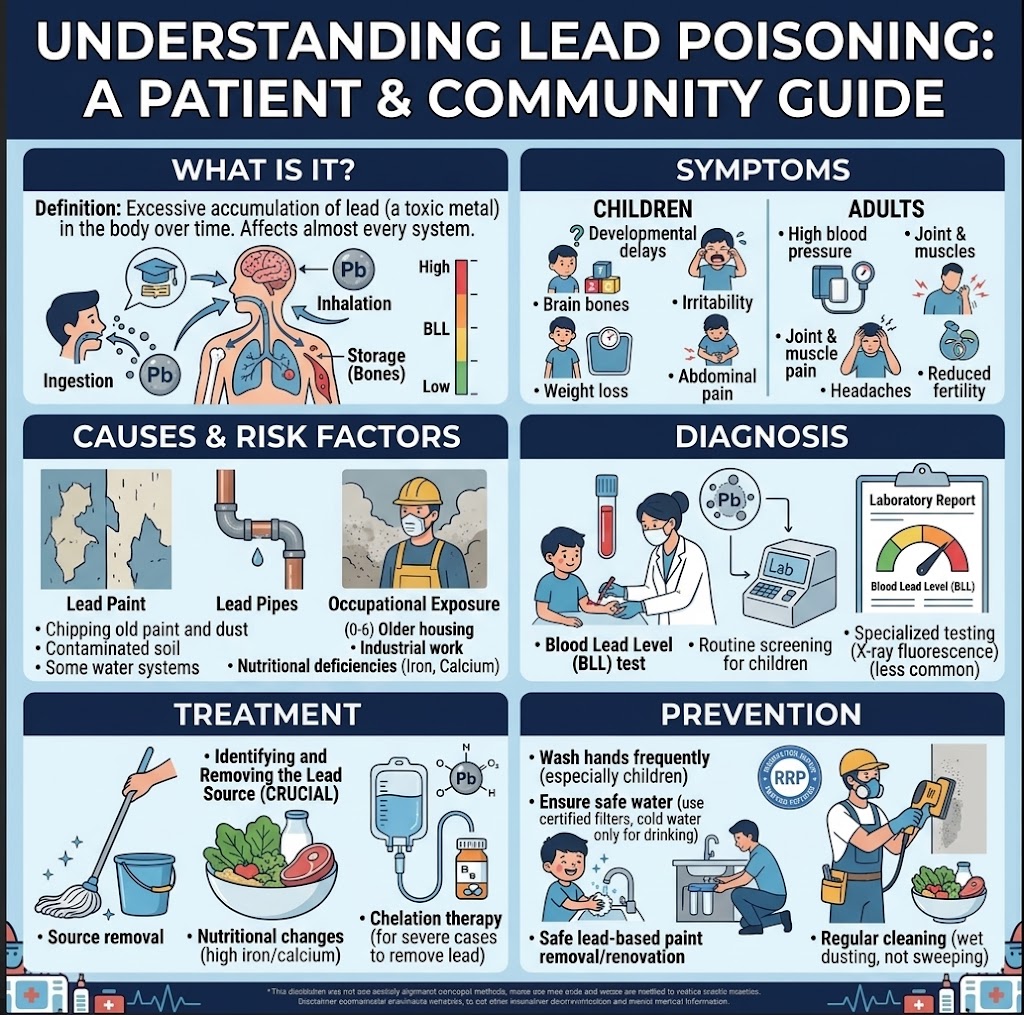
Lead poisoning occurs when lead, a toxic metal, gradually builds up in the body over months or years. Even small amounts can cause serious health problems, especially in young children under six years old, where it can severely impact brain development and overall growth. In very high concentrations, lead poisoning can be fatal. Common sources include lead-based paint and contaminated dust in older buildings, as well as polluted air, water, and soil. Adults can also be exposed through certain jobs or home renovation activities. Lead poisoning is challenging to detect because symptoms often don't appear until dangerous levels have accumulated in the blood. While treatable, prevention through simple precautions is key to protecting your family.
Understanding the Condition
Lead Poisoning: Understanding the Risks and Protecting Your Family
Understanding the Condition
Lead poisoning occurs when lead, a toxic metal, gradually builds up in the body over months or years. Even small amounts can cause serious health problems, especially in young children under six years old, where it can severely impact brain development and overall growth. In very high concentrations, lead poisoning can be fatal. Common sources include lead-based paint and contaminated dust in older buildings, as well as polluted air, water, and soil. Adults can also be exposed through certain jobs or home renovation activities. Lead poisoning is challenging to detect because symptoms often don't appear until dangerous levels have accumulated in the blood. While treatable, prevention through simple precautions is key to protecting your family.
Common Symptoms
In Young Children: Lead exposure can harm a child's developing brain and nervous system. Symptoms might be subtle and include: developmental delays, learning difficulties, irritability, loss of appetite, unexplained weight loss, sluggishness and fatigue, abdominal pain, vomiting, constipation, hearing loss, seizures (in severe cases), and pica (eating non-food items).
In Babies Exposed Before Birth: Babies exposed to lead in the womb can experience adverse outcomes such as: premature birth, lower birth weight, and slower growth after birth.
In Adults: Adult symptoms can be broad and sometimes mistaken for other conditions, including: high blood pressure, joint and muscle pain, memory and concentration problems, headaches, abdominal pain, mood disorders, reduced sperm count or abnormal sperm, and, for pregnant women, miscarriage, stillbirth, or premature birth.
Consultation Guide
Which Specialist to Meet
For children, the first step is typically a pediatrician. Depending on the child's symptoms and lead levels, they may refer to a developmental specialist, a pediatric neurologist, or an environmental health expert. Adults should begin by consulting their primary care physician, who might involve an internal medicine specialist, a neurologist, or a toxicologist.
Preparations Before Your Visit
Before your appointment, make a list of all symptoms experienced by you or your family, noting when they started. Detail any potential lead exposure sources, such as living in an older home, recent home renovations, specific occupations, or hobbies. Also, prepare a list of questions you have for the doctor.
Book a doctor visit near me
Consultation Guide
A small amount of blood will be collected. For adults and older children, this is typically done from a vein in the arm. For infants and very young children, a finger prick is often used. The blood sample is then sent to a laboratory for analysis. The procedure is brief and generally causes only minor, temporary discomfort. Results are usually available within a few days to a week.
Follow-up Blood Tests: After lead sources are removed and initial treatment is completed, regular follow-up blood tests are essential, especially for children. This ensures that lead levels continue to decrease and remain at safe levels. The frequency depends on initial lead levels and ongoing risk factors.
Developmental Screening: Children with a history of lead exposure should undergo ongoing developmental screenings. This helps monitor for any potential long-term impacts on learning, behavior, and growth, allowing for timely intervention and support.
Diagnostic Procedures
Blood Lead Level Test
This is the most common and definitive test for lead poisoning. It measures the amount of lead circulating in the blood, providing an accurate indicator of recent and past exposure. Even small, concerning amounts of lead can be detected.
What to Expect
Water Testing and Filters: If your home has older plumbing (e.g., lead pipes), consider having your drinking water tested. If lead is detected, use a water filter certified to remove lead or run cold water for several minutes before use.
Safe Home Renovations: If renovating an older home, assume lead-based paint is present. Always hire certified lead-safe professionals for any work that disturbs painted surfaces to prevent the release of lead dust.
Treatment Options
Home and Environmental Management
Identifying and Removing Lead Sources: The most crucial step in treatment is to identify and safely eliminate all sources of lead from the patient's environment. This often involves professional lead abatement services for old lead-based paint, ensuring safe drinking water, and thoroughly cleaning lead-contaminated dust. It's vital not to attempt lead-based paint removal yourself due to the risk of further contamination. (Duration: Ongoing until all identified sources are safely removed and verified.)
Medications
Chelation Therapy: For individuals with significantly elevated blood lead levels, specific medications are prescribed. These medications bind to the lead in the body, forming a compound that can be excreted through urine. Chelation therapy can be administered orally or via injections and requires close medical supervision. (Duration: Can range from several days to months, depending on the severity of lead poisoning and the patient's response to treatment.)
Therapies
Developmental and Behavioral Support: Children who have been affected by lead poisoning may benefit from various therapies. These can include occupational therapy, physical therapy, and behavioral counseling to address any lasting developmental delays, learning difficulties, or behavioral issues resulting from lead exposure. (Duration: Varies significantly based on individual needs and the extent of developmental impact, potentially long-term.)
Prevention & Long-Term Wellbeing
Nutritional Support: Eating a balanced diet rich in calcium and iron can help reduce the body's absorption of lead. Good sources include milk, cheese, yogurt, leafy green vegetables, fortified cereals, and lean meats. (Duration: Long-term dietary adjustments.)
Prevention
Regular Cleaning: Wet-mop floors and wet-wipe all dusty surfaces, especially window sills and children's play areas, regularly. This helps remove lead dust, particularly important in older homes built before 1978.
Frequent Handwashing: Ensure children wash their hands often, especially before eating and after playing outdoors, to prevent accidental ingestion of lead dust or contaminated soil.
Nutrient-Rich Diet: Provide a healthy diet for children that is rich in calcium and iron. These nutrients can help reduce the amount of lead absorbed by the body.
Occupational Safety for Adults: Adults working in high-risk occupations (e.g., construction, battery manufacturing, auto repair) should strictly follow safety protocols, including wearing protective gear, thorough handwashing, and changing clothes and shoes before returning home to avoid bringing lead dust into the house.
Long-Term Monitoring
Tags & Topics
Notice an error or need an update?
Help us keep medical information accurate. Report incorrect info or suggest an edit.


