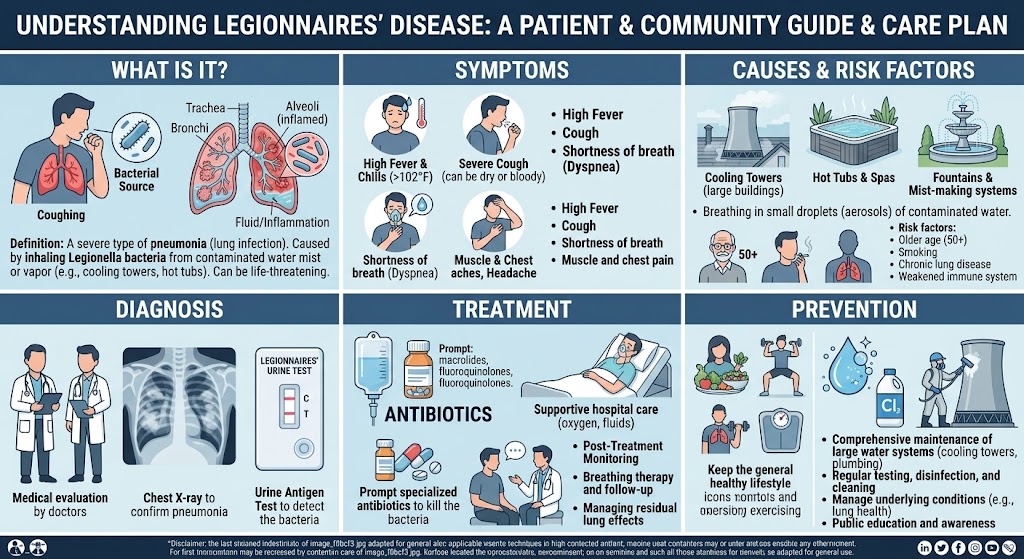
Legionnaires' disease is a severe form of pneumonia, a lung infection, caused by a type of bacteria called Legionella. Most people get sick by breathing in these bacteria from water or soil. While it often affects the lungs, it can also cause infections in other body parts, including the heart. Older adults, individuals with weakened immune systems, and smokers are at higher risk. The same bacteria can cause a milder, flu-like illness called Pontiac fever, which usually resolves on its own. However, untreated Legionnaires' disease can be fatal. Symptoms typically appear 2 to 10 days after exposure and prompt treatment with antibiotics is usually effective.
Understanding the Condition
Legionnaires' Disease: Understanding a Serious Lung Infection
Understanding the Condition
Legionnaires' disease is a severe form of pneumonia, a lung infection, caused by a type of bacteria called Legionella. Most people get sick by breathing in these bacteria from water or soil. While it often affects the lungs, it can also cause infections in other body parts, including the heart. Older adults, individuals with weakened immune systems, and smokers are at higher risk. The same bacteria can cause a milder, flu-like illness called Pontiac fever, which usually resolves on its own. However, untreated Legionnaires' disease can be fatal. Symptoms typically appear 2 to 10 days after exposure and prompt treatment with antibiotics is usually effective.
Common Symptoms
Initial Symptoms (Often First Days): Headache, muscle aches, fever (often 104 F / 40 C or higher), and chills.
Later Symptoms (By Day 2 or 3): Cough (which may produce mucus or blood), shortness of breath, chest pain, nausea, vomiting, diarrhea, confusion, and other mental changes.
Consultation Guide
Which Specialist to Meet
Initially, you should see your primary care physician. Depending on the severity and complexity of your case, they may refer you to a pulmonologist (a doctor specializing in lung conditions) or an infectious disease specialist.
Preparations Before Your Visit
Before your visit, make a list of your symptoms, including when they started and how they've progressed. Note any recent travel, especially if it involved hotels, cruises, or exposure to hot tubs or large water systems. List all medications, vitamins, and supplements you are currently taking. Be prepared to discuss your medical history and any existing health conditions. Write down any questions you have for the doctor.
Book a doctor visit near me
Hydration: Drinking plenty of fluids helps prevent dehydration, especially if you have a fever or gastrointestinal symptoms. (Duration: Ongoing throughout recovery.)
Fever and Pain Management: Over-the-counter medications can help manage fever, muscle aches, and discomfort. (Duration: As needed for symptom relief.)
Oxygen Therapy: For individuals experiencing significant shortness of breath or low oxygen levels, supplemental oxygen may be administered, often in a hospital setting. (Duration: As required to maintain adequate oxygen levels, varying from a few days to longer.)
Follow-Up Appointments: Attend all recommended follow-up appointments with your doctor to monitor your lung function, overall recovery, and address any lingering symptoms, especially after a severe illness.
Monitor Persistent Symptoms: Be attentive to any lingering cough, persistent fatigue, or ongoing breathing difficulties after treatment and report them to your healthcare provider. Some individuals may experience prolonged recovery.
Pulmonary Rehabilitation: For those with significant lung damage or persistent breathing issues, a tailored pulmonary rehabilitation program, involving exercises and education, can help improve lung function and quality of life.
Diagnostic Procedures
A common imaging test that uses a small amount of radiation to create pictures of your heart, lungs, blood vessels, airways, and the bones of your chest and spine. It helps doctors detect problems like pneumonia, fluid in or around the lungs, or a collapsed lung.
What to Expect
You will typically stand or sit in front of an X-ray plate. A technician will position you correctly and ask you to hold your breath briefly while the images are taken. The procedure is quick, painless, and usually takes only a few minutes.
CT Scan (Computerized Tomography Scan)
A more advanced imaging test that uses X-rays from many different angles and computer processing to create detailed cross-sectional 'slice' images of your bones, blood vessels, and soft tissues inside the body. These images provide more detail than standard X-rays and are very useful for diagnosing infections, injuries, or other conditions.
What to Expect
You will lie on a motorized table that slides into a large, donut-shaped machine. You'll need to lie very still during the scan, which may take several minutes. You might hear whirring noises from the machine. Sometimes, a contrast dye may be injected into a vein to help highlight specific areas in the images.
Lumbar Puncture (Spinal Tap)
A medical procedure used to collect a sample of cerebrospinal fluid (CSF), which is the fluid that surrounds and protects your brain and spinal cord. Analyzing this fluid can help diagnose serious infections, such as meningitis, or other conditions affecting the central nervous system.
What to Expect
You will typically lie on your side with your knees pulled up to your chest, or sit and lean forward, to help arch your back. The doctor will clean and numb a small area in your lower back. A thin needle is then carefully inserted between two vertebrae (bones) in your lower spine to collect a small amount of CSF. You might feel some pressure or a brief sting. After the procedure, you may be asked to lie flat for a few hours to help prevent a headache.
Treatment Options
Medications
Antibiotics: Specific medications designed to kill the Legionella bacteria. These may be given orally (by mouth) or intravenously (through a vein), depending on the severity of the infection. Early and appropriate antibiotic treatment is crucial for recovery. (Duration: Treatment typically lasts 7 to 14 days, but can be longer in severe cases or for individuals with weakened immune systems.)
Supportive Care and Therapies
Prevention & Long-Term Wellbeing
Rest: Allowing your body adequate rest is essential to conserve energy and aid in recovery. (Duration: As needed, often for several weeks during and after the acute phase of illness.)
Mechanical Ventilation: In very severe cases where the lungs cannot function adequately, a breathing machine may be used to support breathing. (Duration: Critical cases, duration varies based on patient recovery.)
Prevention
Maintain Water Systems: Ensure proper cleaning and maintenance of man-made water systems where Legionella bacteria can thrive, such as hot tubs, cooling towers for air conditioning, decorative fountains, and large plumbing systems. This includes regular disinfection and maintaining appropriate water temperatures.
Avoid Smoking: Smoking significantly increases the risk of developing Legionnaires' disease and other severe lung infections. Quitting smoking is a crucial preventive measure.
Boost Your Immune System: Maintaining a healthy lifestyle through balanced nutrition, regular physical activity, and adequate sleep can help support a strong immune system, making you less susceptible to infections.
Be Cautious in Public Water Exposures: When using public hot tubs, pools, or showers, ensure they appear well-maintained. If traveling, be aware of any advisories regarding water safety.
Long-Term Monitoring and Recovery
Tags & Topics
Notice an error or need an update?
Help us keep medical information accurate. Report incorrect info or suggest an edit.


