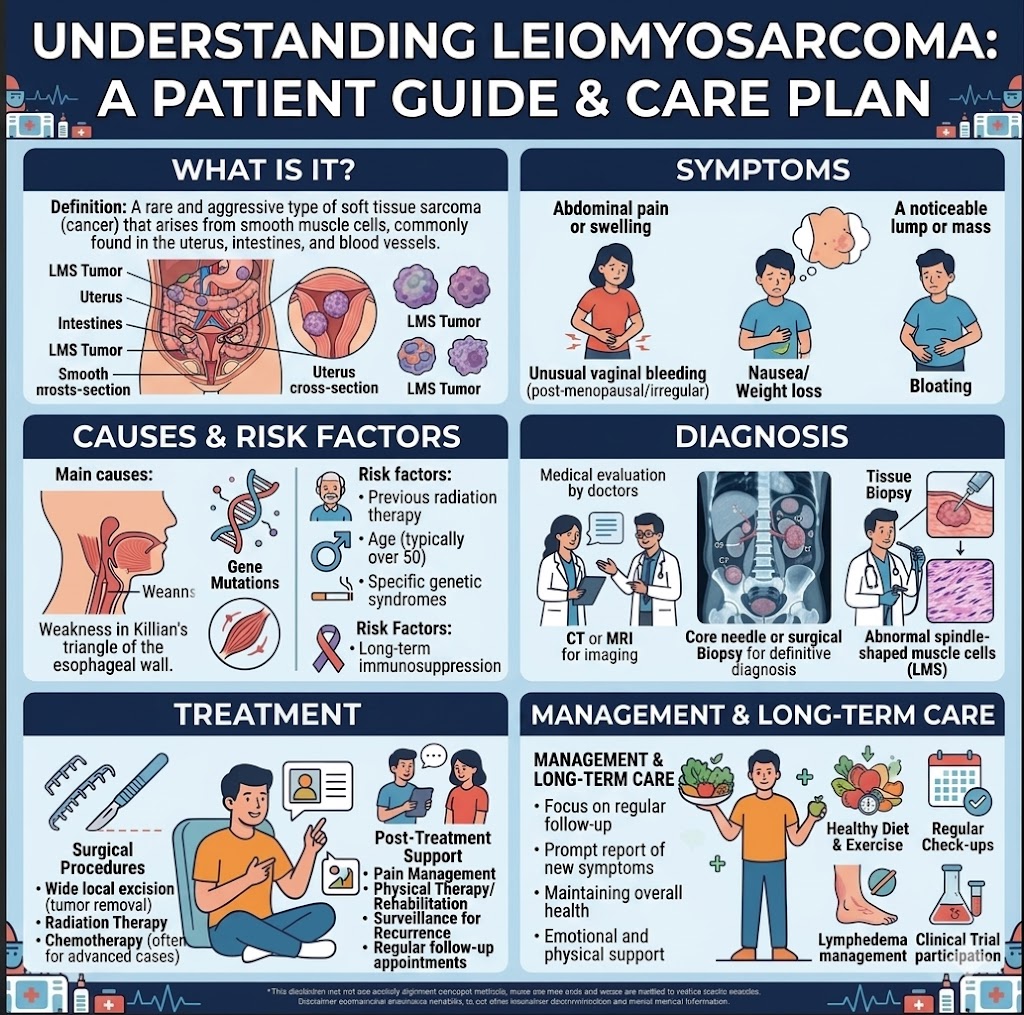
Leiomyosarcoma is a rare cancer that originates in the body's smooth muscle tissues. These muscles are involuntary, meaning you don't consciously control them, and they are found in various organs like the digestive system, urinary tract, walls of blood vessels, and the uterus. Most often, leiomyosarcoma begins in the uterus, abdomen, or legs. It starts when normal smooth muscle cells undergo specific changes in their genetic code (DNA). These changes cause the cells to grow and multiply uncontrollably, forming an abnormal mass or tumor. Unlike healthy cells that die at a programmed time, cancer cells continue to live and can grow quickly. If left untreated, these cancer cells can spread from their original location to other parts of the body, a process called metastasis. This cancer is classified as a type of soft tissue sarcoma, a broader category of cancers that develop in connective tissues that support and surround body structures.
Understanding the Condition
Leiomyosarcoma: Understanding a Rare Smooth Muscle Cancer
Understanding the Condition
Common Symptoms
Unexplained Weight Loss: Losing a significant amount of weight without trying.
Nausea and Vomiting: Feelings of sickness and throwing up, especially if the cancer affects abdominal organs.
A Lump or Swelling Under the Skin: A noticeable mass that can be felt or seen, particularly if the cancer develops in a limb.
Begin by discussing any concerning symptoms with your primary care physician. They will evaluate your condition and may refer you to specialists such as an oncologist (a doctor who specializes in cancer treatment), a surgical oncologist (a surgeon specializing in cancer removal), or, if the uterus is involved, a gynecologic oncologist.
Preparations Before Your Visit
Before your appointment, gather your medical information including your personal and family medical history, existing health conditions, and a list of all medications/supplements. Prepare a list of your symptoms, noting when they started, how often they occur, and any factors that seem to affect them. Write down all your questions for the doctor.
Book a doctor visit near me
A quick, non-invasive check, including palpation of areas and discussion of your symptoms.
Magnetic Resonance Imaging (MRI)
Uses powerful magnets and radio waves for highly detailed soft tissue images, vital for visualizing the tumor’s size and extent.
Regular Health Check-ups: Maintain routine doctor visits to monitor your general health and discuss any new or unusual symptoms promptly.
Body Awareness: Pay attention to your body and promptly report any persistent or new lumps, unusual bleeding, or unexplained weight loss to your doctor.
Genetic Counseling: If you have a family history of leiomyosarcoma or conditions like hereditary retinoblastoma or Li-Fraumeni syndrome, genetic counseling can assess your risk and guide screening strategies.
Long-Term Monitoring and Support
Follow-up Care: After treatment, regular follow-up appointments with your oncology team, including physical exams and imaging tests, are crucial to monitor for any signs of recurrence or new symptoms.
Symptom and Side Effect Management: Work closely with your healthcare providers to manage any ongoing symptoms or side effects from treatment. This might include pain management, nutritional support, or physical therapy.
Consultation Guide
Leiomyosarcoma is a rare cancer that originates in the body's smooth muscle tissues. These muscles are involuntary, meaning you don't consciously control them, and they are found in various organs like the digestive system, urinary tract, walls of blood vessels, and the uterus. Most often, leiomyosarcoma begins in the uterus, abdomen, or legs. It starts when normal smooth muscle cells undergo specific changes in their genetic code (DNA). These changes cause the cells to grow and multiply uncontrollably, forming an abnormal mass or tumor. Unlike healthy cells that die at a programmed time, cancer cells continue to live and can grow quickly. If left untreated, these cancer cells can spread from their original location to other parts of the body, a process called metastasis. This cancer is classified as a type of soft tissue sarcoma, a broader category of cancers that develop in connective tissues that support and surround body structures.
Abdominal Pain or Discomfort: If the tumor is in the belly area, it might cause persistent pain, fullness, or pressure.
Unusual Vaginal Bleeding or Pelvic Pain: If the cancer starts in the uterus.
Consultation Guide
Which Specialist to Meet
Diagnostic Procedures
Your doctor will check for lumps, swelling, assess your general health, and review your medical history.
What to Expect
What to Expect
You lie on a table in a loud, tunnel-like machine; you must stay very still for 30-60 minutes. Contrast dye may be injected into a vein.
Computed Tomography (CT) Scan
X-rays from various angles create cross-sectional images, useful for assessing organs and detecting cancer spread (metastasis).
What to Expect
You lie on a table moving through a donut-shaped machine, asked to hold your breath briefly. Takes 10-30 minutes; contrast dye may be used orally or injected.
Positron Emission Tomography (PET) Scan (often PET-CT)
Involves injecting a radioactive sugar that cancer cells absorb more quickly, helping identify active cancer throughout the body.
What to Expect
After an injection and an approximate one-hour waiting period, you lie on a table for a 30-45 minute scan, requiring you to remain still.
Uses sound waves to image internal structures; good for initial evaluation of superficial lumps or abdominal/pelvic organs.
What to Expect
Gel is applied to your skin, and a handheld device (transducer) is moved over the area. Usually painless, takes 15-30 minutes.
A thin needle, guided by imaging (like ultrasound or CT), extracts a tissue sample (core needle or fine needle aspiration).
What to Expect
Local anesthetic numbs the area. You might feel pressure as the needle takes samples. Takes 15-30 minutes, with mild soreness afterward.
A surgeon removes part (incisional) or all (excisional) of the tumor and surrounding tissue during a minor surgical procedure.
What to Expect
Emotional and Psychological Support: Coping with cancer can be challenging. Seek support from family, friends, support groups, or mental health professionals to address anxiety, depression, or stress related to your diagnosis and treatment.
Treatment Options
Surgical Procedures
Surgical Removal of the Tumor: The primary goal is to completely remove the tumor with a margin of healthy tissue around it. This may involve removing parts of affected organs or limbs to ensure all cancer cells are eradicated. (Duration: Surgery lasts several hours, followed by a hospital stay ranging from a few days to over a week for recovery, depending on complexity.)
Therapies
Radiation Therapy: Uses high-energy beams (like X-rays) to target and destroy cancer cells or shrink tumors. It can be used before surgery (to shrink), after surgery (to eliminate residual cells), or as the main treatment if surgery isn't an option. (Duration: Typically administered daily, five days a week, for several weeks (e.g., 4-7 weeks); each session is brief.)
Medications
Chemotherapy: Powerful anti-cancer drugs, given orally or intravenously, that kill rapidly dividing cells throughout the body. Used for widespread cancer or to shrink large tumors before surgery. (Duration: Administered in cycles over several months (e.g., 3-6 months), with treatment periods followed by rest to allow the body to recover.)
Targeted Therapy: Medications that specifically attack vulnerabilities in cancer cells (e.g., specific proteins or pathways), inhibiting their growth and spread with less harm to healthy cells. (Duration: Often taken daily for months or even years, as long as the treatment is effective and side effects are manageable.)
Immunotherapy: Boosts your body's own immune system to recognize and fight cancer cells more effectively, helping the immune system identify and attack the cancer. (Duration: Typically administered intravenously every few weeks (e.g., 2-4 weeks) for several months or longer, depending on response and tolerance.)
Prevention & Long-Term Wellbeing
Performed in an operating room, often under local anesthesia with sedation or general anesthesia. Involves an incision, stitches, and a few days to a week of recovery.
Prevention and Early Detection
Healthy Lifestyle: Adopt a balanced diet rich in fruits, vegetables, and whole grains. Engage in regular physical activity as advised by your healthcare team. Avoid tobacco and limit alcohol to support overall health.
Tags & Topics
Notice an error or need an update?
Help us keep medical information accurate. Report incorrect info or suggest an edit.


