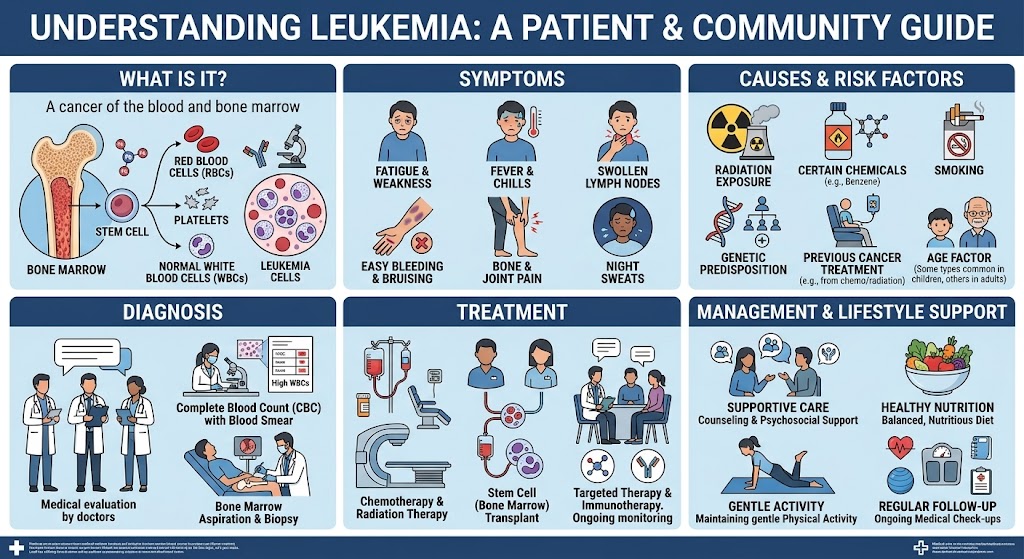
Leukemia is a cancer affecting blood-forming tissues, like bone marrow and the lymphatic system. It primarily involves white blood cells, which normally fight infections. In leukemia, the bone marrow produces too many abnormal white blood cells that don't work correctly. This overcrowding leads to a shortage of healthy blood cells, causing symptoms. Leukemia has many forms, some common in children, others in adults. Treatment is complex and personalized.
Understanding the Condition
Leukemia: Understanding Blood Cancer
Understanding the Condition
Leukemia is a cancer affecting blood-forming tissues, like bone marrow and the lymphatic system. It primarily involves white blood cells, which normally fight infections. In leukemia, the bone marrow produces too many abnormal white blood cells that don't work correctly. This overcrowding leads to a shortage of healthy blood cells, causing symptoms. Leukemia has many forms, some common in children, others in adults. Treatment is complex and personalized.
Common Symptoms
Unexplained Fever or Chills: Feeling unusually hot or cold without an apparent reason.
Ongoing Tiredness and Weakness: Persistent lack of energy that doesn't improve with rest.
Frequent or Severe Infections: Getting sick often or having infections that are difficult to overcome.
Unexplained Weight Loss: Losing weight without intentionally trying to.
Swollen Glands, Enlarged Liver or Spleen: Noticeable swelling in lymph nodes (glands), or a larger than normal liver or spleen.
Easy Bleeding or Bruising: Bruising easily or experiencing bleeding that is difficult to stop.
Frequent Nosebleeds: Having nosebleeds more often than usual.
Tiny Red Spots on the Skin (Petechiae): Small, pinpoint red spots that appear on the skin due to bleeding under the surface.
Heavy Night Sweats: Excessive sweating, especially during the night.
Bone Pain or Tenderness: Aching or sensitivity in the bones.
Consultation Guide
Which Specialist to Meet
You should first consult with your primary care physician, who may then refer you to a hematologist-oncologist. A hematologist-oncologist is a specialist in blood disorders and cancer.
Preparations Before Your Visit
Before your visit, make a list of all your symptoms, including when they started and how often they occur. Be prepared to share your complete medical history, including any past illnesses, treatments, and medications you are currently taking. Write down any questions you have for the doctor. Consider bringing a family member or friend for support and to help remember information.
Book a doctor visit near me
Palliative Care: Consider palliative care services, which focus on providing relief from the symptoms and stress of a serious illness, aiming to improve quality of life for both the patient and the family.
Consultation Guide
A healthcare professional will draw a small sample of blood, usually from a vein in your arm, using a sterile needle. This is a quick procedure that might cause a brief pinch or sting. The blood sample is then sent to a lab for analysis.
Bone Marrow Aspiration and Biopsy
You'll lie on your stomach or side. The hip bone area is cleaned and numbed with a local anesthetic, which may cause a brief sting. For aspiration, a needle withdraws liquid marrow, potentially causing a sharp pain or pulling sensation. For the biopsy, a larger needle takes a solid sample; you may feel pressure. Afterward, pressure and a bandage are applied, and some soreness or bruising is common for a few days.
Diagnostic Procedures
Blood Tests (Complete Blood Count with Differential)
Initial blood tests, such as a complete blood count (CBC) with differential, help evaluate the number and types of blood cells. These tests can reveal abnormalities in white blood cell counts, red blood cell counts, and platelet levels, which are often indicative of leukemia.
What to Expect
These procedures collect and examine bone marrow, the spongy tissue inside your bones, for leukemia diagnosis, typing, severity assessment, and treatment monitoring. Aspiration removes liquid marrow; a biopsy takes a solid tissue sample.
What to Expect
Ongoing Tests: Periodic blood tests and, if necessary, bone marrow exams track your condition and ensure remission.
Treatment Options
Medications and Therapies
Regular Follow-Up Care: Consistent appointments with your hematologist-oncologist are vital for health monitoring, detecting recurrence, and managing treatment side effects.
Infection Prevention: Practice good hand hygiene, avoid crowds and sick individuals, and follow medical advice on vaccinations to minimize infection risk, especially during and after treatment when the immune system may be compromised.
Support and Resources
Support Groups and Counseling: Connecting with others who have similar experiences through support groups, or seeking professional mental health counseling, can provide emotional support and coping strategies.
Prevention & Long-Term Wellbeing
Chemotherapy: Uses powerful chemicals, given intravenously or orally, to kill fast-growing cancer cells throughout the body. Drug combinations vary by leukemia type. (Duration: Administered in cycles over months to years, with breaks for recovery.)
Radiation Therapy: Uses high-energy beams to damage cancer cells. It can be external (machine outside body) or internal (small radioactive implant near cancer). (Duration: Typically daily sessions over several weeks, depending on leukemia type and stage.)
Biological Therapy (Immunotherapy): Helps your immune system recognize and fight cancer cells. It uses natural or lab-made substances to boost or direct the body's defenses. (Duration: Varies, often in cycles over months.)
Bone Marrow Transplant (Stem Cell Transplant): This procedure replaces diseased or damaged bone marrow with healthy blood-forming stem cells. Before transplant, high-dose chemotherapy (and sometimes radiation) destroys existing diseased bone marrow. Then, healthy stem cells (from the patient's own body - autologous, or a donor - allogeneic) are infused into the bloodstream. These cells travel to the bone marrow and begin producing new, healthy blood cells. (Duration: Preparation (chemotherapy/radiation) lasts days to weeks, followed by a single stem cell infusion. Recovery can take weeks to many months, often requiring hospitalization and close monitoring for complications like infection or graft-versus-host disease (for allogeneic transplants).)
Prevention and Risk Reduction
Avoid Known Carcinogens: Minimize exposure to chemicals like benzene (in gasoline, industrial solvents) and avoid smoking to reduce risk. Genetic counseling can assess risks for those with family history or associated genetic disorders.
Long-Term Monitoring
Lifestyle Adjustments
Healthy Diet and Hydration: Maintain a balanced diet rich in fruits, vegetables, and lean proteins, and stay well-hydrated to support overall health and recovery.
Moderate Physical Activity: Engage in regular, gentle exercise as advised by your doctor to improve energy levels, mood, and physical function.
Adequate Sleep and Stress Management: Prioritize sufficient rest and explore stress-reducing techniques like meditation or mindfulness to support mental and physical well-being.
Tags & Topics
Notice an error or need an update?
Help us keep medical information accurate. Report incorrect info or suggest an edit.


