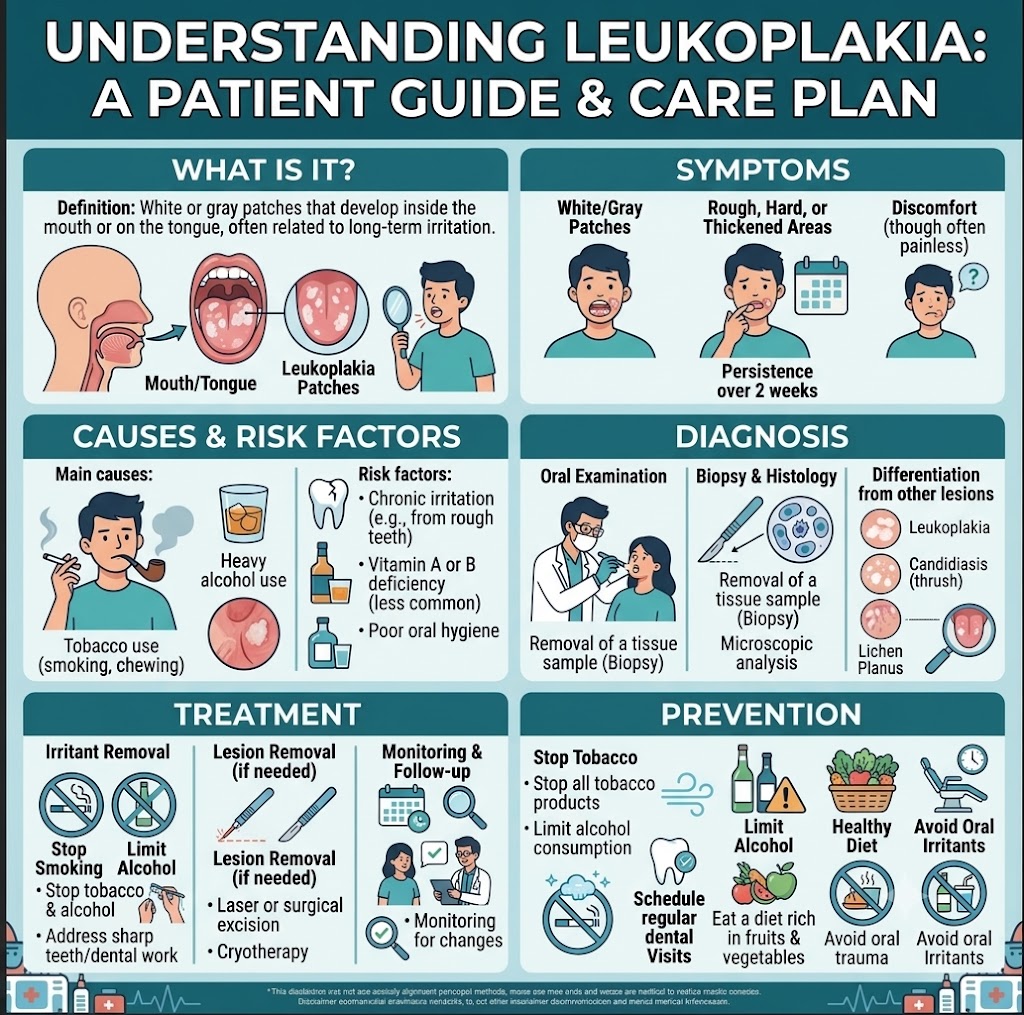
Leukoplakia (loo-koh-PLAY-key-uh) causes thick, white or grayish patches in the mouth, typically on the gums, cheeks, bottom of the mouth, or tongue. These patches cannot be scraped off. While the exact cause isn't fully understood, common links include chronic irritation from tobacco (smoked, dipped, or chewed) and heavy, long-term alcohol use. Most patches are harmless, but some can be pre-cancerous or develop into mouth cancer, especially those with both white and red areas (speckled leukoplakia). Hairy leukoplakia, a specific type, affects people with weakened immune systems like those with HIV/AIDS and is generally not cancerous. Any persistent unusual changes in your mouth warrant a doctor's visit.
Understanding the Condition
Leukoplakia: Understanding White Patches in Your Mouth
Understanding the Condition
Common Symptoms
White or Gray Patches: Thick, non-removable white or gray areas in the mouth.
Varied Texture & Shape: Patches may be rough, ridged, wrinkled, smooth, or thick, with irregular shapes and edges.
Common Locations: Found on gums, inner cheeks, mouth floor, and sometimes the tongue.
Usually Painless: Often unnoticed initially due to lack of discomfort.
Speckled Leukoplakia: White patches mixed with raised red areas, indicating a higher potential for cancerous changes.
Hairy Leukoplakia: Fuzzy, white patches resembling folds or ridges, typically on the sides of the tongue. Common in individuals with weak immune systems and distinct from oral thrush (which can be wiped away).
Consultation Guide
Which Specialist to Meet
Document your symptoms (onset, changes), medical history (conditions, medications), and habits (tobacco, alcohol use). Prepare any questions for your doctor.
Book a doctor visit near me
Consultation Guide
Leukoplakia (loo-koh-PLAY-key-uh) causes thick, white or grayish patches in the mouth, typically on the gums, cheeks, bottom of the mouth, or tongue. These patches cannot be scraped off. While the exact cause isn't fully understood, common links include chronic irritation from tobacco (smoked, dipped, or chewed) and heavy, long-term alcohol use. Most patches are harmless, but some can be pre-cancerous or develop into mouth cancer, especially those with both white and red areas (speckled leukoplakia). Hairy leukoplakia, a specific type, affects people with weakened immune systems like those with HIV/AIDS and is generally not cancerous. Any persistent unusual changes in your mouth warrant a doctor's visit.
Tobacco Cessation: Quitting all tobacco (smoking, chewing, dipping) is vital. It often causes patches to shrink or disappear and is crucial for overall mouth health. (Duration: Ongoing commitment.)
Alcohol Reduction: Reducing or stopping heavy alcohol consumption helps resolve leukoplakia and lowers mouth cancer risk. (Duration: Ongoing commitment.)
Regular Follow-Up: Essential check-ups post-treatment, as new patches can form and mouth cancer risk remains, especially if risk factors persist. (Duration: Ongoing (e.g., every 3-6 months initially, then annually).)
Moderate Alcohol Use: Limit alcohol consumption. Heavy drinking is a risk factor, especially combined with tobacco.
Good Oral Hygiene: Brush, floss daily, and attend regular dental cleanings. Address irritations like jagged teeth or ill-fitting dentures.
Routine Dental Check-ups: Visit your dentist regularly. They are key to early detection of oral changes.
Self-Mouth Examination: Periodically check your mouth for new patches, red areas, lumps, or non-healing sores. Report persistent changes promptly.
Diagnostic Procedures
A thorough visual and physical inspection of your mouth and throat. The doctor or dentist will use a light to examine gums, cheeks, tongue, mouth floor, and palate for unusual patches, sores, or abnormalities.
What to Expect
You'll open your mouth for the examination. The doctor will gently feel patches and surrounding tissues for firmness. This quick, painless procedure typically takes a few minutes.
Biopsy (Tissue Sample)
If a suspicious patch is found, a small piece of tissue is removed for microscopic analysis by a pathologist. This definitively determines if cells are pre-cancerous or cancerous.
What to Expect
The area will be numbed with local anesthetic. A small section of the patch is then carefully removed using a scalpel or specialized instrument. For small patches, the entire area may be removed (excisional biopsy). You may feel pressure but no pain. Stitches, either dissolvable or requiring removal, may close the site. Mild discomfort, soreness, or swelling is common for a few days, manageable with over-the-counter pain relief.
Adhere to Follow-Up: Strictly follow your provider's schedule for post-diagnosis visits and screenings to monitor for recurrence or progression.
Treatment Options
Begin with your dentist or primary care doctor. They may refer you to an oral surgeon, ENT specialist, or oral medicine expert for further assessment and treatment.
Preparations Before Your Visit
Medications
Antiviral Treatment: For hairy leukoplakia, antiviral medications can reduce patch size and appearance, especially in those with weakened immune systems. (Duration: Varies, often long-term or as needed.)
Surgical Procedures
Surgical Excision: For pre-cancerous cells or small, accessible patches, the doctor surgically removes the entire patch with a scalpel to ensure all abnormal tissue is gone. (Duration: Single procedure; healing several weeks.)
Manage Underlying Health (Hairy Leukoplakia): For hairy leukoplakia, managing the underlying immune condition (e.g., HIV/AIDS treatment) is crucial to keep the causative virus inactive and reduce patch recurrence.
Prevention & Long-Term Wellbeing
Lifestyle Changes
Laser Removal: Lasers precisely vaporize or cut away patches, potentially minimizing bleeding and aiding quicker recovery. (Duration: Single procedure; healing several weeks.)
Cryotherapy: Freezing abnormal cells with substances like liquid nitrogen to destroy them, an option for certain leukoplakia types. (Duration: One or few sessions; healing several weeks.)
Prevention
Avoid Tobacco: Eliminate all tobacco use (cigarettes, chew, snuff) to prevent leukoplakia and drastically lower mouth cancer risk.
Tags & Topics
Notice an error or need an update?
Help us keep medical information accurate. Report incorrect info or suggest an edit.


