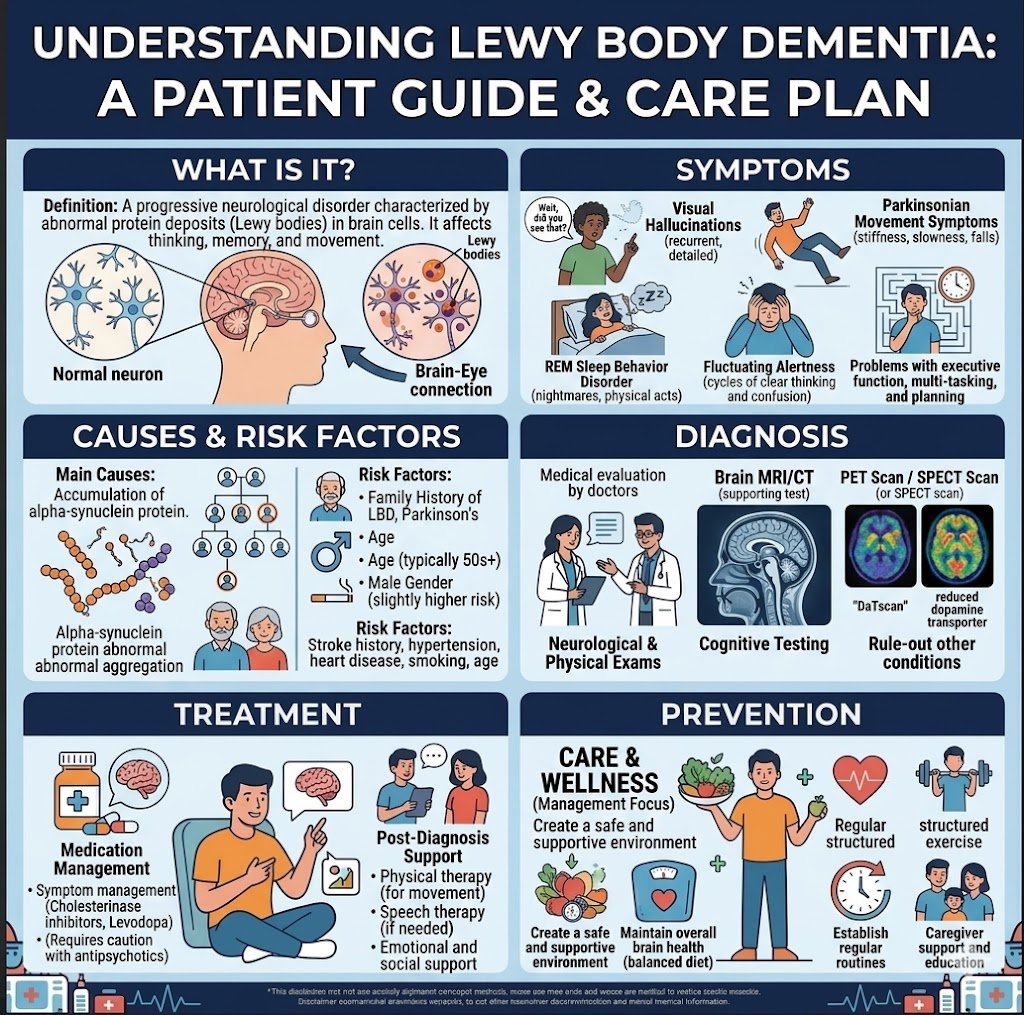
Lewy body dementia (LBD) is a brain disorder that affects thinking, memory, and movement. It is the second most common type of progressive dementia after Alzheimer's disease. LBD is caused by abnormal protein deposits called Lewy bodies that build up in nerve cells in specific areas of the brain. These deposits interfere with brain function, leading to a gradual decline in mental abilities and various physical and behavioral symptoms. There are two main forms of LBD that cause similar cognitive issues: dementia with Lewy bodies (DLB) and Parkinson's disease dementia (PDD). People with LBD often experience a combination of cognitive changes, visual hallucinations (seeing things that aren't real), fluctuations in alertness, and movement problems similar to Parkinson's disease, such as stiffness, slow movement, and tremors.
Understanding the Condition
Lewy Body Dementia: A Comprehensive Guide
Understanding the Condition
Lewy body dementia (LBD) is a brain disorder that affects thinking, memory, and movement. It is the second most common type of progressive dementia after Alzheimer's disease. LBD is caused by abnormal protein deposits called Lewy bodies that build up in nerve cells in specific areas of the brain. These deposits interfere with brain function, leading to a gradual decline in mental abilities and various physical and behavioral symptoms. There are two main forms of LBD that cause similar cognitive issues: dementia with Lewy bodies (DLB) and Parkinson's disease dementia (PDD). People with LBD often experience a combination of cognitive changes, visual hallucinations (seeing things that aren't real), fluctuations in alertness, and movement problems similar to Parkinson's disease, such as stiffness, slow movement, and tremors.
Common Symptoms
Visual Hallucinations: Often one of the earliest signs, these involve seeing things that aren't actually there, such as shapes, animals, or people. These can occur frequently and feel very real. Less commonly, people might experience hallucinations involving sounds, smells, or touch.
Movement Difficulties: Similar to Parkinson's disease, these can include slowed movement, rigid or stiff muscles, tremors (shaking), and a shuffling walk. These symptoms can increase the risk of falls.
Problems with Body Functions: The part of the nervous system that automatically controls functions like blood pressure, heart rate, sweating, and digestion can be affected. This might lead to sudden drops in blood pressure when standing (causing dizziness and falls), bladder control issues, and constipation.
Changes in Thinking (Cognitive Problems): People may experience confusion, difficulty paying attention, problems with visual-spatial tasks (like judging distances or navigating), and memory loss. These changes can sometimes resemble symptoms of Alzheimer's disease.
Sleep Disturbances: A common symptom is REM sleep behavior disorder, where individuals physically act out their dreams, sometimes by punching, kicking, yelling, or screaming while asleep.
Fluctuating Attention and Alertness: Episodes of sudden drowsiness, long periods of staring blankly, frequent or lengthy daytime naps, or speech that becomes disorganized are possible.
Mood Changes: Depression (persistent sadness) or apathy (lack of motivation and interest) are common in people with LBD.
Consultation Guide
Which Specialist to Meet
Before your visit, make a detailed list of all symptoms, including when they started and how they've progressed. Note down your full medical history, any medications you are currently taking, and prepare a list of questions for the doctor. Bringing a family member or close friend can be helpful to provide additional observations and support.
Book a doctor visit near me
A brain CT scan uses X-rays and a computer to create detailed cross-sectional images of the brain, bone, blood vessels, and soft tissues in the head. It provides more detailed views than standard X-rays and is particularly useful for quickly identifying issues like bleeding, swelling, or tumors. It helps rule out other conditions that might cause similar symptoms.
To Improve Thinking and Memory: Certain medications, typically used for Alzheimer's disease, can help improve cognitive symptoms for a limited time. (Duration: Ongoing, as prescribed by a doctor.)
For Movement Symptoms: Medications commonly used for Parkinson's disease can help reduce stiffness, tremors, and slow movement. (Duration: Ongoing, adjusted as needed.)
Regular Exercise: Engage in light physical activity, such as walking, stretching, or tai chi, to help maintain strength, balance, and flexibility, which can lessen movement symptoms.
Mental Engagement: Participate in mentally stimulating activities like puzzles, reading, listening to music, or social interactions to help maintain cognitive function for as long as possible.
Nutrition and Hydration
Managing Behavioral Symptoms
Simplifying Communication: Use clear, simple language and give one instruction at a time.
Calm and Reassuring Approach: Respond to agitation, confusion, or hallucinations with a calm, understanding, and reassuring manner. Avoid confrontation.
Addressing Sleep Disturbances: Create a consistent bedtime routine, ensure a comfortable sleep environment, and limit daytime naps to improve nighttime sleep.
Educating Caregivers: Provide caregivers with resources and training to understand LBD and its unique challenges, enabling them to provide better care and support.
Respite Care: Encourage caregivers to utilize respite services to prevent burnout and maintain their own well-being.
Long-Term Monitoring and Planning
Regular Medical Check-ups: Consistent follow-up with healthcare professionals is essential to monitor symptom progression, adjust treatments, and address new concerns.
Advance Care Planning: Discuss and document wishes regarding future medical care, living arrangements, and financial decisions while the individual can still participate in these choices.
Diagnostic Procedures
To diagnose Lewy body dementia, you should consult specialists such as a neurologist (brain and nerve specialist), a geriatrician (specialist in older adult care), or a movement disorder specialist.
Preparations Before Your Visit
Brain CT Scan (Computerized Tomography Scan)
What to Expect
You will lie on a movable table that slides into a large, donut-shaped scanner. You’ll need to lie very still. The scanner rotates around your head, taking images from different angles. You might hear humming or clicking sounds. In some cases, a special dye (contrast material) is injected into a vein to highlight specific structures; if so, you might feel a brief warm flush. The scan is usually quick, lasting only a few minutes.
Brain MRI (Magnetic Resonance Imaging)
A brain MRI is a diagnostic test that uses a powerful magnet, radio waves, and a computer to produce very detailed images of the brain, neck, and spine. Unlike CT scans, an MRI does not use radiation. It creates many "slices" of the brain, allowing healthcare professionals to see subtle changes or abnormalities that might not be visible on other scans. It's excellent for diagnosing conditions like stroke, tumors, and multiple sclerosis.
What to Expect
You will lie on a movable table that slides into a long, narrow tube-shaped machine. The machine makes loud banging and humming noises during the scan, so you will likely be given earplugs or headphones. It's crucial to remain completely still during the procedure, which can take 30 to 60 minutes or longer. If contrast is needed, it will be given through an IV. Some people may feel uncomfortable in the enclosed space (claustrophobia), but open MRI machines are sometimes available.
EEG (Electroencephalogram)
An EEG is a test that measures the electrical activity of the brain. Brain cells communicate using electrical impulses, and an EEG records these patterns through small metal discs (electrodes) placed on the scalp. The activity appears as wavy lines on a recording. An EEG is primarily used to diagnose conditions like epilepsy and other seizure disorders, but it can also help assess other brain conditions and confirm brain death.
What to Expect
Small, flat metal discs (electrodes) are attached to your scalp with a special paste. These electrodes are connected by wires to a machine that records your brain's electrical signals. You will typically be asked to lie still with your eyes closed. You might be asked to open and close your eyes, breathe deeply, or look at a flashing light at different points during the test. The procedure is painless and usually takes about 20 to 40 minutes, though longer monitoring might be needed in some cases.
Treatment Options
Medications
To Manage Hallucinations and Behavioral Issues: Low doses of specific medications may be used to reduce severe visual hallucinations, delusions, or agitation. Careful monitoring is essential due to potential side effects. (Duration: Short-term or ongoing, carefully monitored due to potential side effects.)
For Sleep Problems: Medications can help manage REM sleep behavior disorder or other sleep disturbances. (Duration: As needed or ongoing, under medical guidance.)
For Mood Disorders: Antidepressants can be prescribed to treat depression or anxiety. (Duration: Ongoing, as determined by a doctor.)
Therapies
Physical Therapy: Helps improve movement, balance, and flexibility, reducing the risk of falls. (Duration: Regular sessions, ongoing as needed.)
Occupational Therapy: Assists with adapting daily tasks and maintaining independence, such as dressing, eating, or bathing. (Duration: As needed to adapt to changing abilities.)
Speech Therapy: Can help with communication difficulties, swallowing problems, and maintaining vocal strength. (Duration: As needed, especially for speech or swallowing issues.)
Counseling and Support
Psychological Support: Counseling can help individuals cope with the emotional impact of LBD, and manage depression or apathy. (Duration: As needed, individually or in group settings.)
Support Groups: Provide a safe space for individuals with LBD and their caregivers to share experiences and receive emotional support. (Duration: Ongoing, as desired.)
Prevention & Long-Term Wellbeing
Creating a Safe and Supportive Environment
Home Safety Modifications: Remove tripping hazards, ensure good lighting, install grab bars in bathrooms, and use non-slip mats. This reduces the risk of falls associated with movement problems and visual hallucinations.
Establishing Routines: Maintain consistent daily schedules for meals, sleep, and activities to help reduce confusion and anxiety.
Promoting Physical and Mental Activity
Balanced Diet: Ensure a healthy, balanced diet to support overall health and energy levels.
Adequate Hydration: Drink plenty of fluids to prevent dehydration, which can worsen confusion and lead to other health issues.
Tags & Topics
Notice an error or need an update?
Help us keep medical information accurate. Report incorrect info or suggest an edit.


