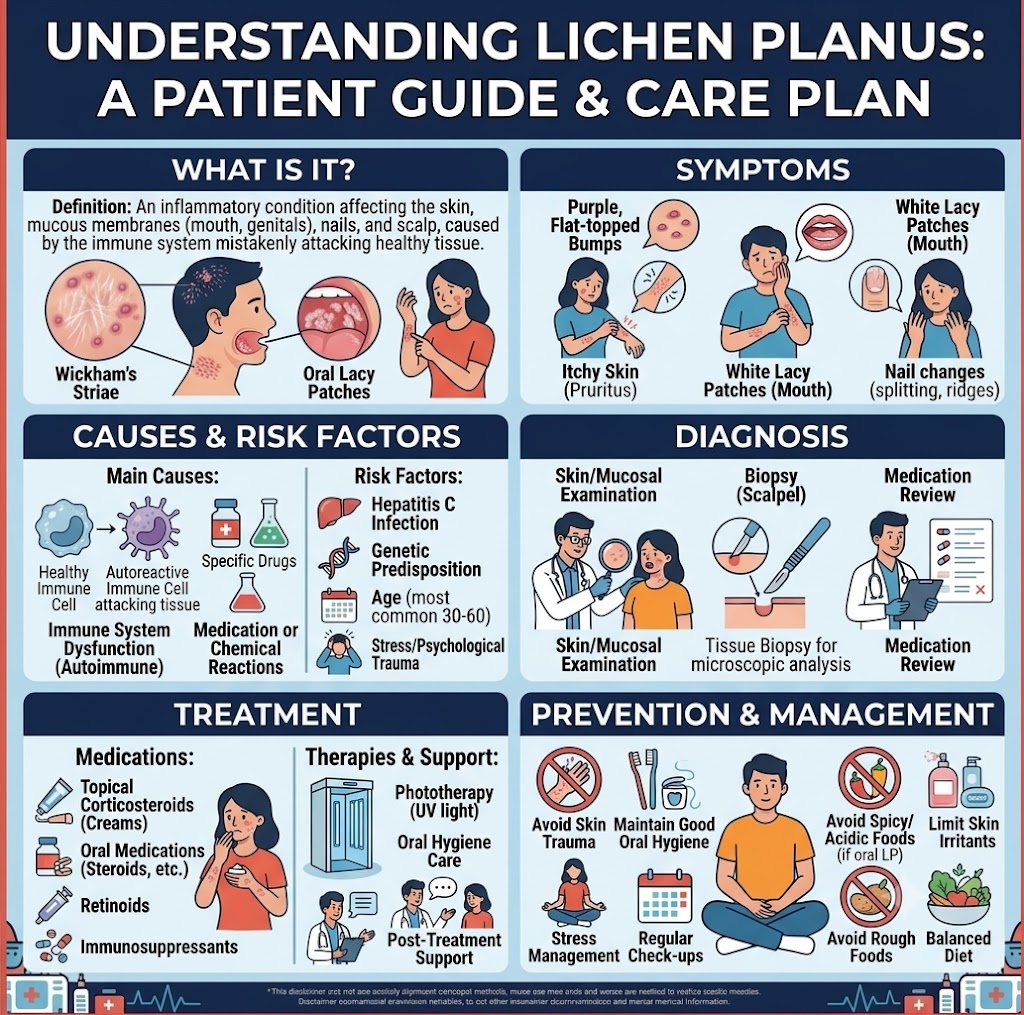
Lichen planus (pronounced LIE-kun PLAY-nus) is a non-contagious skin condition that can also affect the hair, nails, mouth, and genitals. It often appears as purple, itchy, flat bumps on the skin, or as lacy white patches and sometimes painful sores in the mouth and genital areas. While mild cases might not need treatment, painful or very itchy symptoms may require prescription medicine to manage.
Understanding the Condition
Lichen Planus: Understanding a Skin, Hair, and Nail Condition
Understanding the Condition
Lichen planus (pronounced LIE-kun PLAY-nus) is a non-contagious skin condition that can also affect the hair, nails, mouth, and genitals. It often appears as purple, itchy, flat bumps on the skin, or as lacy white patches and sometimes painful sores in the mouth and genital areas. While mild cases might not need treatment, painful or very itchy symptoms may require prescription medicine to manage.
Common Symptoms
Skin Rash: Purple, shiny, flat, itchy bumps, typically on inner forearms, wrists, or ankles. Rash lines can appear where skin is scratched.
Mouth and Genital Patches: Lacy white patches; can develop into painful sores in the mouth or genital areas.
Hair Changes: Rarely, hair loss (potentially permanent with scalp scarring).
Nail Changes: Changes in multiple nails, including scarring, loss, or dark lines from tip to base.
Consultation Guide
Which Specialist to Meet
A dermatologist handles skin, hair, and nail issues. An oral medicine specialist or dentist for mouth symptoms. A gynecologist (for women) or a urologist (for men) for genital symptoms.
Preparations Before Your Visit
Before your visit, list all symptoms (when they started, how often they occur), all medications (prescription, over-the-counter, supplements), your medical history, any known allergies, and potential triggers. Prepare any questions you have for your doctor.
Book a doctor visit near me
Soothing Compresses: Cool compresses or baths with colloidal oatmeal can help relieve itching. (Duration: As needed for symptom relief.)
Oral Hygiene: For mouth lesions, maintaining excellent oral hygiene, avoiding irritating foods (spicy, acidic), and using gentle mouthwashes can help manage discomfort. (Duration: Ongoing.)
Pain Relievers: Over-the-counter pain relievers can help with painful sores. (Duration: As needed.)
Identify and Avoid Triggers: Pay attention to anything that seems to worsen your symptoms, such as certain medications, stress, or specific foods (for oral lichen planus). If a dental filling allergy is suspected, discuss alternatives with your dentist.
Gentle Skin Care: Avoid harsh soaps, hot water, and excessive scrubbing that can irritate the skin. Use gentle, fragrance-free moisturizers to keep skin hydrated and reduce dryness and itching.
Protect Affected Areas: Try to avoid scratching, as this can worsen skin lesions and potentially lead to new ones. Keep nails trimmed.
Oral Hygiene: For oral lichen planus, practice meticulous oral hygiene, including regular brushing with a soft toothbrush and flossing. Avoid alcohol-based mouthwashes and irritating foods like spicy, acidic, or crunchy items.
Long-Term Monitoring and Support
Regular Medical Check-ups: Consistent follow-up with your specialist is crucial, especially for oral lichen planus, which carries a small but increased risk of oral cancer. Regular screenings can help detect any changes early.
Manage Pain and Discomfort: Work with your doctor to find effective ways to manage pain from sores, especially in the mouth or genital areas, to improve quality of life and ability to eat or engage in daily activities.
Emotional Support: Living with a chronic, visible, and sometimes painful condition can be challenging. Seek support from family, friends, or support groups, or consider counseling if needed.
Diagnostic Procedures
A small sample of affected skin is removed to be examined under a microscope, which is the primary test for diagnosing lichen planus.
What to Expect
The area to be biopsied will be numbed with a local anesthetic. A small piece of skin is then removed:- **Shave Biopsy:** The surface layer is gently scraped with a blade. This usually doesn't require stitches, and a small bandage is applied.- **Punch Biopsy:** A special round cutting tool removes a deeper, cylindrical piece of skin. Depending on the size, a stitch or two might be needed to close the wound, followed by a bandage.- **Excisional Biopsy:** A scalpel is used to cut out a lump or a larger area of irregular skin, along with a small margin of healthy tissue. Stitches are typically required to close the wound.The sample is sent to a lab for analysis, with results usually available in several days to a few weeks.
These tests are performed if your doctor suspects an allergic reaction, such as to metal in dental fillings or certain medications, is triggering your lichen planus.
What to Expect
Small amounts of various suspected allergy-causing substances (allergens) are applied to your skin, typically on your forearm or back. The skin may be lightly pricked to allow the allergen to enter. The area is then observed for signs of an allergic reaction, such as a raised, red bump, usually within 15-20 minutes. If skin tests are not suitable (e.g., due to severe skin conditions), blood tests to check for specific allergy antibodies might be used instead. This helps identify if an external factor is contributing to your condition.
Treatment Options
Medications
Topical Anti-Inflammatory Creams: Creams or ointments containing corticosteroids are often the first treatment for skin lesions, helping to reduce itching and inflammation. (Duration: Typically applied once or twice daily for several weeks, or as directed by your doctor.)
Oral Medications: For more widespread or severe cases, or when topical treatments aren't enough, oral corticosteroids or other medications that suppress the immune system may be prescribed. (Duration: Oral corticosteroids are usually prescribed for short courses (e.g., 2-4 weeks) for flare-ups, while other immune-modulating drugs may be taken for longer periods under medical supervision.)
Therapies
Light Therapy (Phototherapy): This involves exposing the skin to specific types of ultraviolet light, which can help calm the immune system and clear skin lesions. (Duration: Typically administered several times a week for multiple weeks or months, depending on response.)
Photodynamic Therapy: A medication is applied to the affected skin and then activated by a special light source. This treatment primarily targets and destroys abnormal cells. (Duration: Usually involves one or more sessions, spaced weeks apart, with each session lasting several hours, including drug application and light exposure.)
Home Remedies and Supportive Care
Trigger Avoidance: Identifying and avoiding potential triggers, such as certain medications or allergens (e.g., in dental fillings), can prevent flare-ups. (Duration: Ongoing.)
Sun Protection: Some treatments or the condition itself can make your skin more sensitive to the sun. Use sunscreen and protective clothing when outdoors.
Address Complications: Be aware of potential complications like scarring, permanent hair loss, or hearing loss if the ear canal is affected. Prompt treatment and monitoring can help mitigate these.
Prevention & Long-Term Wellbeing
Prevention and Self-Care
Tags & Topics
Notice an error or need an update?
Help us keep medical information accurate. Report incorrect info or suggest an edit.


