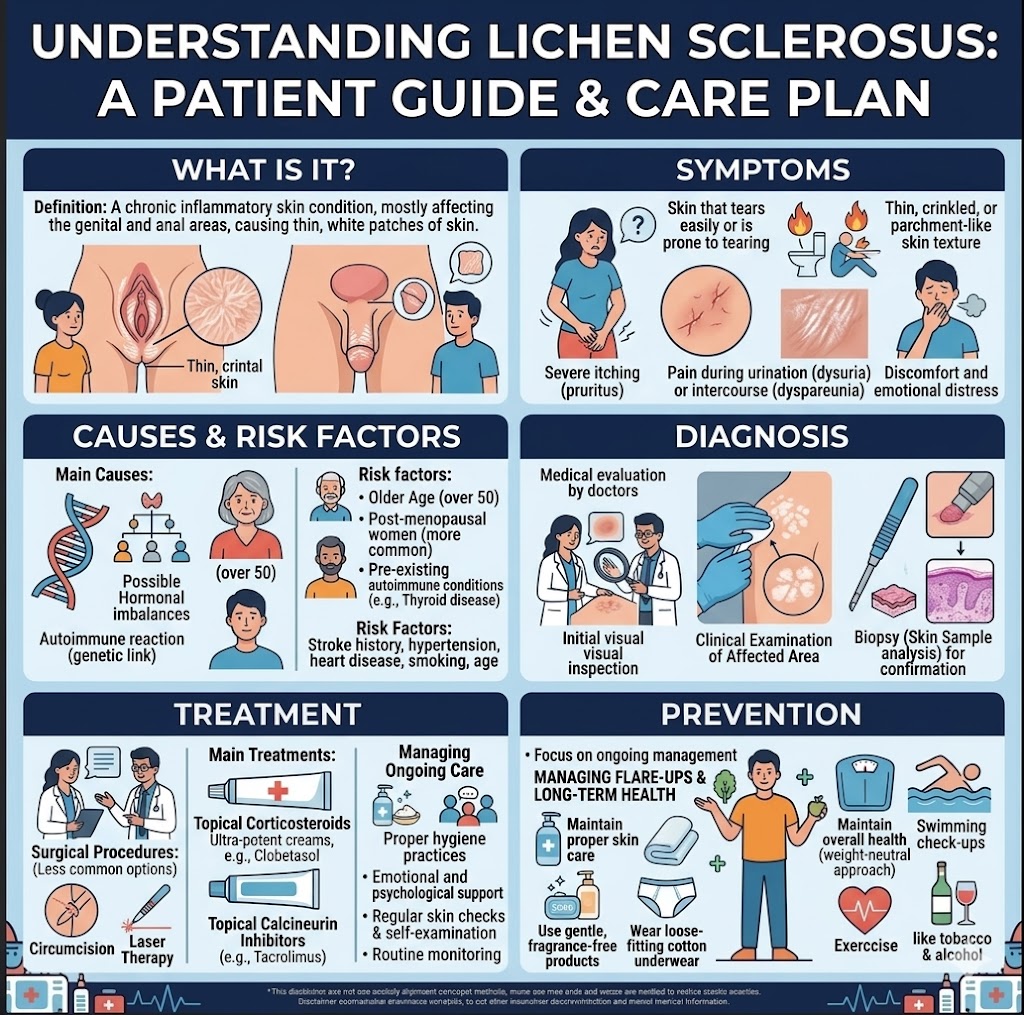
Lichen sclerosus (pronounced LIE-kun skluh-ROW-sus) is a chronic skin condition that causes thin, patchy, and often discolored skin, most commonly affecting the genital and anal areas. It is not contagious and cannot be spread through sexual contact. While anyone can develop it, postmenopausal women are at a higher risk. Treatment typically involves a medicated ointment to alleviate symptoms and reduce the risk of scarring. However, symptoms can often return, making long-term monitoring and care essential.
Understanding the Condition
Lichen Sclerosus: Understanding a Skin Condition
Understanding the Condition
Lichen sclerosus (pronounced LIE-kun skluh-ROW-sus) is a chronic skin condition that causes thin, patchy, and often discolored skin, most commonly affecting the genital and anal areas. It is not contagious and cannot be spread through sexual contact. While anyone can develop it, postmenopausal women are at a higher risk. Treatment typically involves a medicated ointment to alleviate symptoms and reduce the risk of scarring. However, symptoms can often return, making long-term monitoring and care essential.
Common Symptoms
Smooth Discolored Skin Patches: Areas of skin may appear white, pale, or blotchy, often becoming smooth and shiny.
Blotchy, Wrinkled Skin Patches: Affected skin can look crinkled, like tissue paper, or become thickened and tough.
Soreness or a Burning Feeling: Discomfort, itching, or a burning sensation in the affected areas, which can be severe.
Easy Bruising and Fragile Skin: The skin becomes very thin and delicate, making it prone to easy bruising, tearing, or injury.
Before your visit, make a list of all your symptoms, including when they started and how often they occur. Note any over-the-counter remedies you've tried and their effectiveness. Prepare a list of all your medications, allergies, and your complete medical history. Also, write down any questions you have for the doctor.
Book a doctor visit near me
Topical Corticosteroid Ointments: These are the primary treatment for lichen sclerosus. High-potency corticosteroid ointments help reduce inflammation, itching, and improve skin texture. They aim to restore skin to a healthier state and prevent further damage. (Duration: Typically, an intensive initial course of several weeks is followed by a maintenance regimen (e.g., once or twice a week) for months or years, as symptoms tend to recur.)
Other Topical Medications: If corticosteroids are not effective or tolerated, other non-steroid creams may be prescribed to manage symptoms like itching and inflammation. (Duration: Used as directed, often for long-term symptom management.)
Regular Follow-Up Appointments: Lichen sclerosus requires ongoing management due to its chronic nature and the risk of symptom recurrence and complications. Regular check-ups with your doctor are crucial to monitor the condition, adjust treatment, and screen for potential issues.
Self-Monitoring for Changes: Be vigilant in observing your skin for any new symptoms, worsening areas, or unusual changes. Promptly report any concerns to your doctor. This is particularly important for detecting early signs of skin cancer.
Adherence to Treatment Plan: Consistently using prescribed medicated ointments, even when symptoms are mild or absent, is vital to prevent flare-ups, reduce inflammation, and minimize the risk of scarring and other complications.
Consultation Guide
Changes in Urine Flow (Urethra): Scarring around the opening where urine exits the body (urethra) can cause difficulty or changes in urination.
Bleeding, Blistering, or Open Sores: Due to skin fragility, small blisters, bleeding, or open wounds may develop.
Painful Sex: The skin changes and fragility, especially in genital areas, can make sexual intercourse painful.
Consultation Guide
Which Specialist to Meet
Managing Scarring and Functional Issues: Untreated or poorly managed lichen sclerosus can lead to severe scarring. In women, this can involve covering of the clitoris. In men, scarring of the penis can cause painful erections, poor urine flow, or inability to retract the foreskin. Consistent treatment helps mitigate these risks. Physical therapy may be recommended for sexual dysfunction or pain.
Screening for Skin Cancer: People with lichen sclerosus, especially those affecting the vulva, have an increased risk of developing a type of skin cancer called squamous cell carcinoma. Regular skin exams by a healthcare provider are essential for early detection.
Diagnostic Procedures
You should first consult your primary care doctor for an initial assessment. Depending on the affected area, they may refer you to a dermatologist (skin specialist), a gynecologist (specialist in women's reproductive health), or a urologist (specialist in urinary and male reproductive health) for further diagnosis and management.
Preparations Before Your Visit
A skin biopsy is the most definitive way to diagnose lichen sclerosus. It involves taking a very small tissue sample from the affected skin area for examination under a microscope by a pathologist.
What to Expect
During the procedure, your doctor will numb the area with a local anesthetic injection, similar to what you might receive at the dentist. Once the area is numb, a small circular piece of skin (usually 2-4 millimeters in size) will be removed. This is often done using a punch tool. You might feel a brief pressure but no pain. The site may then be closed with a stitch or two, or covered with a sterile dressing. The tissue sample is sent to a lab for analysis. You may experience mild soreness or bruising at the biopsy site for a few days, and it's important to keep the area clean and follow any wound care instructions.
Treatment Options
Medications
Circumcision (for men): In men with lichen sclerosus affecting the foreskin, circumcision (surgical removal of the foreskin) can be an effective treatment, especially if the foreskin becomes too tight to retract or if there's extensive scarring. (Duration: A one-time procedure with a recovery period of a few weeks.)
Addressing Constipation in Children: In children with lichen sclerosus, constipation can be a common complication, often due to pain during bowel movements. Managing constipation through diet and medication, as advised by a doctor, is important for their comfort and health.
Prevention & Long-Term Wellbeing
Home Remedies and Lifestyle
Gentle Hygiene and Moisturizing: Using mild, unscented soaps or cleansers, avoiding harsh scrubbing, and regularly applying plain petroleum jelly or a thick moisturizer to affected areas can help protect fragile skin and reduce irritation. (Duration: Ongoing as part of daily care.)
Avoiding Irritants: Steering clear of perfumed products, tight clothing, or prolonged moisture in affected areas can help prevent flare-ups and discomfort. (Duration: Ongoing.)
Long-Term Monitoring and Prevention of Complications
Tags & Topics
Notice an error or need an update?
Help us keep medical information accurate. Report incorrect info or suggest an edit.


