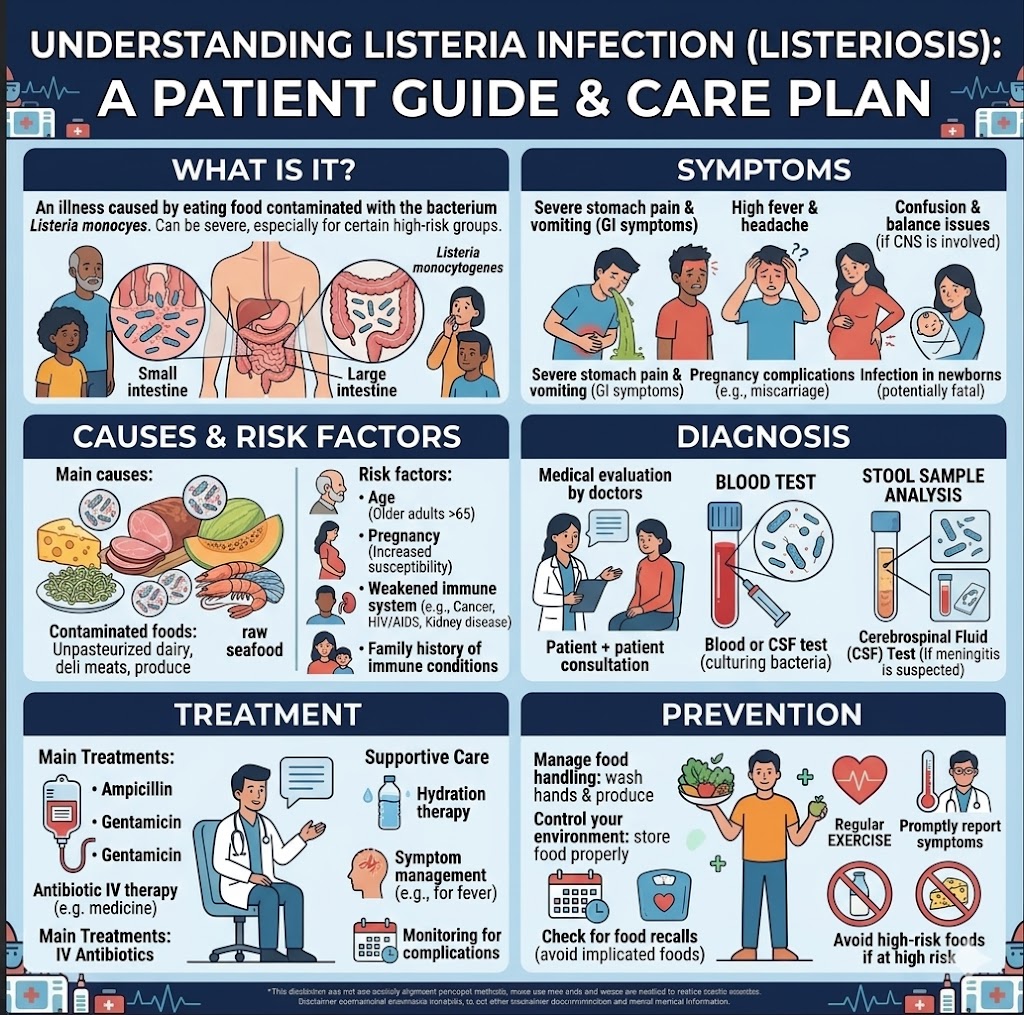
Listeria infection, also known as listeriosis, is a serious illness caused by bacteria called *Listeria monocytogenes* that can contaminate various foods. While healthy individuals may experience mild or no symptoms, it poses a significant risk to pregnant women, unborn babies, newborns, people over 65, and those with weakened immune systems. This bacteria can survive and even grow in cold temperatures, including refrigeration. Prompt treatment with antibiotics is critical to manage the infection and prevent severe complications.
Understanding the Condition
Listeria Infection (Listeriosis)
Understanding the Condition
Listeria infection, also known as listeriosis, is a serious illness caused by bacteria called *Listeria monocytogenes* that can contaminate various foods. While healthy individuals may experience mild or no symptoms, it poses a significant risk to pregnant women, unborn babies, newborns, people over 65, and those with weakened immune systems. This bacteria can survive and even grow in cold temperatures, including refrigeration. Prompt treatment with antibiotics is critical to manage the infection and prevent severe complications.
Common Symptoms
Mild Gut Symptoms: Similar to food poisoning, these include fever, muscle aches, nausea, vomiting, and diarrhea. These symptoms typically begin within a day of eating contaminated food and usually subside within a few days.
Severe Symptoms (Spread to Brain or Spinal Cord): If the infection spreads to the nervous system, symptoms can become more serious, including headache, stiff neck, confusion, loss of balance, and seizures. These severe symptoms can appear within two weeks but may take up to two months after exposure.
During Pregnancy: Pregnant individuals may experience only mild, flu-like symptoms. However, the infection can be devastating for the developing baby, potentially leading to miscarriage, stillbirth, premature birth, or a life-threatening infection in the newborn.
In Newborns: Symptoms in a newborn can be subtle and may include irritability, poor feeding, fever, and a general lack of energy.
Consultation Guide
Which Specialist to Meet
If you suspect a Listeria infection, especially if you are in a high-risk group or have severe symptoms, you should consult your primary care doctor. They may refer you to an infectious disease specialist. Pregnant individuals should contact their obstetrician immediately, and newborns with suspected infection should be seen by a neonatologist or pediatric specialist.
Preparations Before Your Visit
Before your visit, make a detailed list of all your symptoms, including when they started. Be prepared to share information about any foods you've recently eaten, especially if they were recalled or are known to be high-risk (e.g., unpasteurized dairy, soft cheeses, deli meats, poorly heated hot dogs). Also, inform your doctor about any existing medical conditions, your complete medication list, and any questions you have.
Book a doctor visit near me
Hospitalization: Patients with severe infections, particularly those involving the brain or spinal cord, pregnant individuals, and newborns, often require hospitalization for close monitoring, intravenous (IV) antibiotic administration, and supportive medical care. (Duration: Varies based on the individual's response to treatment and resolution of symptoms, often several days to weeks.)
Hydration and Symptom Management: For individuals experiencing gut-related symptoms like vomiting and diarrhea, maintaining adequate hydration is crucial. This may involve drinking fluids or receiving IV fluids in more severe cases. Other treatments may be used to manage specific symptoms as they arise. (Duration: As needed until symptoms subside, usually a few days.)
Diagnostic Procedures
Complete Blood Count (CBC)
A routine blood test that measures the levels of different types of blood cells, including red blood cells, white blood cells, and platelets. It helps evaluate overall health and can indicate the presence of an infection by showing unusual increases or decreases in cell counts.
What to Expect
A healthcare professional will draw a small sample of blood, typically from a vein in your arm. You might feel a brief pinch or sting as the needle is inserted. The blood collection itself usually takes only a few minutes.
Lumbar Puncture (Spinal Tap)
This procedure involves collecting a small sample of cerebrospinal fluid (CSF), which is the fluid that surrounds and protects your brain and spinal cord. The CSF is then analyzed in a laboratory for signs of infection, such as the presence of bacteria or an elevated white blood cell count. This test is crucial when Listeria is suspected to have spread to the nervous system.
What to Expect
You will typically lie on your side with your knees drawn up to your chest, or sit and lean forward. The doctor will clean your lower back and inject a local anesthetic to numb the area. Once numb, a thin needle is carefully inserted between two bones (vertebrae) in your lower back to collect the CSF sample. You may feel some pressure or a brief sharp sensation. The procedure usually takes about 30-45 minutes. Afterwards, you might be advised to lie flat for a period to help prevent a headache.
Treatment Options
Medications
Antibiotics: Specific antibiotics are the primary treatment for Listeria infection. They work by killing the bacteria in the body. (Duration: Treatment typically lasts for several weeks, depending on the severity of the infection and the patient's immune status. For severe cases, especially those affecting the brain or in newborns, longer courses or combinations of antibiotics may be used.)
Follow-Up Care: After treatment, especially for severe infections or in newborns, regular follow-up appointments with a healthcare provider are important to monitor recovery and ensure there are no lasting complications from the infection.
Prevention & Long-Term Wellbeing
Prevention
Food Safety Practices: Cook raw meat, poultry, and seafood thoroughly to safe internal temperatures. Prevent cross-contamination by keeping raw meats separate from other foods. Wash fruits and vegetables thoroughly under running water. Regularly clean food preparation surfaces and utensils.
Avoid High-Risk Foods: Individuals at higher risk (pregnant women, older adults, those with weakened immune systems) should strictly avoid certain foods. These include unpasteurized milk and dairy products (e.g., soft cheeses like feta, brie, Camembert, blue-veined cheese), hot dogs and deli meats unless heated to steaming hot, refrigerated pâtés or meat spreads, and refrigerated smoked seafood unless cooked in a dish.
Handle Leftovers Safely: Refrigerate perishable foods promptly. Consume leftovers within a few days or discard them if unsure about their freshness.
Long-Term Monitoring
Ongoing Awareness: Continue practicing safe food handling and remain vigilant about food recalls. Individuals in high-risk groups should maintain dietary precautions indefinitely to prevent recurrence.
Tags & Topics
Notice an error or need an update?
Help us keep medical information accurate. Report incorrect info or suggest an edit.


