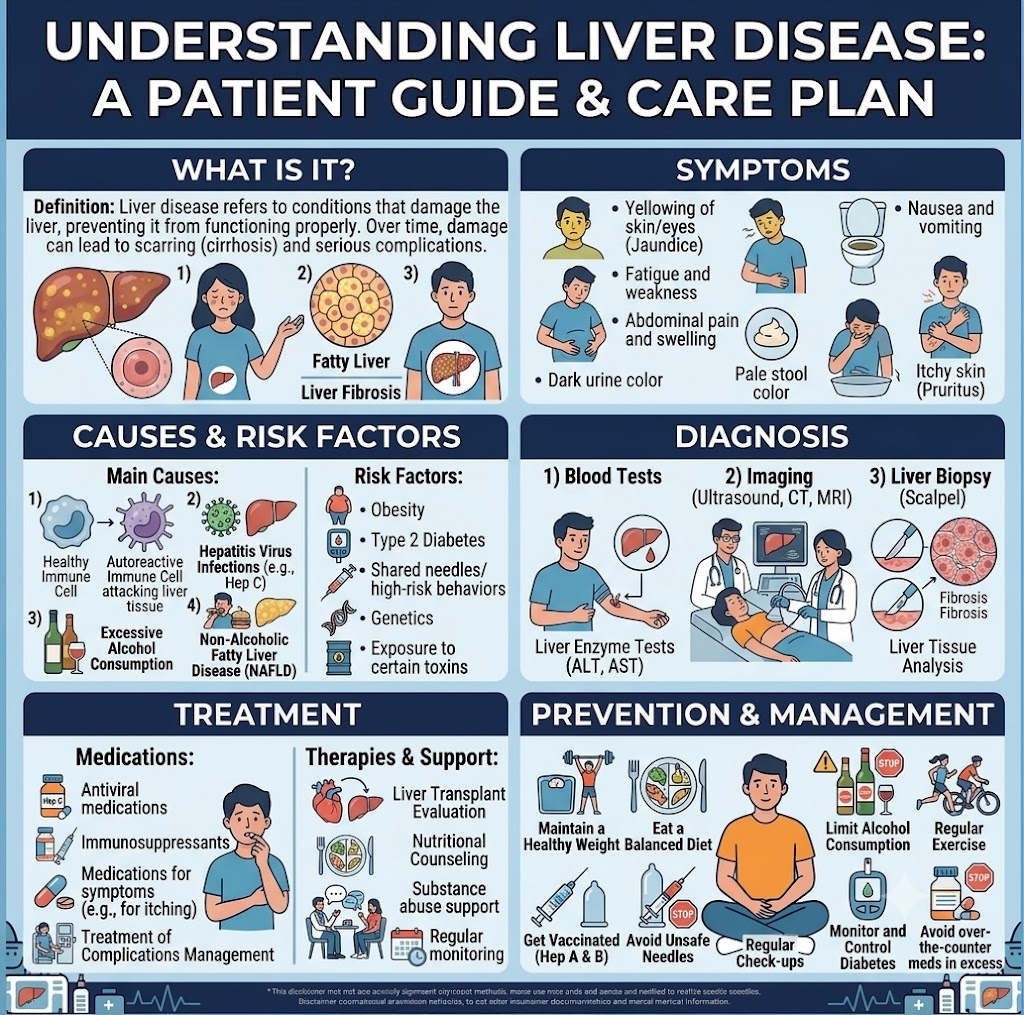
The liver is a vital organ, located just under the right rib cage in your abdomen, weighing about 4 pounds. It's essential for digesting food, removing waste from the body, and producing substances that help blood clot properly, among many other functions. Liver disease occurs when the liver is damaged, preventing it from working as it should. This damage can be inherited from family members or caused by factors like viruses, excessive alcohol use, and obesity. Over time, ongoing liver damage can lead to severe scarring called cirrhosis, which can then progress to life-threatening liver failure. However, early detection and treatment can give the liver a chance to heal. Sometimes, fluid-filled sacs called cysts can form in the liver, often without symptoms, but large ones can cause discomfort. Also, issues with bile, a digestive fluid made by the liver, can indicate serious underlying problems, often leading to pale or white stool.
Understanding the Condition
Understanding Liver Disease: Symptoms, Causes, and Care
Understanding the Condition
The liver is a vital organ, located just under the right rib cage in your abdomen, weighing about 4 pounds. It's essential for digesting food, removing waste from the body, and producing substances that help blood clot properly, among many other functions. Liver disease occurs when the liver is damaged, preventing it from working as it should. This damage can be inherited from family members or caused by factors like viruses, excessive alcohol use, and obesity. Over time, ongoing liver damage can lead to severe scarring called cirrhosis, which can then progress to life-threatening liver failure. However, early detection and treatment can give the liver a chance to heal. Sometimes, fluid-filled sacs called cysts can form in the liver, often without symptoms, but large ones can cause discomfort. Also, issues with bile, a digestive fluid made by the liver, can indicate serious underlying problems, often leading to pale or white stool.
Common Symptoms
Jaundice: Yellowing of the skin and the whites of the eyes. This yellowing might be harder to notice on Black or brown skin tones.
Belly Pain and Swelling: Discomfort or visible enlargement in the abdominal area.
Swelling in Legs and Ankles: Fluid buildup causing puffiness in the lower limbs.
Itchy Skin: Persistent itching across the body.
Dark Urine: Urine that appears darker than usual.
Pale or White Stool: Stool that is unusually light-colored or clay-like, indicating a problem with bile flow.
Constant Tiredness: Ongoing fatigue that doesn't improve with rest.
Nausea or Vomiting: Feeling sick to your stomach or actually throwing up.
Loss of Appetite: A reduced desire to eat.
Easy Bruising: Bruises appearing with little or no injury, indicating issues with blood clotting.
Consultation Guide
Which Specialist to Meet
If you experience any concerning symptoms, start by consulting your primary care doctor. They can assess your condition and, if needed, refer you to a specialist such as a hepatologist (a doctor specializing in liver diseases) or a gastroenterologist (a doctor specializing in the digestive system).
Preparations Before Your Visit
Before your visit, make a list of all your symptoms, including when they started and how often they occur. Gather your complete medical history, including any past illnesses, surgeries, and family history of liver disease. Bring a list of all medications, over-the-counter drugs, vitamins, and herbal supplements you are currently taking. Prepare a list of questions you want to ask your doctor. Be ready to discuss your lifestyle habits, including alcohol consumption, diet, and any recent travel.
Book a doctor visit near me
Symptom Management Medications: Medications to alleviate specific symptoms such as itching, swelling (diuretics), or nausea. (Duration: As needed for symptom relief)
Cyst Drainage or Removal: For large or symptomatic liver cysts, a procedure might be done to drain the fluid or surgically remove the cyst. (Duration: Single procedure, with recovery time)
Awareness of New Symptoms: Be vigilant for any new or worsening symptoms and report them to your healthcare provider promptly.
Consultation Guide
This blood test checks for proteins (antibodies) that your body makes to fight a Hepatitis C infection. The presence of these antibodies indicates past or current exposure to the Hepatitis C virus, which can cause significant liver damage.
Bile Duct Procedures: Procedures to clear blockages in the bile ducts caused by gallstones or tumors, restoring proper bile flow. (Duration: Single procedure, with recovery time)
Drink Alcohol in Moderation (or not at all): If you choose to drink alcohol, do so responsibly: up to one drink per day for women and up to two drinks per day for men. Avoiding alcohol entirely is best for liver health, especially if you have existing risk factors or liver conditions.
Practice Safe Habits: Use protection during sex. If you get tattoos or body piercings, choose reputable, sterile establishments. Never share needles, especially for injecting drugs.
Get Vaccinated: Discuss with your doctor if you are at risk for Hepatitis A or Hepatitis B, and get vaccinated to protect your liver from these viral infections.
Maintain a Healthy Weight: Obesity is a significant risk factor for non-alcoholic fatty liver disease (now often called metabolic-associated steatotic liver disease). Achieving and maintaining a healthy weight through diet and exercise is crucial for liver health.
Diagnostic Procedures
Liver Function Tests (LFTs)
These are a group of blood tests that measure levels of certain enzymes and proteins in your blood. They help assess how well your liver is working and if there's any damage. Common tests within an LFT panel include Alanine Aminotransferase (ALT), Aspartate Aminotransferase (AST), and Alkaline Phosphatase (ALP). Abnormal levels can signal liver problems.
What to Expect
A healthcare professional will draw a small sample of blood, usually from a vein in your arm, using a needle. You might feel a brief pinch or sting. The blood is then sent to a lab for analysis. No special preparation is typically needed, though your doctor might advise fasting for certain specific components of the test.
Hepatitis C Antibody Test
What to Expect
A small blood sample will be drawn from a vein in your arm, similar to a standard blood test. The procedure is quick, and you may feel a slight pinch. No special preparation is usually required.
An ultrasound uses high-frequency sound waves to create real-time images of your internal organs, including the liver. It can detect abnormalities like cysts, tumors, or changes in liver size and structure.
What to Expect
You will lie on an examination table. A clear gel will be applied to your abdomen over the liver area. A handheld device (transducer) will be gently pressed against your skin and moved around. You may feel slight pressure. The procedure is painless and usually takes about 15-30 minutes. You might be asked to fast for a few hours before the test or to drink water to have a full bladder, depending on the specific area being examined.
CT Scan (Computerized Tomography)
A CT scan uses specialized X-ray equipment to produce detailed cross-sectional images (slices) of your liver and surrounding structures. These images provide more detail than regular X-rays and can help identify various liver diseases, injuries, or tumors.
What to Expect
You will lie on a motorized table that slides into a large, donut-shaped machine. The table will move through the scanner as it takes images. You'll need to stay still during the scan, and you might hear humming or clicking noises. In some cases, a contrast dye might be given orally or through an intravenous (IV) line to enhance the images; you might feel a warm flush with the IV dye. The scan typically takes 10-30 minutes.
A liver biopsy involves taking a small tissue sample from your liver for examination under a microscope. This is the most definitive way to diagnose the specific type and severity of liver disease, and to guide treatment decisions.
What to Expect
You will lie on your back or side. The skin over your liver will be numbed with a local anesthetic. The doctor will then insert a thin needle through the skin and into the liver to collect a tiny piece of tissue. Imaging (like ultrasound) is often used to guide the needle. You might feel some pressure or a brief, sharp pain as the needle is inserted. After the biopsy, you will need to rest quietly for several hours to prevent bleeding. Less common types include transjugular biopsy (through a vein in the neck) or laparoscopic biopsy (through a small incision in the abdomen).
Regular Medical Check-ups: If you have been diagnosed with a liver condition, ongoing medical appointments and prescribed tests are essential to monitor your liver health and adjust treatment as needed.
Treatment Options
Medications
Antiviral Medications: Specific medications designed to combat viral infections like hepatitis A, B, or C, helping to reduce viral load and minimize liver damage. (Duration: Varies from a few weeks to several months, or sometimes life-long, depending on the virus and individual response)
Immune-Suppressing Medications: For autoimmune liver diseases, these medications help calm an overactive immune system that is mistakenly attacking liver cells. (Duration: Often long-term or life-long)
Liver Transplant: For individuals with severe, end-stage liver failure where other treatments are no longer effective, a diseased liver is replaced with a healthy donor liver (from a deceased or living donor). (Duration: One-time surgery, followed by life-long anti-rejection medications)
Use Medications Wisely: Always follow dosage instructions for prescription and over-the-counter medications. Avoid mixing medicines with alcohol, and consult your doctor before combining different medications or herbal supplements.
Avoid Contact with Others' Blood and Body Fluids: Take precautions to avoid exposure, as hepatitis viruses can spread through contaminated blood or bodily fluids. Ensure proper cleanup of spills and safe handling of needles.
Ensure Food Safety: Wash your hands thoroughly before preparing or eating food. When traveling, especially in areas with uncertain sanitation, use bottled water for drinking, brushing teeth, and washing hands.
Handle Chemicals Carefully: When using aerosol sprays, insecticides, paints, or other toxic chemicals, ensure good ventilation, wear a mask, gloves, long sleeves, and follow product instructions to prevent exposure through breathing or skin contact.
Adherence to Treatment Plans: Consistently follow your doctor's treatment recommendations, including taking medications as prescribed and following dietary or lifestyle guidelines, to manage your condition effectively.
Prevention & Long-Term Wellbeing
Lifestyle Changes and Home Remedies
Dietary Adjustments and Weight Management: Adopting a healthy diet, rich in fruits, vegetables, and lean proteins, and limiting processed foods, unhealthy fats, and sugars. Losing weight, if overweight or obese, is crucial for conditions like fatty liver disease. (Duration: Ongoing, long-term)
Alcohol Avoidance or Reduction: Completely avoiding alcohol or significantly reducing intake is critical for alcohol-related liver disease and beneficial for most other liver conditions. (Duration: Ongoing, potentially life-long)
Rest and Hydration: Ensuring adequate rest and staying well-hydrated can support the liver's healing process, especially during acute phases of illness. (Duration: As needed, during recovery phases)
Prevention
Tags & Topics
Notice an error or need an update?
Help us keep medical information accurate. Report incorrect info or suggest an edit.


