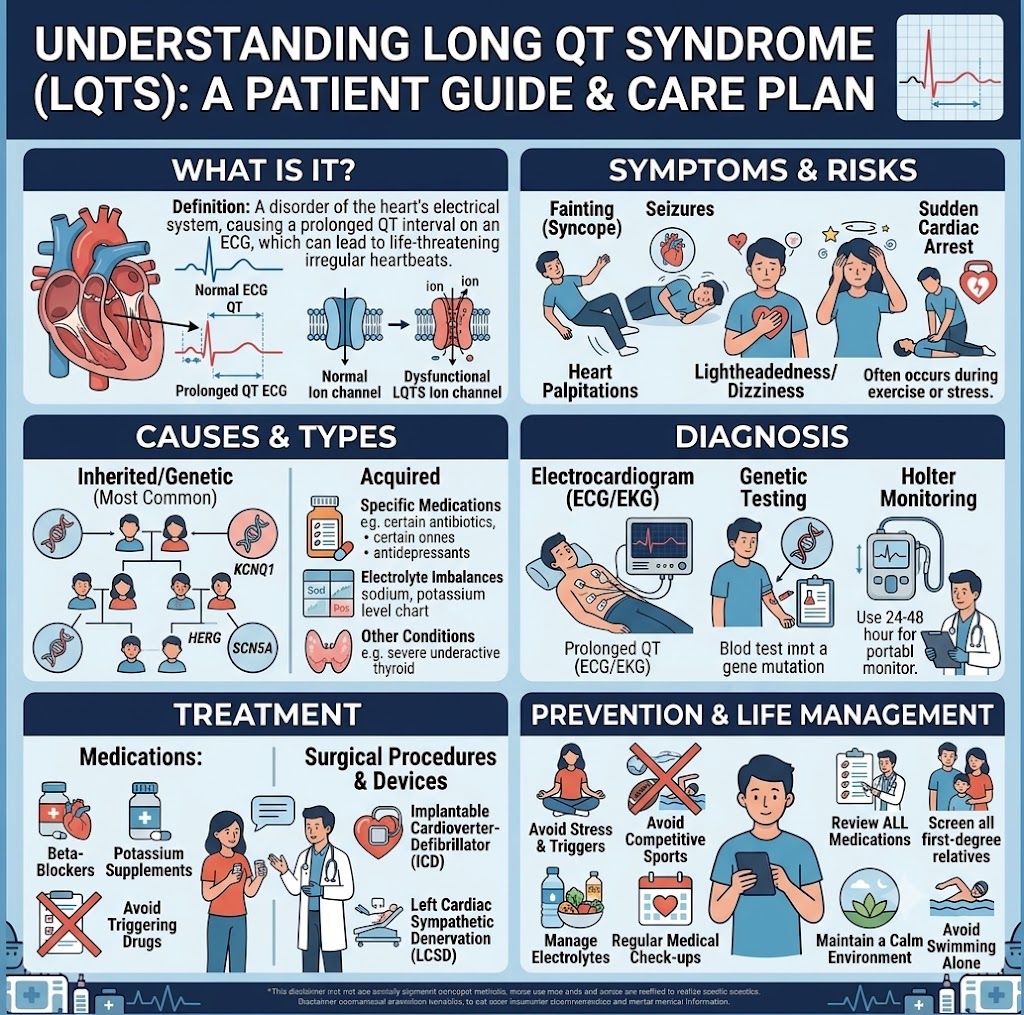
Long QT syndrome (LQTS) is a heart rhythm disorder caused by abnormalities in the heart's electrical system. This system controls how the heart pumps blood and recharges between beats. In people with LQTS, the heart takes longer than normal to recharge after each contraction, a delay known as a prolonged QT interval. This delay can trigger sudden, dangerously fast, and chaotic heartbeats. LQTS is categorized into two types: congenital (present from birth due to inherited genetic mutations) and acquired (developed later in life due to medications, mineral imbalances, or underlying medical conditions). Left untreated, it can lead to fainting, seizures, and sudden cardiac arrest.
Understanding the Condition
Understanding Long QT Syndrome (LQTS)
Understanding the Condition
Common Symptoms
Unexplained Fainting (Syncope): The most common symptom, occurring when the heart temporarily beats erratically, reducing blood flow to the brain. Fainting often happens suddenly during exercise, emotional stress, anger, or when startled by sudden noises like an alarm clock.
Asymptomatic Presentation: Many people with LQTS show no visible signs. The condition is often silently discovered during routine heart testing or genetic screening performed for other medical reasons.
Consultation Guide
Which Specialist to Meet
You should consult a cardiologist, specifically a cardiac electrophysiologist, who specializes in heart rhythm disorders. A genetic counselor may also be recommended to evaluate inherited risks.
Preparations Before Your Visit
Bring a complete list of all medications, over-the-counter drugs, and supplements you take. Compile a detailed family medical history, noting any unexplained sudden deaths, drownings, or seizures. Write down any symptoms you have experienced, along with their specific triggers.
Book a doctor visit near me
Electrodes will be attached to your chest and connected to a small recording monitor that you wear in a pocket or on a strap. You will go about your normal routine, keep a log of your activities and symptoms, and return the monitor to the clinic for analysis.
Consultation Guide
Long QT syndrome (LQTS) is a heart rhythm disorder caused by abnormalities in the heart's electrical system. This system controls how the heart pumps blood and recharges between beats. In people with LQTS, the heart takes longer than normal to recharge after each contraction, a delay known as a prolonged QT interval. This delay can trigger sudden, dangerously fast, and chaotic heartbeats. LQTS is categorized into two types: congenital (present from birth due to inherited genetic mutations) and acquired (developed later in life due to medications, mineral imbalances, or underlying medical conditions). Left untreated, it can lead to fainting, seizures, and sudden cardiac arrest.
Diagnostic Procedures
Seizures: If a chaotic heart rhythm persists and starves the brain of oxygen for an extended period, it can trigger a full-body seizure, which can sometimes be misdiagnosed as epilepsy.
Heart Palpitations: Some individuals experience a sudden sensation of a fluttering, pounding, or racing heartbeat right before a fainting episode.
Presyncope Signs: Moments before passing out, patients may experience warning signs such as sudden lightheadedness, dizziness, or blurred vision.
Electrocardiogram (ECG or EKG)
A quick, noninvasive test that measures and records the electrical activity of your heart to detect a prolonged QT interval.
What to Expect
Small, sticky patches called electrodes will be placed on your chest, arms, and legs. You will lie completely still for a few minutes while a machine records your heart's electrical signals. There is no pain or discomfort involved.
A portable ECG device worn during daily activities to continuously record your heart rhythm, usually for 24 to 48 hours, to catch irregular rhythms that a standard ECG might miss.
What to Expect
A laboratory analysis of your DNA used to identify inherited genetic changes linked to congenital Long QT syndrome.
What to Expect
A healthcare provider will collect a small sample of your blood or a saliva swab from the inside of your cheek. The sample is sent to a specialized lab for testing, and results may take several weeks to discuss with your doctor or genetic counselor.
Electroencephalogram (EEG)
A brain wave test used primarily to rule out primary neurological seizure disorders (like epilepsy) if seizures have occurred during fainting spells.
What to Expect
A technician will attach small metal discs (electrodes) to your scalp using a mild adhesive. You will lie down in a comfortable position while the machine records your brain waves. The test is painless and typically takes about 30 to 60 minutes.
Family Screening: Advise immediate relatives (parents, siblings, and children) to undergo clinical evaluation and genetic screening, as congenital LQTS is inherited and can be managed effectively when diagnosed early.
Treatment Options
Medications
Heart-Rhythm Regulating Medications: Daily oral prescription medications, such as beta-blockers, designed to blunt the heart's response to stress and adrenaline, thereby lowering the risk of dangerous, chaotic heart rhythms. (Duration: Typically lifelong.)
Implantable Cardioverter-Defibrillator (ICD): A small, battery-powered device surgically placed under the skin of the chest. It monitors your heartbeat and delivers a localized electrical shock to restore a normal rhythm if it detects a life-threatening arrhythmia. (Duration: Lifelong therapy, with surgical battery replacements required every 5 to 10 years.)
Pacemaker: A surgically implanted device that sends electrical impulses to keep the heart beating at a safe, steady minimum rate, preventing it from slowing down too much. (Duration: Lifelong therapy, with battery replacements required every 7 to 12 years.)
Surgical Procedures
Left Cardiac Sympathetic Denervation (LCSD): A surgical procedure to remove specific nerves along the left side of the spine that send fight-or-flight stress signals to the heart. This is typically reserved for high-risk patients who cannot tolerate medications or who have repeated ICD shocks. (Duration: A one-time surgery providing permanent nerve alteration.)
Avoid QT-Prolonging Medications: Strictly avoid common medications known to prolong the QT interval, including certain antibiotics, antihistamines, and heart-rhythm drugs. Always cross-reference new prescriptions with your cardiologist.
Electrolyte and Hydration Management
Maintain Mineral Levels: Keep essential minerals like potassium and magnesium balanced. Seek immediate medical attention for severe vomiting, diarrhea, or eating disorders, which deplete these critical electrolytes.
Reduce Startle Triggers: Avoid sudden, loud noises. Use gentle alarm tones, disable loud phone ringers, and adjust home security volumes to minimize startle reflexes.
Modify Physical Activity: Consult your cardiologist about safe levels of physical exertion. Avoid swimming unsupervised and modify high-intensity or competitive sports if recommended by your physician.
Tags & Topics
Notice an error or need an update?
Help us keep medical information accurate. Report incorrect info or suggest an edit.


