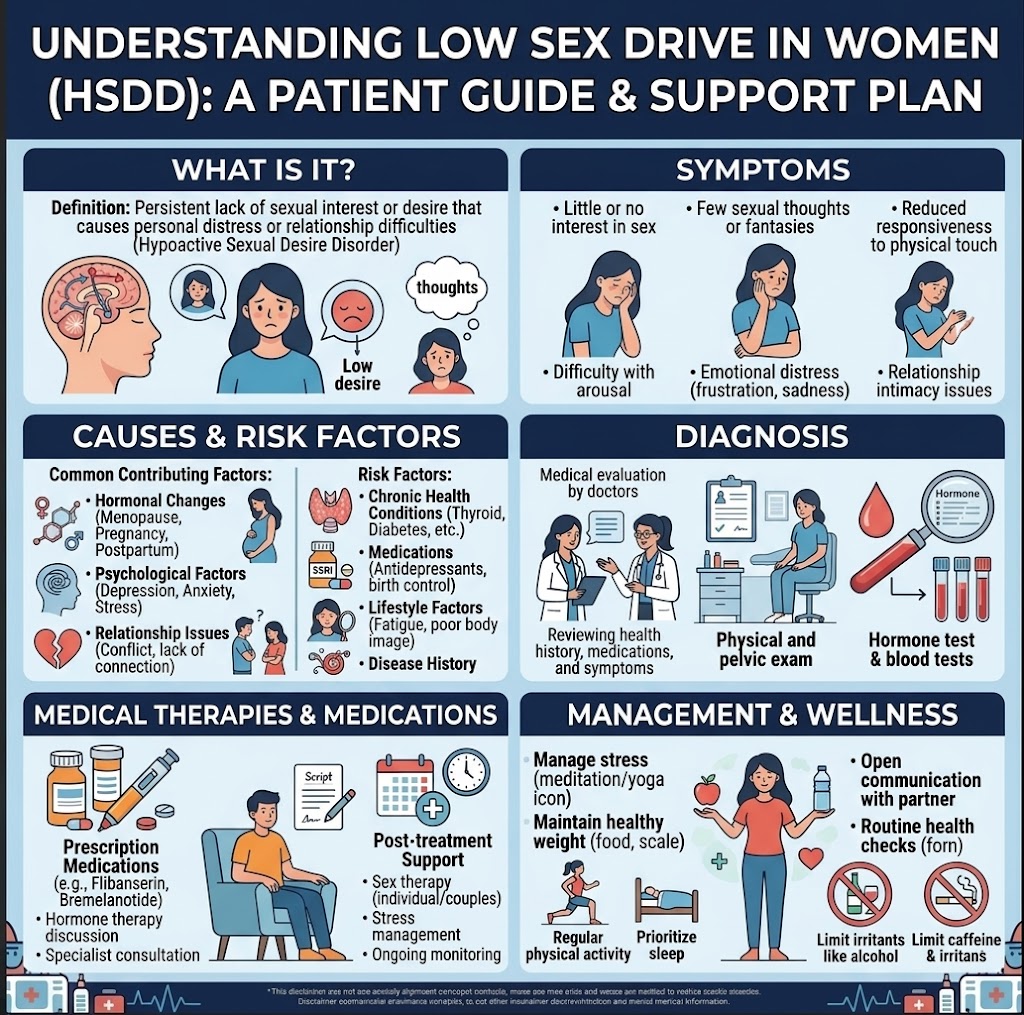
Low sexual desire in women, often referred to medically as Hypoactive Sexual Desire Disorder (HSDD) or sexual interest-arousal disorder, is characterized by a persistent or recurring lack of interest in sex that causes personal distress. It's common for a woman's sexual desire to change over time due to relationships, significant life events like pregnancy or menopause, illness, or certain medications. If this lack of interest continues, returns, and causes you concern or emotional distress, it's beneficial to speak with a healthcare professional. Help is available, and various lifestyle changes, therapies, and medical treatments can often improve sexual desire and overall well-being.
Understanding the Condition
Low Sexual Desire in Women (Hypoactive Sexual Desire Disorder)
Understanding the Condition
Common Symptoms
Reduced Interest in Sexual Activity: Experiencing less or no interest in any type of sexual activity, which may include self-stimulation (masturbation) or sex with a partner.
Lack of Sexual Thoughts or Fantasies: Seldom or never having sexual thoughts, urges, or fantasies.
Emotional Distress: Feeling sad, concerned, bothered, or distressed by your lack of sexual activity or fantasies. It's important to note that what is considered 'low' desire varies from person to person; the key factor is if it causes you personal distress.
Consultation Guide
Which Specialist to Meet
Before your visit, be prepared to discuss your medical history, including any chronic health conditions, current medications (prescription and over-the-counter), and lifestyle habits (e.g., alcohol use, smoking). It's helpful to consider when your low desire started, what specific symptoms you're experiencing, how it affects your emotional well-being and relationships, and any major life changes or stressors. Jot down any questions you have for your doctor.
Book a doctor visit near me
Consultation Guide
Low sexual desire in women, often referred to medically as Hypoactive Sexual Desire Disorder (HSDD) or sexual interest-arousal disorder, is characterized by a persistent or recurring lack of interest in sex that causes personal distress. It's common for a woman's sexual desire to change over time due to relationships, significant life events like pregnancy or menopause, illness, or certain medications. If this lack of interest continues, returns, and causes you concern or emotional distress, it's beneficial to speak with a healthcare professional. Help is available, and various lifestyle changes, therapies, and medical treatments can often improve sexual desire and overall well-being.
You can start by consulting your primary care physician or a gynecologist. Depending on the underlying causes, they may refer you to a sex therapist, a mental health professional (such as a psychologist or psychiatrist), or an endocrinologist (a specialist in hormones).
Preparations Before Your Visit
You will have an open and private conversation with your doctor, who will ask questions about your sexual history, your current level of desire, any distress it causes, and other aspects of your physical and mental health. This is a chance to openly share your concerns in a non-judgmental environment.
A general physical exam helps assess your overall health and identify any signs of underlying medical conditions that could be affecting your sexual desire.
Treatments for Painful Intercourse: Addressing conditions that cause pain during sex, such as severe vaginal dryness, vulvodynia, or pelvic floor dysfunction, through methods like localized treatments, physical therapy, or other medical interventions, can remove barriers to desire. (Duration: Varies depending on the cause, ongoing for some conditions)
Addressing Underlying Surgical Causes: While no direct surgical procedure exists to treat low sexual desire itself, surgeries may be indicated to correct specific underlying physical conditions (e.g., severe pelvic organ prolapse or certain anatomical issues causing pain) that indirectly contribute to reduced desire. Resolving these issues can then improve sexual function and interest. (Duration: Post-operative recovery, then ongoing monitoring)
Diagnostic Procedures
Medical History and Discussion
What to Expect
What to Expect
Your doctor will perform a routine check of your body, including listening to your heart and lungs, checking your blood pressure, and looking for any general physical abnormalities.
A pelvic exam checks the health of your female reproductive organs (vagina, cervix, uterus, ovaries, fallopian tubes) and can help identify conditions like infections, structural abnormalities, or pain during intercourse that might contribute to low desire. It may also include a Pap test to screen for cervical cancer.
What to Expect
You will lie on an exam table with your feet in stirrups. Your doctor will first visually inspect your external genital area (vulva). Then, a speculum (a medical instrument) will be gently inserted into your vagina to allow the doctor to view your cervix and vaginal walls. During this, a Pap test (collection of cells from the cervix) may be performed. Finally, the doctor will remove the speculum and perform a bimanual exam, gently inserting gloved fingers into your vagina while pressing on your abdomen to feel your uterus and ovaries for any unusual changes or tenderness.
Blood tests may be ordered to check hormone levels (such as estrogen, testosterone, and thyroid hormones) and screen for other medical conditions like diabetes, high blood pressure, or high cholesterol, all of which can impact sexual desire.
What to Expect
A healthcare professional will draw a small sample of blood, usually from a vein in your arm. You might be asked to fast (not eat or drink anything other than water) for a certain period before the test, depending on what specifically is being checked. The process usually takes only a few minutes.
Hormone Therapy: For women, particularly those in menopause or experiencing hormonal imbalances, localized estrogen therapy (for vaginal dryness/pain) or systemic hormone therapy (sometimes including specific forms of testosterone) may be considered to improve desire and comfort. This is done under careful medical supervision. (Duration: Varies, often long-term under medical guidance)
Hormone Level Monitoring: If hormone therapy is part of your treatment plan, regular blood tests and consultations with your doctor will be necessary to ensure hormone levels remain within a healthy range and to adjust dosages as needed.
Treatment Options
Your doctor will ask detailed questions about your sexual health, relationship dynamics, emotional state, lifestyle, and any medical conditions or medications you are taking. This helps identify potential physical, psychological, or relationship factors contributing to your low desire.
Medications
Non-Hormonal Medications: Specific non-hormonal prescription medications are available that work on brain chemicals to increase sexual desire in some women, typically premenopausal. (Duration: Varies, usually several weeks to months to assess effectiveness)
Medication Adjustments: If current medications (e.g., certain antidepressants like SSRIs, or blood pressure medicines) are identified as contributing to low desire, your doctor may suggest adjusting the dosage or switching to an alternative medication. (Duration: Short-term adjustment, long-term monitoring)
Therapies and Counseling
Sex Therapy: Working with a specialized sex therapist can help address psychological factors, improve communication, explore sexual techniques, and provide education on sexual function and desire. (Duration: Typically 6-12 sessions, can be longer depending on individual needs)
Couples Therapy: Counseling with your partner can help resolve relationship conflicts, improve emotional and physical intimacy, and enhance communication surrounding sexual issues. (Duration: Varies, often 8-20 sessions)
Individual Psychotherapy: Addressing underlying mental health conditions such as depression, anxiety, body image issues, or past trauma with a therapist can significantly improve sexual desire. (Duration: Varies, from short-term to long-term)
Ongoing Medical Review: Regular follow-ups with your healthcare provider are essential to assess the effectiveness of any treatments, adjust medications if necessary, and address any new concerns regarding your sexual desire or overall health.
Continued Relationship Nurturing: Actively working on emotional and physical intimacy with your partner through shared activities, affection, and continued communication helps sustain a fulfilling sexual connection.
Monitoring Mental Health: Being vigilant about changes in your mental health and seeking professional support if conditions like depression, anxiety, or relationship distress re-emerge is crucial for overall well-being and sexual health.
Prevention & Long-Term Wellbeing
Lifestyle and Home Remedies
Open Communication with Partner: Engaging in honest and open discussions with your partner about your desires, concerns, and intimacy needs can strengthen your connection and improve sexual satisfaction. (Duration: Ongoing)
Stress Management Techniques: Practicing relaxation methods such as mindfulness, meditation, deep breathing exercises, or yoga can help reduce stress, which often impacts sexual desire. (Duration: Ongoing)
Regular Physical Activity: Engaging in consistent exercise can boost your mood, improve body image, increase energy levels, and enhance overall physical well-being, all of which can positively affect sexual desire. (Duration: Ongoing)
Adequate Sleep: Prioritizing sufficient and quality sleep helps combat fatigue and improves energy, contributing to better overall health and a potential increase in sexual interest. (Duration: Ongoing)
Healthy Diet: Eating a balanced and nutritious diet supports general health, energy levels, and hormonal balance, which can indirectly influence sexual desire. (Duration: Ongoing)
Avoiding Excessive Alcohol and Illicit Drugs: Limiting or avoiding substances that can impair sexual function and arousal is crucial for improving sexual desire. (Duration: Ongoing)
Prevention
Maintaining Open Communication: Regularly discussing sexual needs, desires, and any concerns with your partner helps foster intimacy and prevents issues from escalating. This open dialogue is crucial for a healthy sexual relationship.
Prioritizing Self-Care: Ensuring adequate rest, balanced nutrition, effective stress management, and regular physical activity are fundamental for overall well-being and maintaining energy levels, which are vital for sexual desire.
Regular Health Check-ups: Attending routine medical appointments allows for early detection and management of chronic conditions (like diabetes or high blood pressure) and can address potential issues affecting sexual health before they become severe.
Educating Yourself on Sexual Health: Understanding the natural fluctuations in sexual desire throughout different life stages (e.g., pregnancy, perimenopause, menopause) can help normalize experiences and prevent unnecessary worry.
Long-Term Monitoring
Tags & Topics
Notice an error or need an update?
Help us keep medical information accurate. Report incorrect info or suggest an edit.


