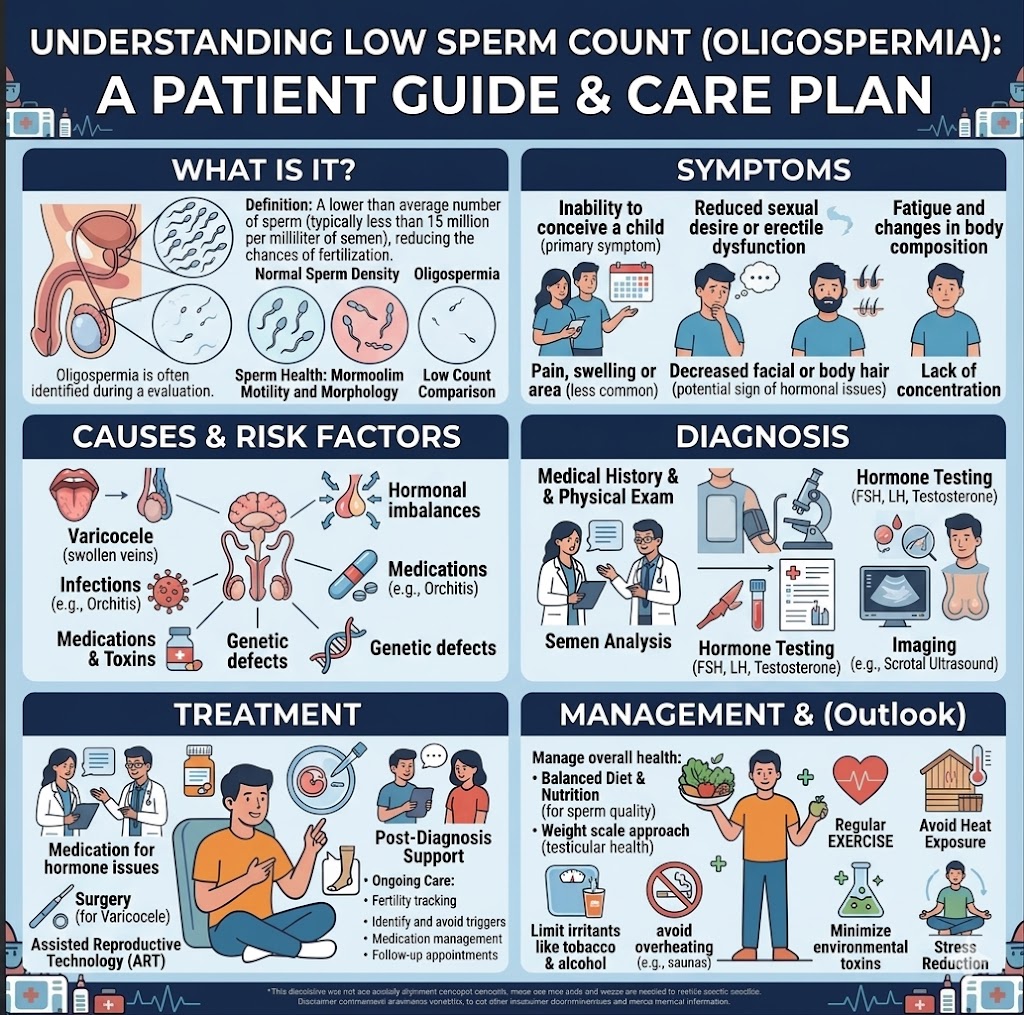
Low sperm count, medically known as oligospermia, means that the fluid released from the penis during orgasm (semen) contains fewer sperm than typically expected. A count below 15 million sperm per milliliter of semen is considered low. In cases where no sperm are present, it's called azoospermia. Having a low sperm count can reduce the chances of a sperm successfully fertilizing an egg to achieve pregnancy. However, various treatments are available to help couples increase their likelihood of conceiving.
Understanding the Condition
Low Sperm Count: Understanding Male Fertility
Understanding the Condition
Common Symptoms
Inability to Conceive: The primary sign is difficulty achieving pregnancy with a partner after a year of regular, unprotected sex. Often, there are no other noticeable symptoms.
Sexual Function Issues: May include reduced interest in sex (low libido) or difficulty getting/maintaining an erection (erectile dysfunction).
Consultation Guide
If a genetic cause is suspected, DNA testing can identify specific changes linked to low sperm count.
Diagnostic Procedures
Testicular Area Changes: Pain, swelling, or a lump in the testicles can signal an underlying condition.
Hormonal or Genetic Signs: Reduced facial or body hair, or other physical changes, might point to hormone imbalances or genetic conditions.
Consultation Guide
Which Specialist to Meet
Consult your general practitioner if you've tried conceiving for a year without success, or sooner if you have sexual health concerns, testicle pain, or a history of reproductive issues. They may refer you to a urologist or a reproductive endocrinologist (fertility specialist).
Preparations Before Your Visit
This essential test evaluates the number of sperm, their shape, and movement, along with other semen characteristics.
What to Expect
You'll provide a sample, typically at a clinic or home, by masturbating into a sterile cup. Abstinence for 2-7 days prior is usually required for accurate results.
Blood samples measure hormone levels crucial for sperm production and can check for infections or genetic markers.
What to Expect
A small amount of blood is drawn from your arm, similar to a routine test.
This imaging test uses sound waves to visualize testicles and surrounding structures, helping identify issues like varicoceles (swollen veins) or other abnormalities.
What to Expect
A gel is applied to the scrotum, and a handheld device creates images, usually painless and taking 15-30 minutes.
Post-Ejaculation Urinalysis
Checks for sperm in urine after ejaculation, indicating retrograde ejaculation (semen flowing into the bladder).
What to Expect
You'll provide a urine sample immediately after ejaculation for lab analysis.
What to Expect
A blood draw or cheek swab collects the sample with minimal risk.
When no sperm are found in semen, a biopsy determines if sperm are produced in the testicles and can retrieve them for fertility treatments.
What to Expect
Under local anesthesia, a small tissue sample is removed from the testicle, with mild post-procedure discomfort.
Sperm Retrieval Techniques: Surgical extraction of sperm directly from the testicle or epididymis for fertility treatments. (Duration: Single outpatient procedure; recovery days.)
Assisted Reproductive Technology (ART)
In Vitro Fertilization (IVF): Eggs are fertilized with sperm in a lab, and embryos are transferred to the uterus. Often includes Intracytoplasmic Sperm Injection (ICSI) where a single sperm is injected into an egg. (Duration: One full cycle typically 2-3 weeks; overall process can be longer.)
Maintain Healthy Lifestyle: Keep a healthy weight, manage stress effectively, and avoid overheating testicles (e.g., tight clothing, hot tubs).
Treatment Options
Low sperm count, medically known as oligospermia, means that the fluid released from the penis during orgasm (semen) contains fewer sperm than typically expected. A count below 15 million sperm per milliliter of semen is considered low. In cases where no sperm are present, it's called azoospermia. Having a low sperm count can reduce the chances of a sperm successfully fertilizing an egg to achieve pregnancy. However, various treatments are available to help couples increase their likelihood of conceiving.
Prepare to discuss your medical history, lifestyle, and all medications. Knowing how long you've tried to conceive is helpful. Your partner may also attend.
Book a doctor visit near me
Medications
Infection Treatment: Prescribed to clear infections causing low sperm count. (Duration: Days to weeks.)
Hormone Therapies: Used to correct hormone imbalances that affect sperm production. (Duration: Several months to ongoing.)
Surgical Procedures
Varicocele Repair: Surgery to correct swollen veins in the scrotum, potentially improving sperm count and quality. (Duration: Single outpatient procedure; recovery takes days to weeks.)
Consult on Medications & Toxins: Discuss all medicines with your doctor, and minimize exposure to environmental toxins like pesticides or heavy metals.
Seek Emotional Support: Infertility can be stressful; counseling or support groups can provide emotional resilience.
Regular Health Monitoring: Continue medical check-ups to monitor overall health and fertility-related conditions.
Prevention & Long-Term Wellbeing
Blocked Sperm Duct Repair: Surgical clearing or repair of blocked tubes that transport sperm. (Duration: Single outpatient procedure; recovery several weeks.)
Prevention
Avoid Harmful Substances: Quit smoking, limit alcohol, and avoid illicit drugs, as these severely impact sperm health.
Tags & Topics
Notice an error or need an update?
Help us keep medical information accurate. Report incorrect info or suggest an edit.


