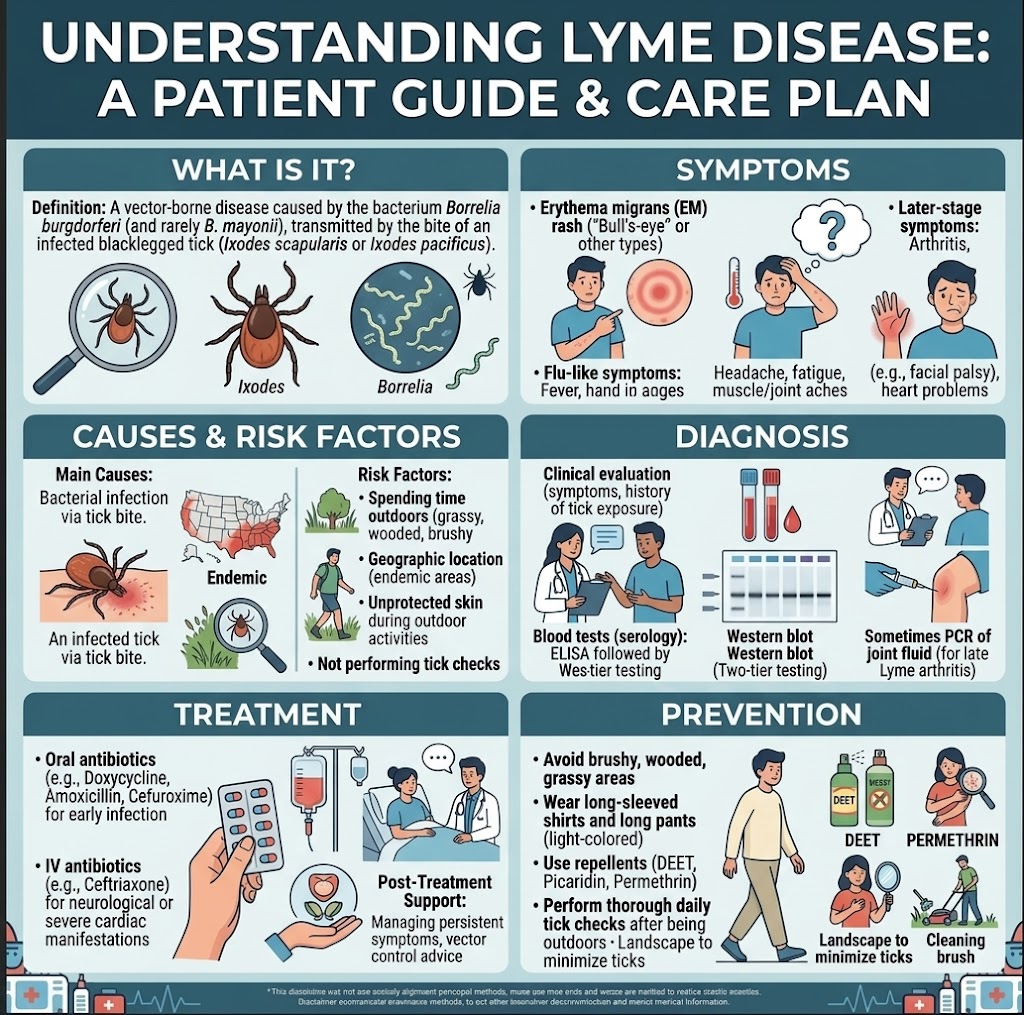
Lyme disease is a bacterial infection typically transmitted to humans through the bite of an infected tick. The illness is caused by specific bacteria, primarily from the Borrelia genus. While ticks carrying these bacteria are found across many regions, Lyme disease is most prevalent in the upper Midwest, northeastern, and mid-Atlantic United States, as well as in parts of Europe and Canada. Spending time in grassy, brushy, or wooded areas increases your risk, but taking precautions can significantly reduce the chance of infection. Early detection and treatment are crucial for preventing more serious complications.
Understanding the Condition
Lyme Disease: Understanding, Symptoms, and Care
Understanding the Condition
Common Symptoms
Tick Bite (Initial Sign): A tick bite may initially appear as a small, itchy bump, similar to a mosquito bite. Many individuals may not notice the bite itself. This bump alone does not confirm Lyme disease, but awareness of potential exposure is important.
Early Localized Stage (3-30 Days Post-Bite): Symptoms usually begin within 3 to 30 days after a tick bite. The most recognizable sign is often a circular rash that slowly expands from the bite site. It may clear in the center, creating a 'bull's-eye' appearance. This rash is typically warm to the touch but generally not painful or itchy. Other common symptoms include extreme tiredness, joint stiffness, muscle aches, and swollen lymph nodes. Not everyone develops a rash, and stages can overlap.
Early Disseminated Stage (Weeks to Months Post-Bite): Without treatment, Lyme disease can worsen, with symptoms often appearing 3 to 10 weeks or more after the tick bite. This stage can involve more widespread and serious issues as the infection spreads throughout the body. While the original source does not list specific new symptoms beyond 'more serious and widespread' for this stage, it indicates a progression of the illness.
Potential Later Stage/Untreated Symptoms: If left untreated, Lyme disease can lead to more severe complications affecting joints, the nervous system, and the heart. These can include severe joint pain and swelling (arthritis), facial paralysis, nerve pain, numbness or weakness in limbs, impaired muscle movement, memory problems, and, rarely, heart problems like an irregular heartbeat.
Consultation Guide
Which Specialist to Meet
Initially, you should consult your primary care physician. If Lyme disease is suspected or confirmed, you might be referred to an infectious disease specialist. Depending on the specific symptoms, a rheumatologist (for joint issues), a neurologist (for nerve-related symptoms), or a cardiologist (for heart complications) may also be involved in your care.
Preparations Before Your Visit
Before your visit, make a list of all your symptoms, including when they started and how severe they are. Note any recent outdoor activities, especially in grassy, brushy, or wooded areas, and if you recall a tick bite. Be prepared to discuss your medical history and any questions you have. If you removed a tick, bring details or a photo if available.
Book a doctor visit near me
A doctor will assess your symptoms, ask about your recent activities and potential tick exposure, and perform a physical examination to look for a rash or other signs of infection.
Pain and Inflammation Management: Over-the-counter pain relievers can help manage joint pain, muscle aches, and fever associated with Lyme disease symptoms. (Duration: As needed, during the symptomatic phase of the illness.)
Follow-Up Medical Care: Regular follow-up appointments with your doctor are important to monitor your recovery and address any persistent symptoms or new concerns.
Manage Post-Treatment Symptoms: Some individuals may experience lingering symptoms such as joint pain, fatigue, or memory issues, even after completing antibiotic treatment. This condition is sometimes called post-treatment Lyme disease syndrome (PTLDS). Work with your healthcare team to manage these symptoms through supportive therapies and lifestyle adjustments.
Consultation Guide
Lyme disease is a bacterial infection typically transmitted to humans through the bite of an infected tick. The illness is caused by specific bacteria, primarily from the Borrelia genus. While ticks carrying these bacteria are found across many regions, Lyme disease is most prevalent in the upper Midwest, northeastern, and mid-Atlantic United States, as well as in parts of Europe and Canada. Spending time in grassy, brushy, or wooded areas increases your risk, but taking precautions can significantly reduce the chance of infection. Early detection and treatment are crucial for preventing more serious complications.
Diagnostic Procedures
What to Expect
Your doctor will ask detailed questions about your health, recent travel, outdoor activities, and any possible tick bites you may have noticed. They will perform a physical check, paying close attention to your skin for rashes, swelling, or other unusual signs.
Two-Step Blood Testing
Lyme disease is typically diagnosed using a two-step blood test. This approach helps reduce the chance of false positive results. The tests look for antibodies your body produces in response to the Borrelia bacteria. These antibodies can take several weeks to develop, so testing too early after infection might yield a negative result even if you are infected.
What to Expect
First, an initial screening test (often an Enzyme-Linked Immunosorbent Assay or ELISA) will be performed. If this test is positive or indeterminate, a second, more specific test called a Western blot is used to confirm the diagnosis. For both tests, a healthcare professional will draw a small sample of blood, usually from a vein in your arm, using a needle. You may feel a brief pinch or sting. The sample is then sent to a laboratory for analysis.
Treatment Options
Medications
Oral Antibiotics (Early Stage): For early-stage Lyme disease, a course of oral antibiotics is typically prescribed to eliminate the bacteria. Prompt treatment in this stage is highly effective. (Duration: Usually 14 to 21 days, though sometimes as short as 10 days or as long as 28 days.)
Intravenous (IV) Antibiotics (Later/Severe Stages): If the disease has progressed to affect the central nervous system or heart, or if early treatment was unsuccessful, intravenous antibiotics may be administered. This approach delivers medication directly into your bloodstream. (Duration: Typically 14 to 28 days, depending on the severity and response to treatment.)
Prevention & Long-Term Wellbeing
Rest and Hydration: Allowing your body to rest and staying well-hydrated are important for recovery, especially when experiencing fatigue and fever. (Duration: Throughout the course of illness and recovery.)
Prevention
Use Tick Repellents: Apply EPA-registered insect repellents to exposed skin. For clothing, shoes, and gear, use products containing permethrin (do not apply permethrin directly to skin). Always follow product instructions.
Wear Protective Clothing: When in wooded, grassy, or brushy areas, wear long-sleeved shirts tucked into your pants and long pants tucked into your socks. Light-colored clothing can make it easier to spot ticks.
Avoid Tick Habitats: Stay away from tall grass, dense brush, and heavily wooded areas. Stick to the center of trails when hiking.
Perform Daily Tick Checks: After spending time outdoors, thoroughly check your body, your children, and pets for ticks. Pay special attention to hidden areas like armpits, behind ears, in hair, inside the belly button, behind knees, and between legs. Use a mirror for hard-to-see areas.
Shower Promptly: Showering within two hours after coming indoors can help wash off any unattached ticks.
Treat Outdoor Gear: Before washing outdoor clothes, tumble dry them on high heat for at least 10 minutes to kill any lingering ticks.
Remove Ticks Correctly: If you find a tick, remove it as soon as possible. Use fine-tipped tweezers to grasp the tick as close to the skin's surface as possible. Pull upward with steady, even pressure. Clean the bite area and your hands with rubbing alcohol or soap and water. Proper removal within 24 hours significantly reduces the risk of disease transmission.
Long-Term Monitoring and Support
Lifestyle Adjustments: Maintaining a healthy lifestyle with adequate rest, a balanced diet, and moderate exercise can support overall well-being and aid recovery.
Tags & Topics
Notice an error or need an update?
Help us keep medical information accurate. Report incorrect info or suggest an edit.


