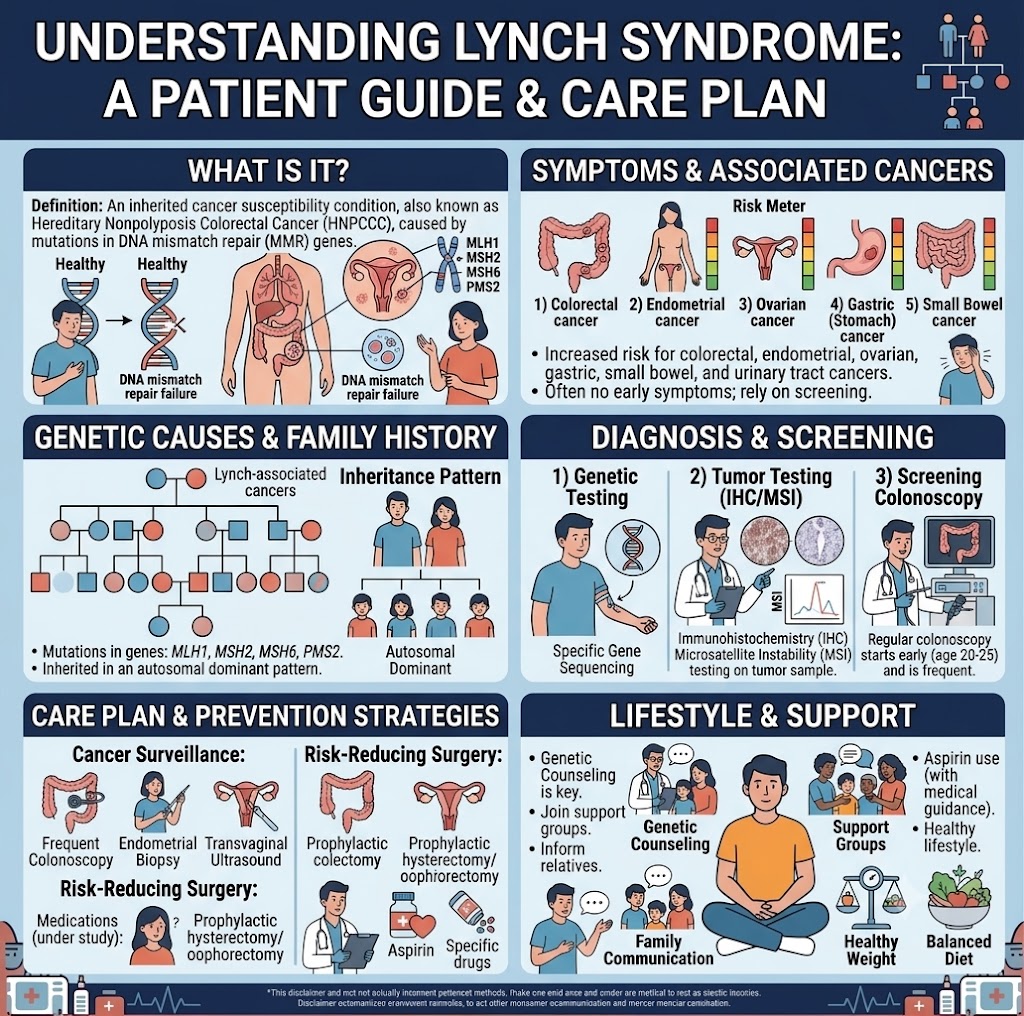
Lynch syndrome is an inherited genetic condition that significantly increases a person's risk of developing various cancers, most notably colon (large intestine) and endometrial (uterine lining) cancers. Unlike many cancers, those associated with Lynch syndrome often develop at younger ages. If one parent has the condition, each child has a 50% chance of inheriting it. Regular health screenings, such as colonoscopies, are crucial for finding these cancers early when most treatable. Some individuals might also consider preventive surgeries or medications to reduce their risk. Historically, Lynch syndrome was known as hereditary nonpolyposis colorectal cancer (HNPCC), but the current name is preferred as it accurately reflects its genetic cause and the broader range of cancers it can lead to.
Understanding the Condition
Lynch Syndrome: Understanding an Inherited Cancer Risk
Understanding the Condition
Common Symptoms
General Symptoms: Lynch syndrome usually causes no symptoms until cancer develops; many learn they have it after a family diagnosis. Symptoms appear from the specific cancer:
Colon Cancer: Blood in stool, bowel habit changes, belly pain, unexplained weight loss.
Endometrial Cancer: Unusual vaginal bleeding or pelvic pain.
Stomach/Small Bowel Cancers: Indigestion, nausea, or unexplained anemia.
Urinary Tract Cancers: Blood in urine.
Other Considerations: Cancers often occur younger and individuals may develop multiple types. Early cancers lack clear symptoms, making regular screening vital for early detection and treatment.
Consultation Guide
Which Specialist to Meet
Before your visit, gather as much information as possible about your family's medical history, particularly any cancers or Lynch syndrome diagnoses. Note down any symptoms you've experienced, even if seemingly minor, and prepare a list of questions you have for the doctor.
Book a doctor visit near me
Consultation Guide
Lynch syndrome is an inherited genetic condition that significantly increases a person's risk of developing various cancers, most notably colon (large intestine) and endometrial (uterine lining) cancers. Unlike many cancers, those associated with Lynch syndrome often develop at younger ages. If one parent has the condition, each child has a 50% chance of inheriting it. Regular health screenings, such as colonoscopies, are crucial for finding these cancers early when most treatable. Some individuals might also consider preventive surgeries or medications to reduce their risk. Historically, Lynch syndrome was known as hereditary nonpolyposis colorectal cancer (HNPCC), but the current name is preferred as it accurately reflects its genetic cause and the broader range of cancers it can lead to.
Diagnostic Procedures
If you have a family history of Lynch syndrome or cancers linked to it, you should first discuss this with your primary care doctor. They may refer you to a specialist in genetics, such as a genetic counselor or a medical geneticist, who can help you understand the condition, its genetic basis, and whether genetic testing is appropriate for you. Gastroenterologists, oncologists, and gynecologists may also be part of your care team for screening and management.
Preparations Before Your Visit
Identifies inherited changes in specific DNA repair genes (MLH1, MSH2, MSH6, PMS2, EPCAM) causing Lynch syndrome, confirming diagnosis and assessing cancer risk.
What to Expect
A blood sample or cheek swab is collected. Results are explained by a genetic counselor.
Examines the large intestine (colon) and rectum for polyps or cancer.
What to Expect
Requires strict bowel preparation. Under sedation, a flexible tube with a camera is inserted for viewing, biopsy, or polyp removal.
Endometrial Cancer Screening
Checks the uterine lining for changes, targeting endometrial cancer risk.
What to Expect
May involve an in-office endometrial biopsy (tissue sample, mild cramping) or a transvaginal ultrasound for imaging.
Examines the esophagus, stomach, and upper small intestine lining for cancer signs.
What to Expect
Under sedation, a flexible tube with a camera is passed through your mouth; biopsies can be taken.
Urinary Tract Screening
Detects blood or other signs of urinary system cancers (kidney, bladder, ureters).
What to Expect
Begins with a urine sample. If abnormal, imaging tests (ultrasound, CT, MRI) of organs may follow.
Dermatological Examination
Visual skin inspection for unusual growths or skin cancers, including sebaceous gland tumors linked to some Lynch variants.
What to Expect
A doctor thoroughly inspects your skin; quick, non-invasive.
Neurological Examination
Assesses brain, spinal cord, nerves, and muscle function to identify nervous system conditions or brain cancers.
What to Expect
Includes medical history and physical/mental status tests (reflexes, balance, memory).
Genetic Counseling for Families: Discuss genetic testing and cancer risks with family. Counselors guide on inherited risk, testing, and family planning.
Treatment Options
Surgical Procedures
Medications
Chemoprevention: Specific medications to reduce cancer risk by interfering with development. Taken regularly, often long-term. (Duration: Long-term, as prescribed, with monitoring.)
Standard Cancer Treatments: If cancer develops, therapies include surgery, chemotherapy, radiation therapy, targeted therapy, or immunotherapy. (Duration: Varies significantly by cancer type and stage, often months to a year, followed by monitoring.)
Informed Decision-Making: Actively participate in decisions about care, including preventive surgeries or medications, based on personal risk and preferences.
Prevention & Long-Term Wellbeing
Preventive Colectomy: Removal of all or part of the colon to prevent colorectal cancer in high-risk individuals. May involve an ostomy or rejoining digestive parts. (Duration: Hospital stay few days; recovery several weeks to months.)
Preventive Oophorectomy and Hysterectomy: Removal of ovaries and/or uterus to prevent ovarian or endometrial cancers in high-risk women, often after childbearing. (Duration: Hospital stay few days; recovery several weeks.)
Prevention & Early Detection
Regular Cancer Screening: Frequent, specialized screenings (e.g., earlier colonoscopies, endometrial screening) as recommended. Early detection improves outcomes.
Healthy Lifestyle Choices: Maintain a balanced diet, regular exercise, healthy weight, limit alcohol, and avoid smoking to reduce overall cancer risk.
Long-Term Monitoring & Support
Ongoing Medical Surveillance: Lifelong, individualized monitoring ensures prompt detection of new cancers or precancerous changes.
Psychological and Emotional Support: Seek support from professionals or groups to manage anxiety and make informed health decisions.
Tags & Topics
Notice an error or need an update?
Help us keep medical information accurate. Report incorrect info or suggest an edit.


