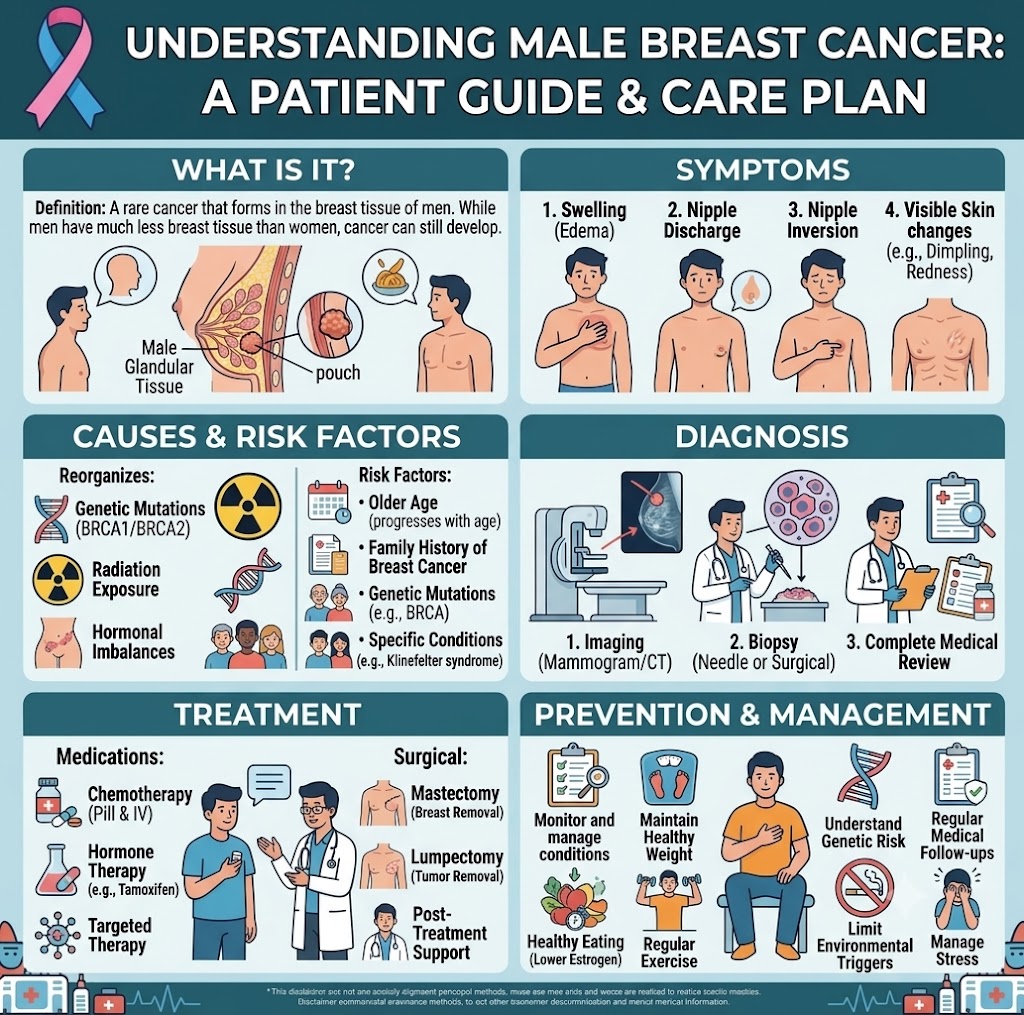
Male breast cancer is a rare type of cancer that starts as abnormal cell growth in the breast tissue of men. While often associated with women, everyone is born with some breast tissue, making anyone susceptible. It most commonly affects older men but can occur at any age. Treatment typically involves surgery, often combined with other therapies like chemotherapy or radiation, to manage the condition effectively.
Understanding the Condition
Common Symptoms
Painless Lump or Thickening: A new, firm, and usually painless lump or a noticeable thickening of the skin on the chest area.
Skin Changes: Alterations to the skin covering the chest, such as dimpling (like an orange peel), puckering, scaling, or changes in skin color.
Nipple Changes: Changes to the nipple itself, including alterations in skin color, scaling, or a nipple that begins to turn inward (retract).
Nipple Discharge or Bleeding: Any unusual fluid discharge or bleeding from the nipple.
Consultation Guide
Which Specialist to Meet
If you notice any concerning symptoms, start by seeing your primary care physician. They can refer you to specialists such as an oncologist (a doctor specializing in cancer), a surgeon, or a radiation oncologist for further evaluation and treatment.
Preparations Before Your Visit
Before your appointment, gather information about your symptoms, including when they started and how they've changed. Be prepared to discuss your family's medical history, especially any history of cancer, and list all medications you currently take. Write down any questions you have for your doctor.
Book a doctor visit near me
An X-ray specifically designed for breast tissue. It can help detect breast cancer even before symptoms become noticeable or investigate concerning findings.
Consultation Guide
You will stand in front of a mammography machine. A technician will position your chest on a platform and gently compress it between two firm plates. This compression helps spread out the tissue for clearer images and may cause brief discomfort. Several images will be taken from different angles.
Managing Risk Factors: Maintain a healthy weight, manage existing liver conditions, and discuss the use of hormone-containing medications with your doctor, particularly if you have other risk factors for breast cancer.
Diagnostic Procedures
Male Breast Cancer: Understanding, Diagnosis, and Treatment
Understanding the Condition
A physical examination performed by a doctor to check for lumps, skin changes, or other unusual signs in your chest area and armpits.
What to Expect
The doctor will visually inspect your chest and gently feel for any abnormalities or changes in your breast tissue and underarms. This is usually a quick and painless part of a routine check-up.
What to Expect
This imaging test uses high-frequency sound waves to create detailed images of the internal structures of your body, helping to identify or further examine lumps or other findings.
What to Expect
You will lie down, and a gel will be applied to your chest. A small handheld device called a transducer will be moved over the gelled area. The device sends and receives sound waves, which are converted into images on a screen. This procedure is generally painless.
CT Scan (Computerized Tomography)
A sophisticated imaging test that combines multiple X-ray images from different angles to create detailed cross-sectional views (slices) of bones, blood vessels, and soft tissues inside your body. It's used to diagnose conditions, stage cancer, or plan treatments.
What to Expect
You will lie on a motorized table that slides into a large, doughnut-shaped machine. You will need to lie very still during the scan. In some cases, a special contrast dye might be given through a vein or swallowed to enhance the images.
A procedure where a small sample of cells or tissue is removed from a suspicious area using a thin needle. This sample is then sent to a lab to be examined under a microscope for cancer cells and to determine if the cancer is sensitive to hormones.
What to Expect
The area to be biopsied will be numbed with a local anesthetic. Using imaging guidance (like ultrasound or mammogram), a thin, hollow needle is inserted into the abnormal area. Tissue samples are carefully collected. You might feel some pressure, but typically no sharp pain during the sample collection.
This surgical procedure helps determine if breast cancer cells have spread to the lymph nodes. It identifies and removes the 'sentinel nodes' – the first few lymph nodes to which cancer cells are most likely to spread.
What to Expect
A quick and painless imaging test that uses a small amount of radiation to create pictures of the inside of your body, particularly bones. It can be used to check for cancer spread to areas like the lungs or bones.
What to Expect
You will stand or lie on a table while the X-ray machine captures images. You may be asked to hold your breath briefly. The process is very quick, and you won't feel anything during the X-ray itself.
Supportive Therapy and Survivorship Services: Comprehensive services designed to help patients manage the physical and emotional side effects of cancer treatment, and provide ongoing support after treatment completion. This includes follow-up tests and help with lingering issues. (Duration: Ongoing throughout treatment and extending for many years after, as needed, to ensure long-term wellbeing.)
Genetic Counseling and Testing: If breast cancer is common in your family, especially with known genetic mutations like BRCA1 or BRCA2, discuss genetic counseling and testing with your doctor to assess your personal risk.
Emotional and Psychological Support: Seeking support from mental health professionals, support groups, or counselors can help manage the emotional and psychological impact of a cancer diagnosis and treatment, promoting better quality of life.
Treatment Options
Male breast cancer is a rare type of cancer that starts as abnormal cell growth in the breast tissue of men. While often associated with women, everyone is born with some breast tissue, making anyone susceptible. It most commonly affects older men but can occur at any age. Treatment typically involves surgery, often combined with other therapies like chemotherapy or radiation, to manage the condition effectively.
During surgery, a special dye and/or a weak radioactive solution are injected near the tumor. The surgeon then uses these tracers to locate the sentinel lymph nodes, which are removed and sent to a lab to be checked for cancer cells.
Surgical Procedures
Mastectomy (Total/Simple): Surgery to remove all of the breast tissue, including the nipple, areola, and skin, to eliminate cancerous cells. (Duration: A single surgical procedure; recovery typically involves several weeks to months, depending on individual healing.)
Lumpectomy: Surgery to remove only the cancerous lump and a small amount of healthy tissue around it, preserving most of the remaining breast tissue. (Duration: A single surgical procedure, often followed by radiation therapy; recovery usually takes a few weeks.)
Breast Reconstruction: Surgery to restore the shape of the breast after a mastectomy. This can be done immediately after the mastectomy or at a later date. (Duration: Can be a single procedure or involve multiple surgeries over several months, depending on the chosen method.)
Therapies (Non-Surgical)
Chemotherapy: Drug treatment using powerful medications to kill fast-growing cancer cells throughout the body. These drugs can be given intravenously (into a vein) or taken orally as pills. (Duration: Administered in cycles, typically spanning several months, depending on the cancer type and stage.)
Radiation Therapy: Treatment that uses high-energy beams (like X-rays or protons) precisely aimed at the cancer to destroy cancer cells and shrink tumors while minimizing harm to healthy tissues. (Duration: Usually given daily for several weeks, or in fewer, higher-dose sessions, depending on the specific treatment plan.)
Hormone Therapy: A treatment specifically for breast cancers that are sensitive to hormones (like estrogen). It works by blocking hormones from reaching cancer cells or by reducing the body's production of hormones. (Duration: Often taken for several years, typically 5-10 years, after initial surgery or other treatments.)
Transgender Men's Health: If you are a transgender man and have not had gender-affirming chest surgery, generally follow the screening guidelines for people assigned female at birth. If you have had chest surgery, be aware that a small amount of breast tissue may remain, and report any new changes to your healthcare team.
Long-Term Monitoring and Survivorship
Regular Follow-Up Care: After completing treatment, consistent follow-up appointments with your healthcare team are crucial to monitor for any signs of recurrence, manage long-term side effects, and maintain overall health.
Prevention & Long-Term Wellbeing
Prevention Strategies
Breast Awareness: Regularly checking your own chest area for any changes in look or feel, such as lumps, skin changes, or nipple alterations, helps you understand what's normal for you and report new findings promptly to your doctor.
Healthy Lifestyle: Adopting and maintaining a healthy lifestyle, including a balanced diet, regular physical activity, and avoiding smoking and excessive alcohol consumption, can contribute to long-term health and wellbeing.
Tags & Topics
Notice an error or need an update?
Help us keep medical information accurate. Report incorrect info or suggest an edit.


