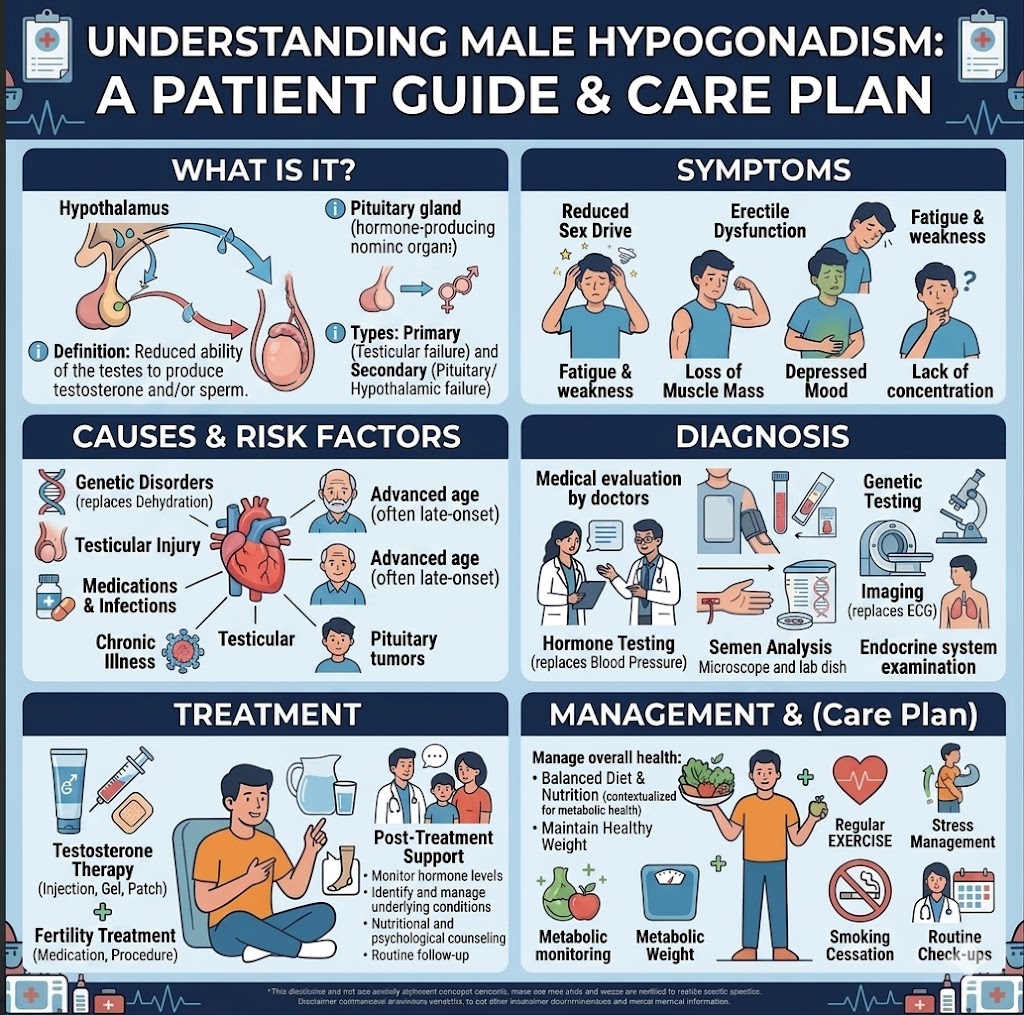
Male hypogonadism is a medical condition where the body doesn't produce enough of the male hormone testosterone, or enough sperm, or both. Testosterone is vital for male development, from before birth through puberty and into adulthood, affecting physical changes, sex drive, and bone health. This condition can be present from birth or develop later in life due to various factors like injury, infection, or other health issues. The timing of onset and the underlying cause determine the symptoms and the most effective treatment options, which often include hormone replacement therapy.
Understanding the Condition
Male hypogonadism is a medical condition where the body doesn't produce enough of the male hormone testosterone, or enough sperm, or both. Testosterone is vital for male development, from before birth through puberty and into adulthood, affecting physical changes, sex drive, and bone health. This condition can be present from birth or develop later in life due to various factors like injury, infection, or other health issues. The timing of onset and the underlying cause determine the symptoms and the most effective treatment options, which often include hormone replacement therapy.
Common Symptoms
During Adulthood: Symptoms in adults can initially be subtle, including reduced sex drive (libido), low energy levels and fatigue, unexplained weight gain, and feelings of sadness or depression. Over time, adults with untreated hypogonadism may experience difficulty achieving or maintaining an erection (erectile dysfunction), inability to father children (infertility), noticeable decrease in beard and body hair, loss of muscle mass and strength, fragile bones (osteoporosis), and enlarged breast tissue (gynecomastia). Severe low testosterone can also lead to mental and emotional changes, such as hot flashes, difficulty concentrating, increased irritability, and persistent fatigue.
Consultation Guide
Which Specialist to Meet
If you suspect you have symptoms of male hypogonadism, your first visit should be with your primary care provider. They can assess your symptoms and conduct initial tests. Depending on the findings, they may refer you to an endocrinologist (a doctor specializing in hormone disorders), a urologist (a doctor specializing in the male reproductive and urinary systems), or a reproductive specialist if infertility is a primary concern. A genetic counselor may also be recommended if a genetic cause is suspected.
Preparations Before Your Visit
To make the most of your appointment, prepare by: writing down all your symptoms, including when they started and how they affect your daily life; listing all medications, supplements, and vitamins you currently take; gathering information about your medical history and any relevant family medical history; preparing a list of questions you want to ask your doctor; and being ready to discuss your lifestyle, including diet, exercise, and stress levels.
Book a doctor visit near me
Consultation Guide
These tests measure the amount of testosterone in your blood. Samples are usually taken in the morning. Other hormone levels, like luteinizing hormone (LH) and follicle-stimulating hormone (FSH), may also be checked to determine the cause of low testosterone production.
Genetic testing examines your DNA for changes in genes that could cause or contribute to hypogonadism, especially useful for early onset, family history, or unclear causes. It can reveal inherited conditions affecting hormone production or reproductive development. More comprehensive genome or exome sequencing might be used for complex cases.
Diagnostic Procedures
Male Hypogonadism: Understanding Low Testosterone and Its Impact
Understanding the Condition
During Fetal Development (before birth): When there isn't enough testosterone during pregnancy, a baby boy may be born with unusual external sex organs. This could include genitals that appear ambiguous (not clearly male or female), a very small penis, or testicles that haven't descended into the scrotum.
During Childhood and Puberty: If hypogonadism develops in childhood, it can delay or prevent the normal changes of puberty. This might involve: lack of muscle development, failure of the voice to deepen, sparse body and facial hair growth, and slowed growth of the penis and testicles.
Testosterone Level Measurement
What to Expect
A healthcare professional will draw a small amount of blood, usually from a vein in your arm. You might feel a brief pinch. The sample is sent to a lab for analysis. No special preparation is typically required, though fasting might be needed for certain related tests.
Sperm Count and Quality Analysis
If fertility is a concern, this test evaluates the number, shape, and movement of sperm in a semen sample. It helps determine if inadequate sperm production is contributing to fertility issues.
What to Expect
You will provide a semen sample by masturbating into a sterile container, usually at a clinic. Instructions often include abstaining from sexual activity for a few days prior. The sample is then examined under a microscope.
What to Expect
Genetic tests usually involve a simple blood draw or a cheek swab. For blood, a sample is taken from your arm. For a cheek swab, cells are collected by gently rubbing a swab inside your cheek. Both are minimally invasive. A genetic counselor typically discusses the process and potential results beforehand.
Testosterone Replacement Therapy (TRT): TRT restores testosterone levels using skin gels, patches, injections, or implants. It helps improve sex drive, energy, mood, muscle mass, and bone health but does not restore fertility. (Duration: Lifelong, with regular medical monitoring.)
Hormone Stimulation and Assisted Reproductive Technologies: To stimulate sperm production for fertility, specific hormone injections can be used. If needed, advanced assisted reproductive technologies may be recommended. (Duration: Varies from months to over a year for hormone therapy; weeks to months for reproductive technologies.)
Treatment Options
Medications
Consistent Follow-up Care: Regular doctor visits are crucial to monitor hormone levels, treatment effectiveness, and related health concerns, including bone density.
Prevention & Long-Term Wellbeing
Lifestyle Management and Counseling: Maintaining a healthy diet and exercise supports overall health. Counseling can help manage emotional and psychological impacts of the condition. (Duration: Ongoing as part of general health management.)
Long-Term Wellbeing
Balanced Diet and Exercise: Maintain a nutritious diet and consistent physical activity to support overall health and energy levels.
Addressing Mental Health: Seek counseling or support for managing any emotional changes or challenges associated with the condition.
Tags & Topics
Notice an error or need an update?
Help us keep medical information accurate. Report incorrect info or suggest an edit.


