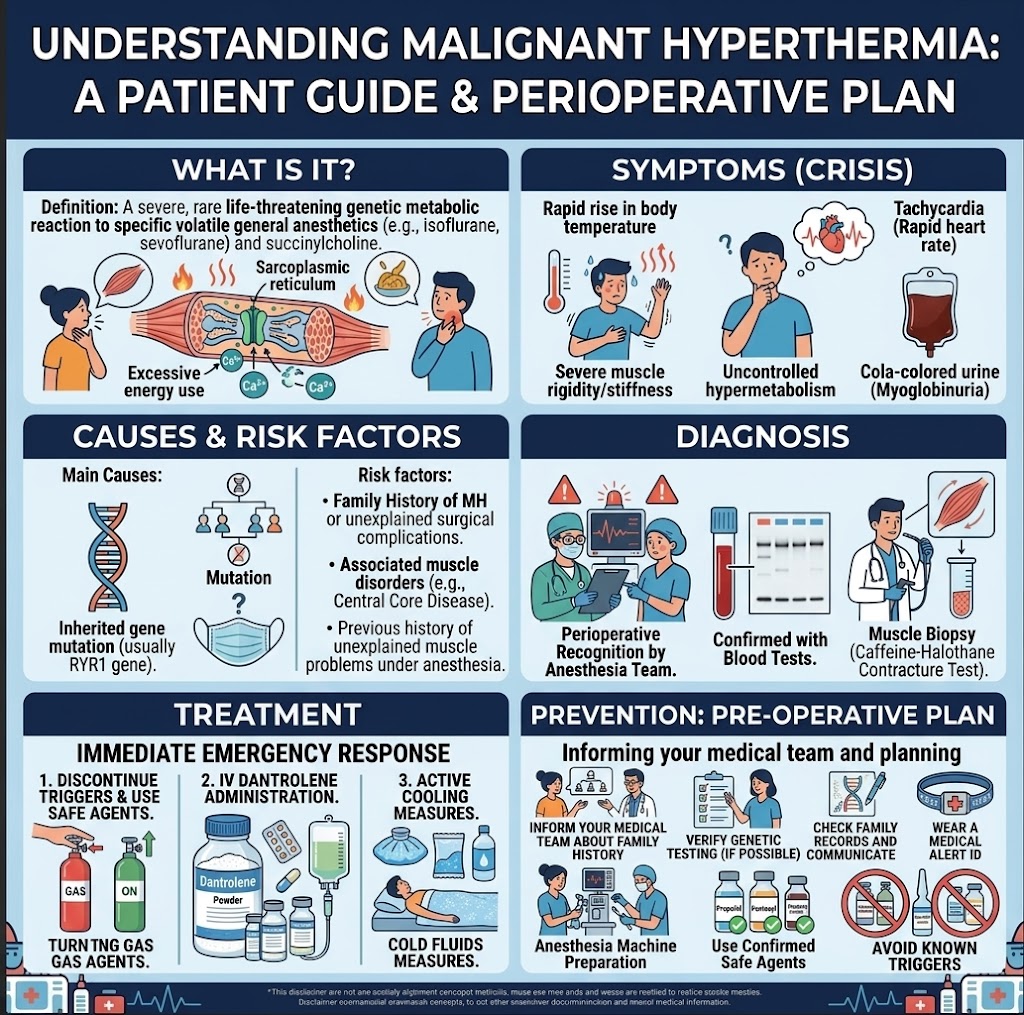
Malignant Hyperthermia (MH) is a rare but life-threatening inherited condition. It causes a severe, rapid reaction in susceptible individuals when they are exposed to certain medications used for general anesthesia. This reaction typically involves a dangerously high body temperature, rigid muscles, a very fast heartbeat, and other serious symptoms. Without immediate and appropriate treatment, MH can lead to severe complications and even be fatal. Most people at risk of MH show no signs until exposed to the triggering anesthesia drugs. The susceptibility is usually inherited through a specific gene change, though sometimes it arises spontaneously.
Understanding the Condition
Malignant Hyperthermia: Understanding a Rare Anesthesia Reaction
Understanding the Condition
Malignant Hyperthermia (MH) is a rare but life-threatening inherited condition. It causes a severe, rapid reaction in susceptible individuals when they are exposed to certain medications used for general anesthesia. This reaction typically involves a dangerously high body temperature, rigid muscles, a very fast heartbeat, and other serious symptoms. Without immediate and appropriate treatment, MH can lead to severe complications and even be fatal. Most people at risk of MH show no signs until exposed to the triggering anesthesia drugs. The susceptibility is usually inherited through a specific gene change, though sometimes it arises spontaneously.
Common Symptoms
High Body Temperature: The body's core temperature can quickly rise to dangerously high levels, often exceeding 105°F (40.6°C).
Muscle Rigidity or Spasms: Muscles become stiff, particularly in the jaw, neck, and limbs, or may experience uncontrolled spasms.
Rapid Heart Rate: The heart beats unusually fast, often skipping beats or developing an irregular rhythm.
Fast Breathing: The body may try to compensate for the rapid changes by breathing at an increased rate.
Specific Muscle Relaxant: A potent medication is given intravenously to rapidly reverse the effects of Malignant Hyperthermia. It works by interfering with the release of calcium in muscle cells, which helps to stop the muscle rigidity, reduce body temperature, and prevent further damage. It is crucial to administer this medication immediately upon suspicion of an MH reaction. (Duration: Administered immediately and often continued every 4-6 hours for at least 24 to 48 hours to prevent recurrence of symptoms, or until all signs of the reaction have subsided.)
Supportive Care and Cooling Measures
Body Cooling: Measures are taken to rapidly lower the dangerously high body temperature. This can include applying ice packs to the armpits, groin, and neck, using cooling blankets, administering cold intravenous fluids, and in some cases, flushing the stomach or bladder with cold saline. (Duration: Continued until body temperature safely returns to normal levels, typically several hours or longer depending on the severity of the reaction.)
Monitoring and Symptom Management: Close monitoring of vital signs (heart rate, breathing, blood pressure, temperature) and blood chemistry is essential. Treatment also focuses on managing complications that arise, such as irregular heart rhythms, kidney problems due to muscle breakdown, and imbalances in body salts (electrolytes). This may involve medications to stabilize the heart, fluids to protect the kidneys, and other supportive therapies. (Duration: Intensive monitoring and management continue throughout the acute reaction and often for several days following, depending on the patient's recovery and the severity of complications.)
Consultation Guide
During this procedure, a healthcare professional will collect a small sample of your blood, typically from a vein in your arm, or sometimes a saliva sample. This process is generally quick and causes minimal discomfort, similar to a routine blood draw. The sample is then sent to a specialized laboratory where your DNA is extracted and analyzed for the known genetic markers associated with Malignant Hyperthermia susceptibility. Results can take several weeks to process and will be discussed with you by your doctor or a genetic counselor.
Diagnostic Procedures
Changes in Blood Chemistry: The blood can become more acidic, and signs of muscle breakdown may appear in lab tests.
Skin Changes: Skin may appear mottled, flushed, or unusually warm to the touch.
Consultation Guide
Which Specialist to Meet
You should consult with your General Practitioner (GP) or Family Doctor, who may then refer you to an Anesthesiologist (a doctor specializing in anesthesia) and potentially a Genetic Counselor if there is a known family history or suspicion of Malignant Hyperthermia susceptibility.
Preparations Before Your Visit
Before your visit, gather as much information as possible about your family's medical history, especially any instances of severe reactions to anesthesia or unexplained sudden deaths during or after surgery. Be prepared to discuss your personal medical history, including any previous surgeries or unusual muscle issues. If genetic testing has been done on family members, have those results available. It is also helpful to list any questions you have about anesthesia and your personal risk.
Book a doctor visit near me
Genetic Testing for Malignant Hyperthermia Susceptibility (MHS)
This test involves analyzing your DNA to identify specific gene changes, also known as mutations, that increase your risk of developing Malignant Hyperthermia. These gene changes affect how calcium is regulated in your muscle cells, making them overly sensitive to certain anesthesia drugs. The most commonly identified gene is RYR1, though other genes like CACNA1S and STAC3 can also be responsible for susceptibility.
What to Expect
Genetic Counseling for Family: If you are diagnosed with MH susceptibility, it is advisable to discuss this with close family members, as they may also be at risk. Genetic counseling can help family members understand their risk and options for testing.
Emergency Preparedness: Ensure that family members and close contacts are aware of your condition and know what to do in an emergency, including contacting medical professionals and informing them about MH susceptibility.
Treatment Options
Medications
Avoid Triggering Anesthetics: Ensure that your anesthesiologist uses alternative, non-triggering anesthesia medications and techniques. There are many safe anesthetic options available for individuals susceptible to MH.
Medical Alert Identification: Consider wearing a medical alert bracelet or carrying a card that clearly states your Malignant Hyperthermia susceptibility. This provides critical information to emergency personnel in situations where you might be unable to communicate.
Awareness of Rare Non-Anesthesia Triggers: While rare, individuals with MH susceptibility have shown reactions after intense physical activity in hot or humid conditions, during viral illnesses, or when taking certain cholesterol-lowering medications (statins). Discuss any concerns about these potential triggers with your doctor.
Long-Term Monitoring and Support
Prevention & Long-Term Wellbeing
Prevention
Inform Healthcare Providers: Always disclose your or your family's history of Malignant Hyperthermia susceptibility to all healthcare providers, especially before any surgical procedure or dental work requiring anesthesia. This allows them to plan for MH-safe anesthesia options.
Tags & Topics
Notice an error or need an update?
Help us keep medical information accurate. Report incorrect info or suggest an edit.


