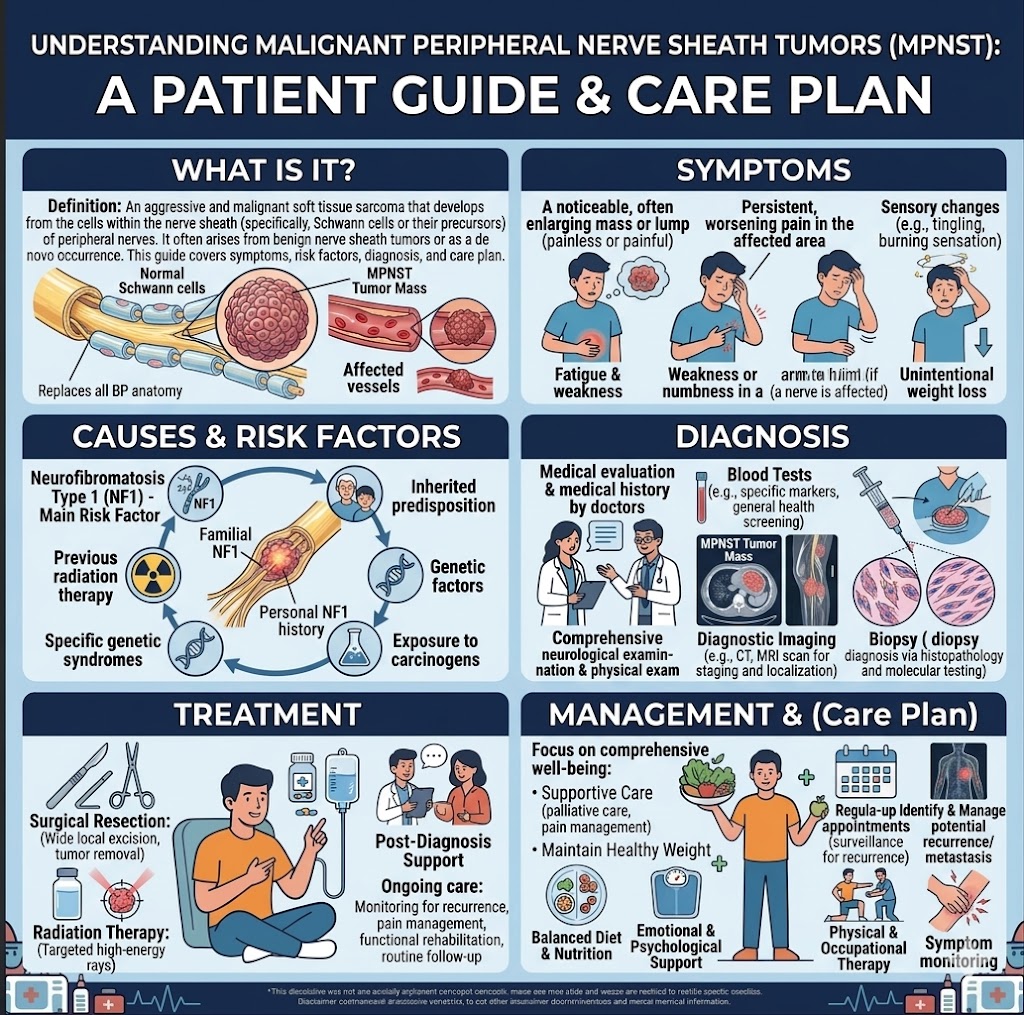
Malignant peripheral nerve sheath tumors (MPNST) are rare, aggressive cancers that develop in the protective lining of the nerves. These cancers occur in the peripheral nervous system, which consists of the nerves that extend from your spinal cord to the rest of your body. Previously known as neurofibrosarcomas, these tumors can develop anywhere in the body but are most frequently found in the deep tissues of the arms, legs, and torso. They typically cause localized pain, physical weakness, and may present as a rapidly growing mass.
Understanding the Condition
Malignant Peripheral Nerve Sheath Tumors (MPNST)
Understanding the Condition
Common Symptoms
Before your visit, compile a complete medical history, noting any personal or family history of genetic conditions like Neurofibromatosis 1 (NF1), or any past radiation therapy. Write down all current symptoms, when they started, a list of all current medications, and bring copies of any prior imaging scans or laboratory reports.
Book a doctor visit near me
Consultation Guide
Malignant peripheral nerve sheath tumors (MPNST) are rare, aggressive cancers that develop in the protective lining of the nerves. These cancers occur in the peripheral nervous system, which consists of the nerves that extend from your spinal cord to the rest of your body. Previously known as neurofibrosarcomas, these tumors can develop anywhere in the body but are most frequently found in the deep tissues of the arms, legs, and torso. They typically cause localized pain, physical weakness, and may present as a rapidly growing mass.
Localized Pain: Continuous or worsening pain directly at the site where the tumor is growing, often caused by the tumor pressing against nerves or surrounding tissues.
Physical Weakness: Difficulty moving or utilizing the specific body part or limb affected by the tumor, often accompanied by numbness or a tingling sensation.
Growing Lump: A noticeable, firm mass or lump of tissue developing underneath the skin that may rapidly increase in size over time.
Consultation Guide
Which Specialist to Meet
You should consult with a multidisciplinary oncology team. This typically includes a surgical oncologist (cancer surgeon), a neuro-oncologist or neurologist (nervous system specialists), and a radiation oncologist.
Preparations Before Your Visit
Diagnostic Procedures
Neurological Examination
An evaluation to assess how well your brain, spinal cord, nerves, and muscles are functioning.
What to Expect
During the exam, a specialist will test your reflexes using a small rubber hammer, evaluate your muscle strength, check your balance and coordination, and measure your ability to feel different sensations like light touch or temperature changes.
Computerized Tomography (CT) Scan
An advanced imaging test that uses X-rays from multiple angles to create detailed, cross-sectional views of the tissues, bones, and blood vessels.
What to Expect
You will lie flat on a motorized table that slides slowly into a large, doughnut-shaped scanner. You must remain very still during the scan, which takes only a few minutes. You may receive an intravenous (IV) injection of contrast dye beforehand to make the internal structures stand out clearly on the images.
Positron Emission Tomography (PET) Scan
An imaging test designed to highlight cellular metabolic activity, which helps identify fast-growing cancer cells that absorb energy more rapidly than healthy tissue.
What to Expect
You will receive an injection of a safe, mildly radioactive sugar tracer into a vein in your arm. After resting for about an hour to allow the tracer to circulate, you will lie on a narrow table that slides into a cylindrical scanner. The scanning process takes about 30 minutes, during which you must lie completely still.
A minor procedure where a doctor uses a thin, hollow needle to extract a small sample of tissue or cells directly from the tumor for laboratory analysis.
What to Expect
The doctor will numb the skin over the tumor with a local anesthetic. Using a CT scan or ultrasound for precise guidance, they will insert a needle through your skin to retrieve a tiny tissue sample. You may feel some pressure or mild discomfort, but the procedure is typically quick, and you can go home the same day.
Treatment Options
Surgical Procedures
Surgical Resection: The primary treatment for MPNST involves surgically removing the entire tumor along with a margin of surrounding healthy tissue to ensure no cancer cells are left behind. (Duration: Typically a single procedure lasting several hours, followed by a hospital stay of a few days to a week, and a home recovery period of several weeks.)
Therapies
Radiation Therapy: The use of high-energy beams to destroy remaining cancer cells. This is often used after surgery to lower the risk of the cancer returning, or before surgery to shrink the tumor. (Duration: Usually administered in daily sessions, five days a week, over a span of 5 to 7 weeks.)
Chemotherapy: The administration of powerful systemic medications that target and destroy rapidly dividing cancer cells throughout the body. It is often recommended if the cancer has spread. (Duration: Delivered in repeating cycles over a period of 3 to 6 months, allowing your body time to recover between treatment phases.)
Prevention & Long-Term Wellbeing
Cancer Rehabilitation: Specialized physical and occupational therapy designed to help you regain muscle strength, mobility, and nerve function that may have been affected by the tumor or its surgical removal. (Duration: Ongoing support for several weeks to months, tailored entirely to your personal physical recovery goals.)
Long-Term Monitoring and Prevention
Regular Surveillance Scans: Schedule routine MRI or CT scans as recommended by your oncologist to monitor for any early signs of tumor recurrence.
Genetic Counseling: If you have a personal or family history of Neurofibromatosis 1 (NF1), consult a genetic counselor to understand your health risks and implement early screening protocols.
Physical and Nerve Health Support: Engage in gentle, low-impact exercises under professional guidance to maintain joint mobility, stimulate blood flow, and support peripheral nerve function.
Integrative Health Practices: Incorporate stress-reduction techniques such as mindfulness, meditation, and balanced nutrition to support your body's natural healing processes and manage chronic pain.
Tags & Topics
Notice an error or need an update?
Help us keep medical information accurate. Report incorrect info or suggest an edit.


