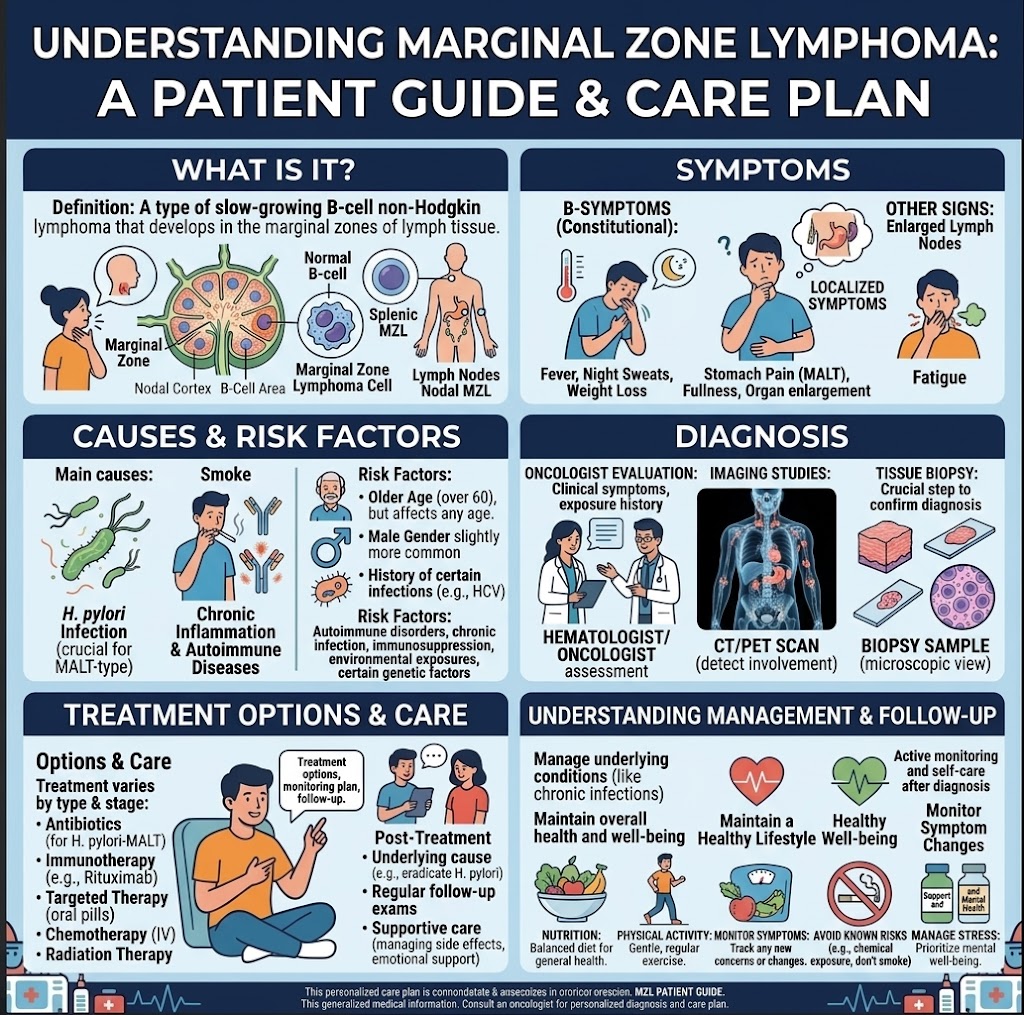
Marginal zone lymphoma (MZL) is a slow-growing type of cancer that affects the lymphatic system, a vital part of your body's immune system designed to fight germs. This system includes organs, glands, vessels, and groups of cells called lymph nodes. MZL is categorized as a type of non-Hodgkin lymphoma. The cancer begins in a specific area of the immune system called the marginal zone, where germ-fighting white blood cells, known as B cells, reside. In MZL, these B cells undergo changes that turn them into cancer cells. These cells can then grow in various parts of the body, including lymph nodes, bone marrow, stomach, spleen, and other organs.There are three main types of MZL:* **Extranodal Marginal Zone Lymphoma (MALT Lymphoma):** The most common type, it develops outside the lymph nodes, often in the stomach (gastric MALT lymphoma). It's frequently linked to long-term inflammation from infections, such as H. pylori. It can also affect other areas like the lungs, skin, thyroid, salivary glands, or eyes.* **Splenic Marginal Zone Lymphoma (SMZL):** This type primarily affects the spleen, and can also involve the lymph nodes, bone marrow, and blood. Some cases are connected to the hepatitis C virus.* **Nodal Marginal Zone Lymphoma (NMZL):** A rare type that starts directly in the lymph nodes.Treatment options vary depending on the specific type and location of MZL, and may include treatments for infections, various drug therapies, radiation, or surgery.
Understanding the Condition
Marginal Zone Lymphoma: A Guide for Non-Medical Readers
Understanding the Condition
Common Symptoms
Symptoms Vary by Location: The signs and symptoms of Marginal Zone Lymphoma can differ widely depending on where the cancer is growing in the body.
Splenic MZL Symptoms: May include an enlarged spleen, a feeling of bloating, and feeling full quickly after eating only a small amount of food.
Nodal MZL Symptoms: Can cause swollen lymph nodes, commonly felt in the neck, armpits, or groin area.
Extranodal MZL (Stomach) Symptoms: May involve symptoms such as heartburn or acid reflux (backwash of food or sour liquid in the throat), tenderness or pain in the belly, an upset stomach, and unexplained weight loss.
Extranodal MZL (Other Areas) Symptoms: Depending on the affected area:* **Salivary Glands:** Swelling in the face and a movable lump in the gland.* **Eye Area:** A lump or tumor, discharge, pain, discomfort, itching, dryness, double vision, or a droopy or bulging eye.* **Lungs:** Persistent cough, chest pain, shortness of breath, and potentially coughing up blood.* **Thyroid:** A growing lump in the neck, which might lead to difficulty swallowing, trouble eating or drinking, or hoarseness.* **Skin:** Noticeable skin lesions, typically found on the belly or arms.
Consultation Guide
Which Specialist to Meet
You should consult with a hematologist-oncologist, a doctor specializing in blood disorders and cancer. Depending on the location of the lymphoma, other specialists might be involved, such as a gastroenterologist for stomach involvement, or an ophthalmologist for eye-related issues.
Preparations Before Your Visit
Before your appointment, gather your complete medical history, including any past illnesses, surgeries, and family medical history. Make a detailed list of all your current symptoms, noting when they started and how often they occur. List all medications, supplements, and vitamins you are currently taking. Prepare a list of questions you want to ask your doctor. It can also be helpful to bring a family member or friend for support and to help take notes.
Book a doctor visit near me
Symptom Awareness and Reporting: Be vigilant about any new or worsening symptoms. Promptly report any changes in your health to your healthcare provider, as MZL can recur, and early detection is important for managing relapse.
Emotional and Psychological Support: Living with a chronic cancer like MZL can be challenging. Seek support from family, friends, support groups, or a mental health professional to help cope with the emotional impact and stress.
Diagnostic Procedures
Bone Marrow Biopsy and Aspiration
This procedure collects samples of your bone marrow, the spongy tissue inside some bones that produces blood cells. An aspiration collects a liquid sample, while a biopsy takes a small solid piece of tissue. These samples are then examined to check if your bone marrow is healthy and producing normal blood cells, and to diagnose conditions like MZL.
What to Expect
You will typically lie on your stomach or side. After cleaning the skin, the doctor will numb a small area on your hip bone. You might feel a sting from the numbing medicine. A thin needle is then inserted into the bone to withdraw liquid marrow (aspiration) and then a small piece of bone tissue (biopsy). You may feel pressure and a brief, sharp pain or pulling sensation as the samples are taken. The entire procedure usually takes about 15-30 minutes. Afterward, pressure will be applied to the site, and you might have some soreness or bruising for a few days.
An upper endoscopy is a procedure used to visually examine the upper part of your digestive system, which includes the esophagus, stomach, and the beginning of the small intestine. A long, flexible tube with a tiny camera (endoscope) is gently guided down your throat.
What to Expect
What to Expect
Tests like CT (Computed Tomography) scans and PET (Positron Emission Tomography) scans create detailed images of the inside of your body. These are used to identify the exact location and extent of the lymphoma, helping doctors understand how far the cancer has spread and stage the disease.
What to Expect
For a CT scan, you will lie on a table that slides into a large, donut-shaped machine. You may receive a contrast dye, either by injection or orally, to highlight certain areas. For a PET scan, you will receive an injection of a small amount of radioactive sugar before the scan, as cancer cells tend to absorb more sugar. Both procedures are generally painless and require you to lie still for a period. They typically last 30-60 minutes.
Regular Follow-Up Care: After diagnosis and treatment, regular appointments with your oncology team are crucial. These follow-ups typically involve physical exams, blood tests, and sometimes imaging scans to monitor your health and check for any signs of the lymphoma returning.
Treatment Options
Medications and Therapies
Treatment for Infections: For MZL linked to specific infections (like H. pylori in the stomach or Hepatitis C), treating the underlying infection with appropriate medications can sometimes lead to the lymphoma shrinking or disappearing. (Duration: Typically several weeks for antibiotic or antiviral courses, with ongoing monitoring.)
Immunotherapy: These treatments help your body's own immune system recognize and fight cancer cells. They may involve using man-made versions of immune system proteins or drugs that 'unblock' the immune system to better attack cancer. (Duration: Can range from several weeks to many months, sometimes continuing for years, depending on the specific therapy.)
Targeted Therapy: These drugs are designed to specifically attack unique vulnerabilities found in cancer cells, such as certain proteins or pathways involved in their growth, while minimizing harm to healthy cells. (Duration: Can be taken for weeks, months, or as an ongoing treatment for years, depending on response and side effects.)
Radiation Therapy: This treatment uses high-energy beams (like X-rays) to precisely target and kill cancer cells in a specific area of the body. Modern techniques aim to protect surrounding healthy tissues. (Duration: Typically delivered in daily sessions over several weeks.)
Surgical Procedures
Surgery: In some cases, especially for localized MZL (e.g., in the spleen or a specific extranodal site), surgery may be performed to remove the tumor or affected organ. (Duration: A single procedure, with recovery time varying from weeks to months depending on the extent of the surgery.)
Healthy Living Post-Treatment: Continue to prioritize a healthy lifestyle. This includes a nutritious diet, maintaining a healthy weight, and staying physically active as advised by your doctor, which can aid in recovery and overall well-being.
Prevention & Long-Term Wellbeing
You will likely receive a sedative to help you relax and make you comfortable. A local anesthetic spray might be used to numb your throat. The endoscope is then carefully passed down your throat. You might feel some pressure but shouldn't feel pain. The camera allows the doctor to look for any abnormalities and take small tissue samples (biopsies) if needed. The procedure usually takes 15-30 minutes, followed by a recovery period as the sedative wears off. You will need someone to drive you home.
Biopsy of Affected Tissue
If MZL is suspected in areas like the lymph nodes, skin, or other organs, a small tissue sample (biopsy) will be taken from the affected area. This tissue is then examined under a microscope by a pathologist to confirm the presence of cancer cells and determine the specific type of lymphoma.
The procedure varies depending on the location of the suspected lymphoma. For easily accessible areas like skin lesions or superficial lymph nodes, a local anesthetic will be used, and a small piece of tissue will be removed, often in an outpatient setting. For internal organs, the biopsy might be guided by imaging (like ultrasound or CT scan) or performed during a surgical procedure. You will receive instructions on preparation and recovery specific to your biopsy type, which may include sedation or general anesthesia for more complex procedures.
Chemotherapy: This involves using powerful drugs, usually given intravenously or orally, to kill fast-growing cancer cells throughout the body. These drugs target cells that multiply quickly, a characteristic of cancer cells. (Duration: Administered in cycles, often over several months, with breaks in between for recovery.)
Bone Marrow (Stem Cell) Transplant: This intensive procedure replaces bone marrow that isn't producing enough healthy blood cells, often after high-dose chemotherapy to destroy existing diseased cells. Healthy blood-forming stem cells are infused into your body, which then travel to your bone marrow to produce new, healthy blood cells. (Duration: Involves weeks of preparation (chemotherapy), a single transplant procedure, followed by months of recovery and close monitoring.)
Prevention and Risk Reduction
Address Underlying Infections: If you have chronic infections known to be linked to MZL, such as H. pylori or Hepatitis C, work with your doctor to treat and manage these conditions effectively, as this may reduce your risk.
Manage Autoimmune Conditions: If you have autoimmune diseases like Hashimoto's disease or Sjogren's syndrome, follow your doctor's recommendations for managing these conditions, as they are associated with an increased risk of MZL.
Maintain a Healthy Lifestyle: While not a direct preventative measure for MZL, a generally healthy lifestyle—including a balanced diet, regular physical activity, avoiding smoking, and limiting alcohol—supports overall immune function and general health, which can be beneficial.
Long-Term Wellbeing and Monitoring
Tags & Topics
Notice an error or need an update?
Help us keep medical information accurate. Report incorrect info or suggest an edit.


