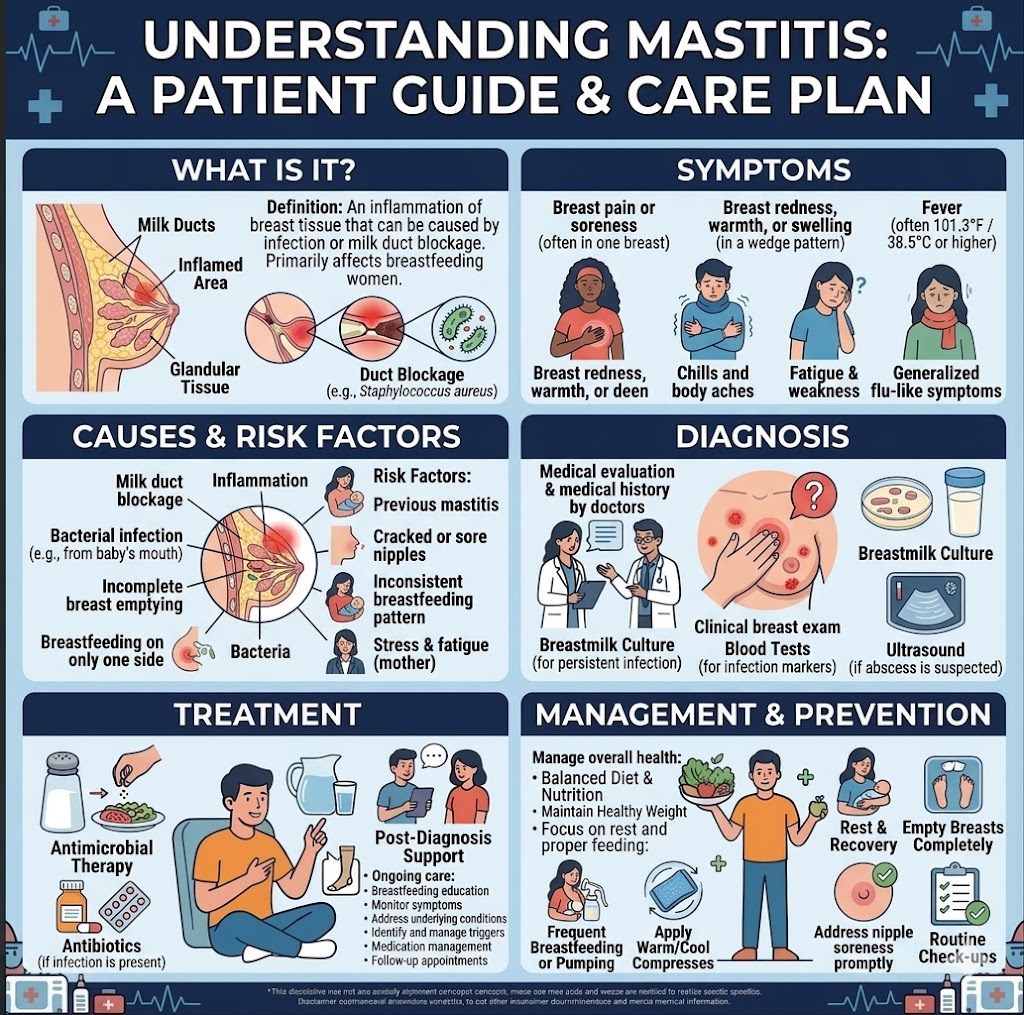
Mastitis is an inflammation of the breast tissue, which sometimes involves an infection. It commonly causes breast pain, warmth, swelling, and redness. If an infection is present, it can also lead to fever and chills. While it most frequently affects individuals who are breastfeeding, known as lactation mastitis, it can occur in anyone. Lactation mastitis can cause general unwellness, making daily tasks challenging. Though it might lead some to stop breastfeeding earlier than intended, continuing to breastfeed is generally beneficial for both parent and baby, even when taking medication.
Understanding the Condition
Mastitis: Understanding Breast Inflammation and Infection
Understanding the Condition
Common Symptoms
Breast Tenderness and Warmth: The affected breast may feel sore to the touch and noticeably warmer than usual.
Breast Swelling: The breast tissue can become noticeably enlarged and firm.
Thickening or Lump: You might feel a firm area or a distinct lump within the breast tissue.
Pain or Burning Sensation: A constant or intermittent painful, burning feeling in the breast, especially during breastfeeding.
Skin Redness: Red patches on the breast skin, sometimes appearing in a wedge-like shape. Note that this redness can be more difficult to observe on darker skin tones.
General Unwell Feeling: A general sense of being unwell, similar to having the flu.
Fever and Chills: An elevated body temperature of 101°F (38.3°C) or higher, often accompanied by chills.
Consultation Guide
Which Specialist to Meet
You should consult a primary care physician or an obstetrician/gynecologist (OB/GYN) if you experience symptoms of mastitis. If you are breastfeeding, a lactation consultant can also provide valuable guidance and support.
Preparations Before Your Visit
Before your visit, be prepared to describe your symptoms in detail, including when they started, their severity, and any factors that seem to make them better or worse. Provide your full medical history, a list of any current medications or supplements you are taking, and if applicable, details about your breastfeeding practices.
Book a doctor visit near me
Your doctor will physically examine your breast, checking for tenderness, warmth, swelling, redness, and any lumps or thickened areas. They will also inquire about your symptoms and medical history.
During a physical exam, your doctor will gently feel your breasts and underarms. They will look for any visible changes, such as redness or swelling, and ask you to describe your symptoms. This exam helps the doctor assess the affected area and determine the next steps in diagnosis.
A mammogram is a specialized X-ray of the breast tissue. It is used to check for underlying issues in the breast, such as blocked ducts or a collection of pus (abscess), and to rule out other conditions like breast cancer, especially if symptoms are unusual or persistent.
Frequent Breast Emptying: If breastfeeding, ensure breasts are emptied completely and often. This can be achieved through regular feeding or by hand expression or pumping. (Duration: Continuous until symptoms resolve.)
Warm Compresses: Applying warm, moist compresses to the affected breast before feeding or pumping can help milk flow and ease discomfort. (Duration: As needed, several times a day.)
Pain Relief: Over-the-counter pain relievers can help manage breast pain and reduce fever. (Duration: As needed, typically for a few days.)
Antibiotic Therapy: If a bacterial infection is present, your doctor will prescribe a course of antibiotics to eliminate the germs. (Duration: Typically 10 to 14 days; it's crucial to complete the entire course even if symptoms improve sooner.)
Prompt Medical Attention: Seek medical advice immediately if you experience new breast symptoms, especially if you have a history of mastitis, to prevent recurrence or complications.
Follow-up Care: Ensure you follow up with your healthcare professional as advised to confirm complete resolution of symptoms and prevent chronic issues.
Consultation Guide
Mastitis is an inflammation of the breast tissue, which sometimes involves an infection. It commonly causes breast pain, warmth, swelling, and redness. If an infection is present, it can also lead to fever and chills. While it most frequently affects individuals who are breastfeeding, known as lactation mastitis, it can occur in anyone. Lactation mastitis can cause general unwellness, making daily tasks challenging. Though it might lead some to stop breastfeeding earlier than intended, continuing to breastfeed is generally beneficial for both parent and baby, even when taking medication.
Diagnostic Procedures
What to Expect
What to Expect
During the procedure, you will stand in front of an X-ray machine. A technician will position your breast on a platform, and it will be gently but firmly compressed between two plates. This compression helps to spread out the breast tissue for clearer images. You may feel some pressure or discomfort for a brief moment. Several images are taken of each breast from different angles. The entire process typically takes about 15-30 minutes.
If imaging tests reveal a suspicious lump or area that cannot be definitively identified as non-cancerous, a breast biopsy may be recommended. This procedure involves removing a small sample of breast tissue for laboratory analysis by specialists called pathologists. They examine the tissue under a microscope to determine its nature.
What to Expect
Before the biopsy, your doctor will clean and numb the skin of your breast with a local anesthetic, so you should only feel a brief sting initially. Depending on the type of biopsy, a small incision might be made, or a hollow needle will be guided into the suspicious area, often with the help of ultrasound or X-ray imaging, to collect tissue samples. You might feel some pressure or a pulling sensation during the sample collection. The procedure usually takes 30-60 minutes. After the biopsy, a small bandage will be applied, and you will receive instructions for care and activity restrictions.
Treatment Options
Home Remedies & Self-Care
Medications
Prevention & Long-Term Wellbeing
Rest and Hydration: Getting plenty of rest and staying well-hydrated supports your body's healing process. (Duration: Continuous until recovery.)
Abscess Drainage: If mastitis progresses to form an abscess (a collection of pus), it may need to be drained. This can be done with a needle and syringe or through a small surgical incision. (Duration: A one-time procedure, with recovery time varying based on the method and size of the abscess.)
Prevention
Lactation Support: If breastfeeding, consider meeting with a lactation consultant before or shortly after birth to ensure proper feeding techniques and prevent issues.
Effective Breast Emptying: Ensure your baby empties one breast fully before switching to the other. Feed on demand or express milk frequently to prevent milk from getting trapped.
Vary Feeding Positions: Change your baby's feeding position from one feeding to the next to ensure all areas of the breast are drained effectively.
Good Latch: Make sure your baby latches onto the breast properly during feedings to ensure efficient milk removal and prevent nipple soreness.
Nipple Care: Address any sore or cracked nipples promptly, as these can be entry points for germs.
Avoid Pressure: Wear supportive, non-constricting bras and avoid anything that puts excessive pressure on your breasts, which can restrict milk flow.
Lifestyle Management: Prioritize adequate rest, manage stress, and maintain a healthy, balanced diet to support overall immune function.
Smoking Cessation: If you smoke, seek support to quit, as smoking can increase your risk of mastitis and other health issues.
Long-Term Wellbeing
Tags & Topics
Notice an error or need an update?
Help us keep medical information accurate. Report incorrect info or suggest an edit.


