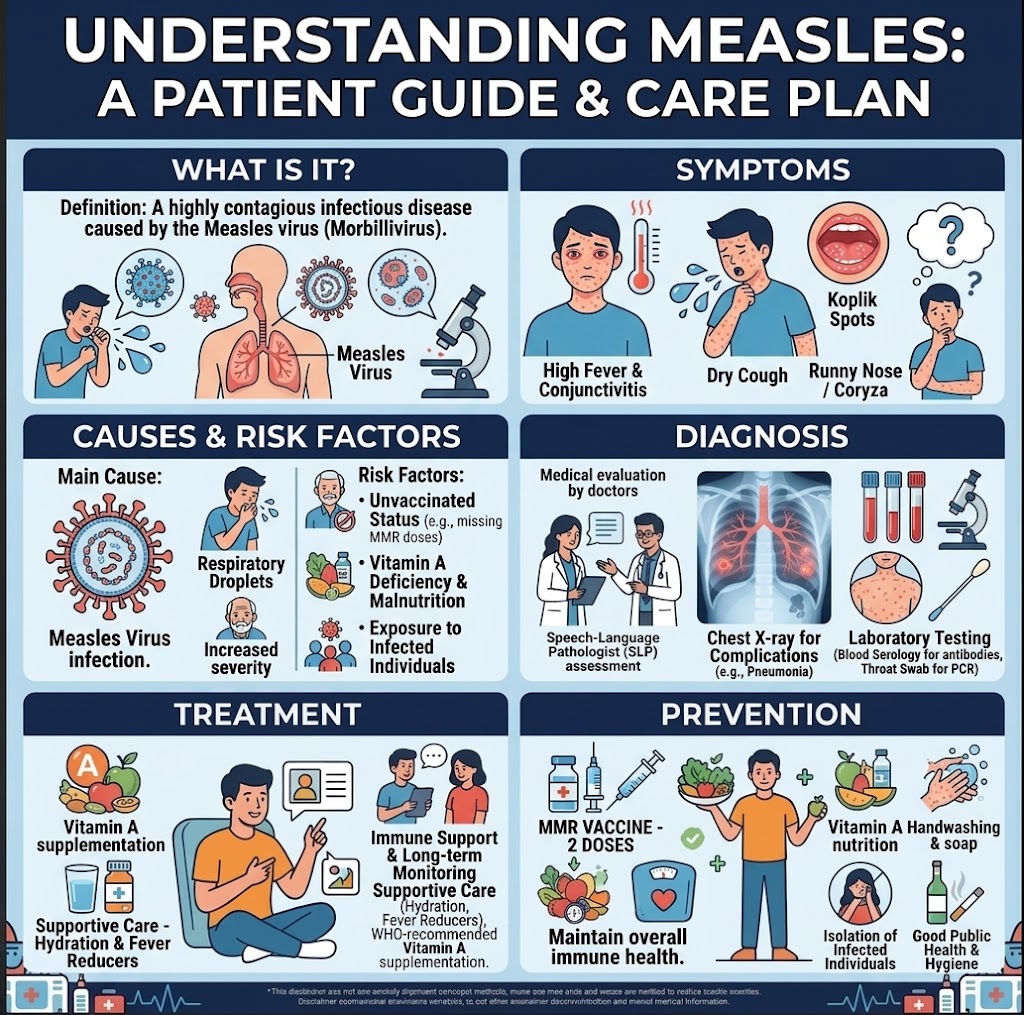
Measles, also known as rubeola, is a highly contagious viral illness that was once very common in childhood. It spreads easily through the air when an infected person coughs or sneezes, and the virus can also live on surfaces for a short time. While most people recover within about 10 days without lasting problems, measles can be very serious and potentially life-threatening, particularly for infants, young children under five, and individuals with weakened immune systems. A safe and effective vaccine can prevent measles infection. Treatment focuses on managing symptoms and preventing potential complications, which can range from ear infections to more severe issues like pneumonia or brain swelling.
Understanding the Condition
Measles, also known as rubeola, is a highly contagious viral illness that was once very common in childhood. It spreads easily through the air when an infected person coughs or sneezes, and the virus can also live on surfaces for a short time. While most people recover within about 10 days without lasting problems, measles can be very serious and potentially life-threatening, particularly for infants, young children under five, and individuals with weakened immune systems. A safe and effective vaccine can prevent measles infection. Treatment focuses on managing symptoms and preventing potential complications, which can range from ear infections to more severe issues like pneumonia or brain swelling.
Common Symptoms
Early Symptoms: Measles symptoms typically begin 7 to 14 days after exposure to the virus. Initial signs often include a high fever, sometimes reaching 104°F (40°C), a dry cough, a runny nose, a sore throat, and red, watery eyes.
Koplik Spots: About two to three days after the first symptoms appear, tiny white spots with bluish-white centers, known as Koplik spots, may be seen inside the mouth on the cheeks. These spots are unique to measles.
Measles Rash: A characteristic skin rash usually develops three to five days after the initial symptoms, or about 14 days after exposure. This blotchy rash consists of large, flat spots that sometimes have small raised bumps. Its color can vary from shades of red to purple or brown, depending on your skin tone. The rash typically begins on the face and behind the ears before spreading downwards to the chest, back, arms, and finally the legs and feet.
Consultation Guide
Which Specialist to Meet
Initially, you should consult with your primary care provider or a pediatrician for children. If complications arise or if you have specific concerns, an infectious disease specialist may be recommended.
Preparations Before Your Visit
Before your visit, be prepared to discuss when symptoms started, recent travel history, any known exposure to someone with measles, and your vaccination records. Make a list of all symptoms you or your child are experiencing, including fever measurements, and any medications or home remedies already tried. Be sure to inform the clinic staff about suspected measles *before* arriving, as special precautions may be needed to prevent further spread.
Book a doctor visit near me
Diagnosis often begins with a thorough physical examination. Your doctor will look for the characteristic measles rash, assess other symptoms like fever, cough, and inflamed eyes, and specifically check for Koplik spots inside the mouth, which are highly indicative of measles.
During the examination, the doctor will ask about your symptoms, medical history, vaccination status, and any potential exposure to the measles virus. They will then visually inspect your skin, eyes, and inside of your mouth. This part of the diagnosis is non-invasive and generally quick.
Fever and Pain Relief: Over-the-counter fever reducers and pain relievers can help manage fever and discomfort. For children, use products specifically formulated for pediatric use and avoid aspirin due to the risk of Reye's syndrome. (Duration: As needed for symptoms.)
Humidifier and Eye Care: A humidifier can help soothe a cough and sore throat. For inflamed eyes, gently clean eyelids with a damp cloth and avoid bright lights. (Duration: As needed for symptoms.)
Medical Interventions
Vitamin A Supplementation: For children, especially those in areas with poor nutrition or vitamin A deficiency, supplementation may be prescribed to reduce the severity of measles and prevent complications like eye damage. (Duration: Typically two doses given 24 hours apart.)
Immune Globulin: In certain high-risk individuals, such as infants, pregnant women, or those with severely weakened immune systems who have been exposed to measles, an injection containing antibodies (immune globulin) may be given shortly after exposure. This can either prevent measles or make the illness milder. (Duration: Single injection, given within six days of exposure.)
Antibiotics for Secondary Infections: While antibiotics do not treat the measles virus itself, they may be prescribed if bacterial complications, such as ear infections or pneumonia, develop. (Duration: Course varies depending on the specific infection, typically 5-10 days.)
Measles Vaccination (MMR Vaccine): The most effective way to prevent measles is through vaccination. The measles vaccine is typically given as part of a combined vaccine that also protects against mumps and rubella (MMR). This vaccine is highly effective, preventing measles in about 97% of individuals who receive two doses. Even if a vaccinated person contracts measles, the symptoms are usually much milder.
Childhood Vaccination Schedule: Children usually receive two doses of the MMR vaccine. The first dose is recommended between 12 and 15 months of age, and the second dose between 4 and 6 years of age, before starting school. In specific situations, such as international travel or local outbreaks, a child between 6 and 11 months may receive an early dose, though two additional doses are still required after their first birthday for long-term protection. The second dose can be given as early as 28 days after the first if needed.
Watch for Complications: While most people recover fully, it's important to monitor for potential complications, especially in vulnerable groups. These can include ear infections, pneumonia, bronchitis, diarrhea, and, rarely, encephalitis (brain inflammation). Seek medical attention if symptoms worsen or new ones develop after the initial illness.
Consultation Guide
For a blood test, a healthcare professional will draw a small sample of blood, usually from a vein in your arm, using a needle. This process is generally brief and may cause a momentary pinch. For a viral swab, a sterile cotton swab will be gently rubbed against the back of your throat, inside your nose, or used to collect a urine sample. These procedures are quick and may cause mild discomfort but are not painful.
Diagnostic Procedures
What to Expect
Laboratory Tests (Blood or Viral Swab)
To confirm a measles diagnosis, laboratory tests are typically performed. These tests can detect the presence of measles antibodies in your blood, indicating a recent or past infection, or identify the measles virus itself from a viral swab (such as from the throat or nose) or urine sample.
What to Expect
Adult Vaccination Guidelines: Most adults born before 1957 are presumed to have natural immunity from having had measles. For other adults, especially those who travel internationally, work in healthcare, or are in an outbreak area, vaccination is recommended if they have no evidence of immunity (e.g., documented prior infection, lab test results, or two doses of MMR vaccine). Immunity from natural infection or full vaccination is generally lifelong.
Avoiding Exposure: If there is a measles outbreak or if you are unvaccinated, limit contact with individuals who are sick. Measles is highly contagious and can spread from four days before the rash appears until four days after.
Prevention & Long-Term Wellbeing
Measles (Rubeola): Understanding, Prevention, and Care
- Understanding the Condition
Rest and Hydration: Plenty of rest is crucial for recovery. Drink plenty of fluids like water, juice, and herbal teas to prevent dehydration, especially with fever. (Duration: Throughout the illness, typically 7-10 days.)
Prevention
Tags & Topics
Notice an error or need an update?
Help us keep medical information accurate. Report incorrect info or suggest an edit.


