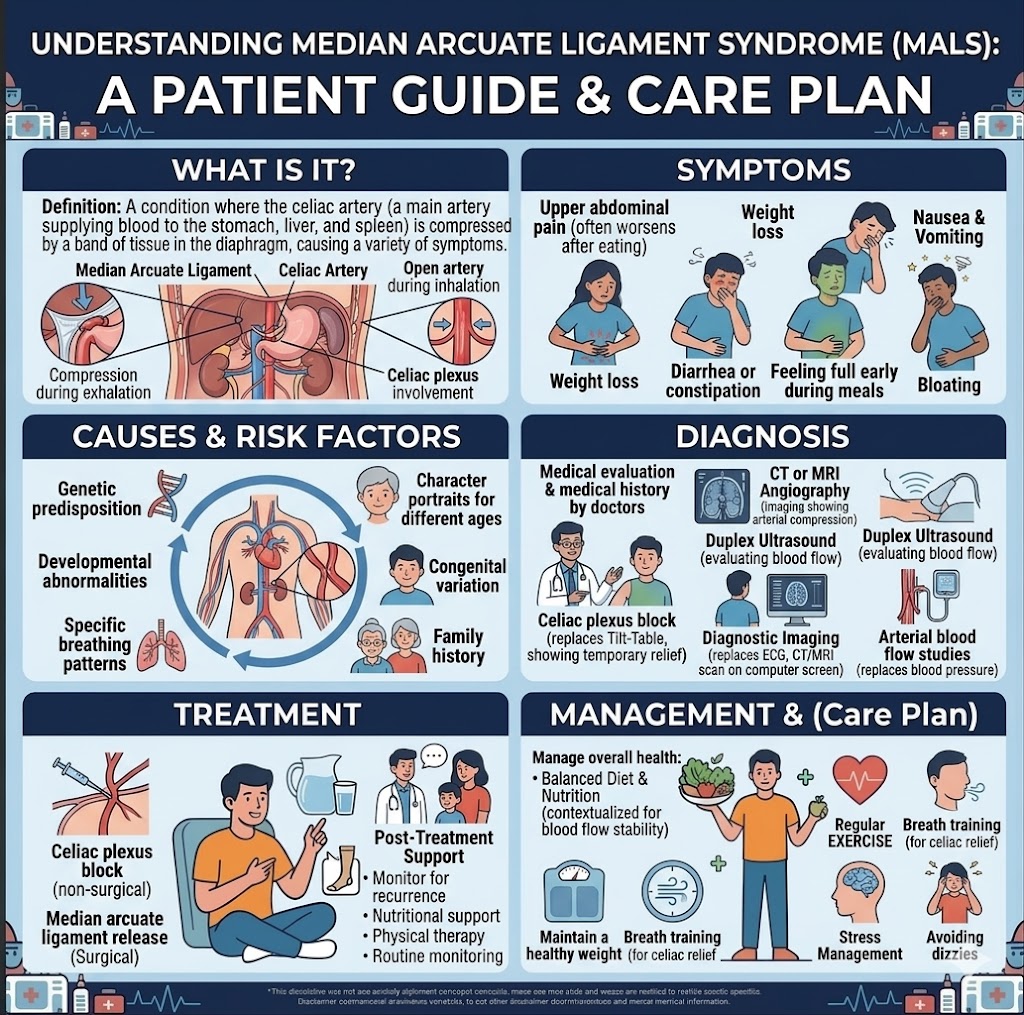
Median arcuate ligament syndrome (MALS) is a condition where a fibrous band of tissue in the upper abdomen, called the median arcuate ligament, presses on the celiac artery. This vital artery supplies blood to the stomach, spleen, and liver. Typically, this ligament arches over the body's main blood vessel, the aorta, with the celiac artery positioned safely below. However, if the ligament or artery is out of place, the ligament can compress the celiac artery and a network of surrounding nerves (the celiac plexus). This nerve compression is the primary cause of symptoms, which can include significant stomach pain. MALS can affect anyone, including children, and is also known as Celiac artery compression syndrome, Celiac axis syndrome, or Dunbar syndrome. Surgical intervention is often required to relieve the pressure.
Understanding the Condition
Median Arcuate Ligament Syndrome (MALS): Understanding and Managing Celiac Artery Compression
Understanding the Condition
Median arcuate ligament syndrome (MALS) is a condition where a fibrous band of tissue in the upper abdomen, called the median arcuate ligament, presses on the celiac artery. This vital artery supplies blood to the stomach, spleen, and liver. Typically, this ligament arches over the body's main blood vessel, the aorta, with the celiac artery positioned safely below. However, if the ligament or artery is out of place, the ligament can compress the celiac artery and a network of surrounding nerves (the celiac plexus). This nerve compression is the primary cause of symptoms, which can include significant stomach pain. MALS can affect anyone, including children, and is also known as Celiac artery compression syndrome, Celiac axis syndrome, or Dunbar syndrome. Surgical intervention is often required to relieve the pressure.
Common Symptoms
Stomach Pain: Often severe, occurring after eating or exercising. This pain may temporarily improve by leaning forward or backward, or standing while eating. The fear of experiencing this pain can lead to changes in eating habits.
Unintended Weight Loss: Due to reduced food intake motivated by the fear of post-meal pain.
Nausea and Vomiting: Digestive distress accompanying the abdominal pain.
When to Seek Immediate Medical Help: Contact a healthcare professional immediately if stomach pain is severe and worsens with activity or movement, or if it occurs with bloody stools, persistent nausea and vomiting, severe tenderness when touching the belly, belly swelling, or yellowing of the skin or eyes (jaundice). These could indicate a more serious condition.
Consultation Guide
Which Specialist to Meet
Initially, a primary care physician can evaluate your symptoms. If MALS is suspected, they may refer you to specialists such as a gastroenterologist (digestive system expert), a vascular surgeon (blood vessel specialist), or a pain management specialist.
Preparations Before Your Visit
Before your visit, keep a detailed diary of your symptoms, noting when they occur, what triggers them, and what relieves them. Be prepared to discuss your complete medical history, including any previous surgeries or injuries to your upper abdomen, and all medications, supplements, and vitamins you are taking. Compile a list of questions to ask your doctor.
Book a doctor visit near me
This procedure uses a thin, flexible tube with a camera (endoscope) inserted down your throat to visually examine your esophagus, stomach, and the beginning of your small intestine (duodenum). While it doesn't directly diagnose MALS, it is crucial for ruling out other digestive conditions that can cause similar symptoms, such as ulcers or inflammation.
A routine blood test that measures various components of your blood, including red blood cells, white blood cells, and platelets. While not specific for MALS, a CBC can help assess overall health, detect signs of infection, anemia (which can result from poor nutrition due to fear of eating), or other underlying conditions that might mimic or complicate MALS symptoms.
Lifestyle and Symptom Management
Pain Management: Over-the-counter pain relievers or prescription medications may be used to help manage pain. Anti-nausea medications can alleviate related digestive distress. (Duration: As needed, for symptom relief)
Postural Changes: Experimenting with body positions that might temporarily relieve pressure on the celiac artery and nerves, such as leaning forward while eating. (Duration: As needed, for immediate relief)
Follow-Up Care: Regular follow-up appointments with your surgeon and other specialists are crucial to monitor recovery, assess symptom resolution, and manage any persistent issues. This may include repeat imaging tests.
Consultation Guide
A healthcare professional will draw a small sample of blood, usually from a vein in your arm, using a needle. This is a quick procedure that typically causes only a brief pinch or sting. No special preparation is usually needed.
Diagnostic Procedures
This non-invasive imaging test uses sound waves to create real-time images of the organs and blood vessels within your belly. It can help assess blood flow through the celiac artery and identify potential compression, especially during different breathing phases.
What to Expect
You will lie on an examination table. A gel will be applied to your abdomen, and a handheld device called a transducer will be moved across your skin. You may be asked to hold your breath briefly at certain times. The procedure is typically painless and takes about 30 minutes to an hour. You might be asked to fast for several hours beforehand.
CT Scan (Computed Tomography Scan)
A CT scan uses specialized X-ray equipment and computer processing to create detailed cross-sectional images (slices) of your bones, blood vessels, and soft tissues. It can provide a clear view of the median arcuate ligament's position relative to the celiac artery and surrounding nerves, helping to visualize the compression.
What to Expect
You will lie on a narrow table that slides into a large, donut-shaped machine. You may receive an intravenous (IV) injection of a contrast dye to enhance the visibility of blood vessels. You will need to remain very still during the scan, which typically takes 15-30 minutes. The procedure is usually painless, though some people feel a warming sensation from the contrast dye.
Upper Endoscopy (Esophagogastroduodenoscopy - EGD)
What to Expect
You will likely receive a sedative to help you relax and your throat will be numbed. The endoscope is gently guided down your throat. You may feel some pressure, but it should not be painful. The procedure usually takes 15-30 minutes. You will need to fast for several hours before the procedure and arrange for someone to drive you home afterward due to the sedation.
Complete Blood Count (CBC)
What to Expect
Treatment Options
Decompression Surgery (Open or Minimally Invasive): The primary treatment involves surgically cutting or releasing the median arcuate ligament to relieve pressure on the celiac artery and surrounding nerves. This can be performed as an open surgery (through a larger incision) or through minimally invasive techniques like laparoscopy or robotic surgery, which use small incisions, tiny cameras, and specialized instruments. (Duration: One-time procedure, with a recovery period typically spanning several weeks to months depending on the surgical approach and individual)
Pain Management Strategies: For some, chronic pain may persist even after surgery. Exploring various pain management techniques, including physical therapy, nerve blocks, or medication, can improve quality of life.
Mental Health Support: Coping with chronic pain and potential fear of eating can lead to anxiety, depression, or stress. Seeking support from therapists, counselors, or support groups can provide valuable coping strategies and emotional wellbeing.
Gradual Return to Activity: Following surgery, a gradual and guided return to physical activities is important to ensure proper healing and prevent complications. Consult with your healthcare team about appropriate exercise levels.
Prevention & Long-Term Wellbeing
Dietary Adjustments: Eating smaller, more frequent meals to reduce digestive load and potential discomfort. Avoiding trigger foods that exacerbate pain. (Duration: Ongoing for long-term management)
Long-Term Monitoring and Support
Nutritional Support: Work with a dietitian to develop a personalized meal plan that ensures adequate nutrition, especially if fear of eating or weight loss has been a significant issue. This helps prevent deficiencies and promotes healing.
Tags & Topics
Notice an error or need an update?
Help us keep medical information accurate. Report incorrect info or suggest an edit.


