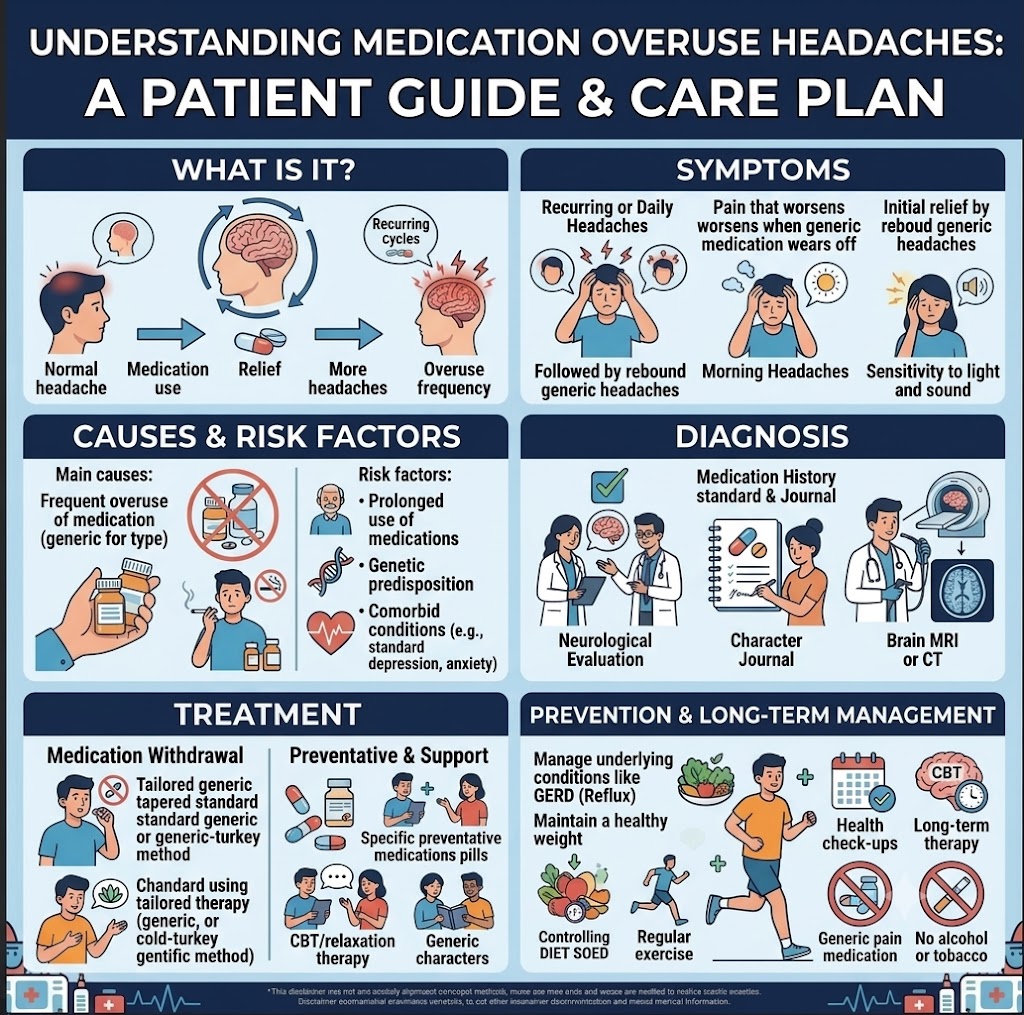
Medication overuse headaches, also known as rebound headaches, occur when individuals frequently use pain relievers to treat headaches, such as migraines. While occasional use of headache medication is safe, taking them more than a couple of days a week can paradoxically lead to more headaches. This condition primarily affects people with existing headache disorders, though those regularly taking pain relievers for other conditions, like arthritis, can also be at risk. The headaches typically resolve once the overused medication is stopped, though managing this transition can be challenging. A healthcare professional can provide guidance and help prevent their recurrence.
Understanding the Condition
Common Symptoms
Frequent Headaches: Headaches occur daily or almost every day, often waking individuals from sleep.
Bridging Therapies for Withdrawal: During the withdrawal period, your doctor may prescribe non-addictive medications or other therapies to help manage the temporary increase in headache pain and associated symptoms. (Duration: As needed during the withdrawal phase.)
Consultation Guide
Your doctor will ask detailed questions about your headache frequency, characteristics, and especially the types and amounts of pain medications you've been taking. They will review your headache diary if you've kept one. A physical and neurological examination may also be performed to rule out other possible causes for your headaches.
Preventive Medications: For individuals with an underlying headache condition like migraine, preventive medications may be started once the overused medication is stopped, to reduce future headache frequency and severity. Newer migraine medications are available that do not appear to cause medication overuse headaches. (Duration: Long-term, as prescribed by your doctor.)
Therapies and Procedures
Acupuncture: Involves inserting very thin needles into specific points on the body. This is believed to stimulate nerves and muscles, potentially boosting the body's natural painkillers or rebalancing energy flow to alleviate pain. (Duration: Multiple sessions, typically weekly or bi-weekly, over several weeks to months.)
Biofeedback: A mind-body technique where you learn to control normally involuntary body functions, such as heart rate or muscle tension, using electronic monitoring. This helps you manage stress and reduce headache triggers. (Duration: Often 8-10 sessions with a therapist, followed by ongoing self-practice.)
Botulinum Toxin Injections: Injections of a purified toxin that blocks nerve signals that cause muscles to contract. For chronic migraines, it helps prevent headache attacks by interrupting pain pathways. (Duration: Effects last approximately 10-12 weeks, requiring repeat injections every 3 months.)
Chiropractic Adjustment (Spinal Manipulation): A procedure where trained specialists apply controlled force to spinal joints to improve movement and ease pain, particularly in the neck and head, which can contribute to certain headaches. (Duration: Varies depending on the individual and condition, often a series of sessions over several weeks or months.)
Cognitive Behavioral Therapy (CBT): A structured therapy that helps individuals identify and change unhelpful thinking patterns and behaviors related to pain, stress, and coping mechanisms, providing practical strategies for managing chronic conditions. (Duration: Typically short-term, 5-20 sessions, with ongoing practice of learned skills.)
Hypnosis (Hypnotherapy): A guided state of increased relaxation and focused attention, used to help individuals gain control over behaviors, cope with anxiety, and manage pain perception. (Duration: Several sessions, duration varies based on individual needs and therapeutic goals.)
Diagnostic Procedures
You should consult a primary care provider, who may refer you to a neurologist or a headache specialist. These specialists have expertise in diagnosing and managing complex headache conditions.
Preparations Before Your Visit
The diagnosis of medication overuse headaches is primarily based on a thorough review of your medical history and headache patterns, particularly your use of headache pain relievers. There are no specific lab tests or imaging scans to diagnose this condition.
What to Expect
Treatment Options
Medication Overuse Headaches (Rebound Headaches)
Understanding the Condition
Medication overuse headaches, also known as rebound headaches, occur when individuals frequently use pain relievers to treat headaches, such as migraines. While occasional use of headache medication is safe, taking them more than a couple of days a week can paradoxically lead to more headaches. This condition primarily affects people with existing headache disorders, though those regularly taking pain relievers for other conditions, like arthritis, can also be at risk. The headaches typically resolve once the overused medication is stopped, though managing this transition can be challenging. A healthcare professional can provide guidance and help prevent their recurrence.
Temporary Relief, Then Return: Headaches improve with pain medicine but return as the medication wears off.
Restlessness: Feeling agitated or unable to relax.
Trouble Concentrating: Difficulty focusing on tasks or thoughts.
Memory Problems: Challenges with recalling information or events.
Irritability: Increased annoyance or short temper. It's important to take any severe or unusual headaches seriously and seek medical advice, as some types can be life-threatening.
Consultation Guide
Which Specialist to Meet
Before your visit, keep a detailed headache diary for at least a few weeks. Record when headaches occur, their severity, all medications (including over-the-counter) you take for them, and any potential triggers. Also, list all your current medications for any condition and prepare questions for your doctor.
Book a doctor visit near me
Medication Management
Stopping Overused Medication: The main treatment involves gradually reducing or abruptly stopping the pain reliever causing the problem. This can be challenging as headaches often worsen temporarily during withdrawal. (Duration: Initial withdrawal can take days to weeks, with full resolution taking several weeks to months.)
Avoid Certain Painkillers: If possible, do not use medications containing butalbital or opioids for headache treatment due to their high risk of causing medication overuse headaches.
Limit Simple Pain Relievers: Use over-the-counter pain relievers (e.g., ibuprofen, naproxen, acetaminophen) fewer than 14 days a month.
Limit Specific Migraine Medicines: Restrict the use of triptans or combined pain relievers (e.g., those with caffeine, aspirin, acetaminophen) to no more than nine days a month.
Identify and Avoid Triggers: Keep a headache diary to identify patterns and specific factors that lead to your headaches, then make efforts to avoid them.
Ensure Adequate Sleep: Maintain a consistent sleep schedule by going to bed and waking up at the same time each day, even on weekends.
Practice Regular Meals: Do not skip meals. Start your day with a healthy breakfast and eat lunch and dinner at consistent times.
Stay Hydrated: Drink plenty of water and other non-caffeinated fluids throughout the day.
Exercise Regularly: Engage in physical activity that you enjoy. Exercise releases natural chemicals in the body that can help block pain signals and reduce stress.
Manage Stress: Simplify your schedule, plan your day effectively, and try to maintain a positive outlook to reduce stress levels.
Maintain a Healthy Weight: Obesity can worsen headaches. If needed, consult your doctor for a weight management plan.
Quit Smoking: Smoking is associated with a higher risk of medication overuse headaches. Seek support from your doctor if you smoke.
Limit Caffeine Intake: Daily caffeine from coffee, soda, or even some pain relievers can contribute to medication overuse headaches. Be mindful of all caffeine sources.
Prevention & Long-Term Wellbeing
Take Headache Medicine as Prescribed: Adhere strictly to your doctor's instructions regarding dosage and frequency to avoid overuse.
Consult Doctor for Frequent Use: Contact your healthcare professional if you find yourself needing acute headache medicine more than twice a week.
Tags & Topics
Notice an error or need an update?
Help us keep medical information accurate. Report incorrect info or suggest an edit.


