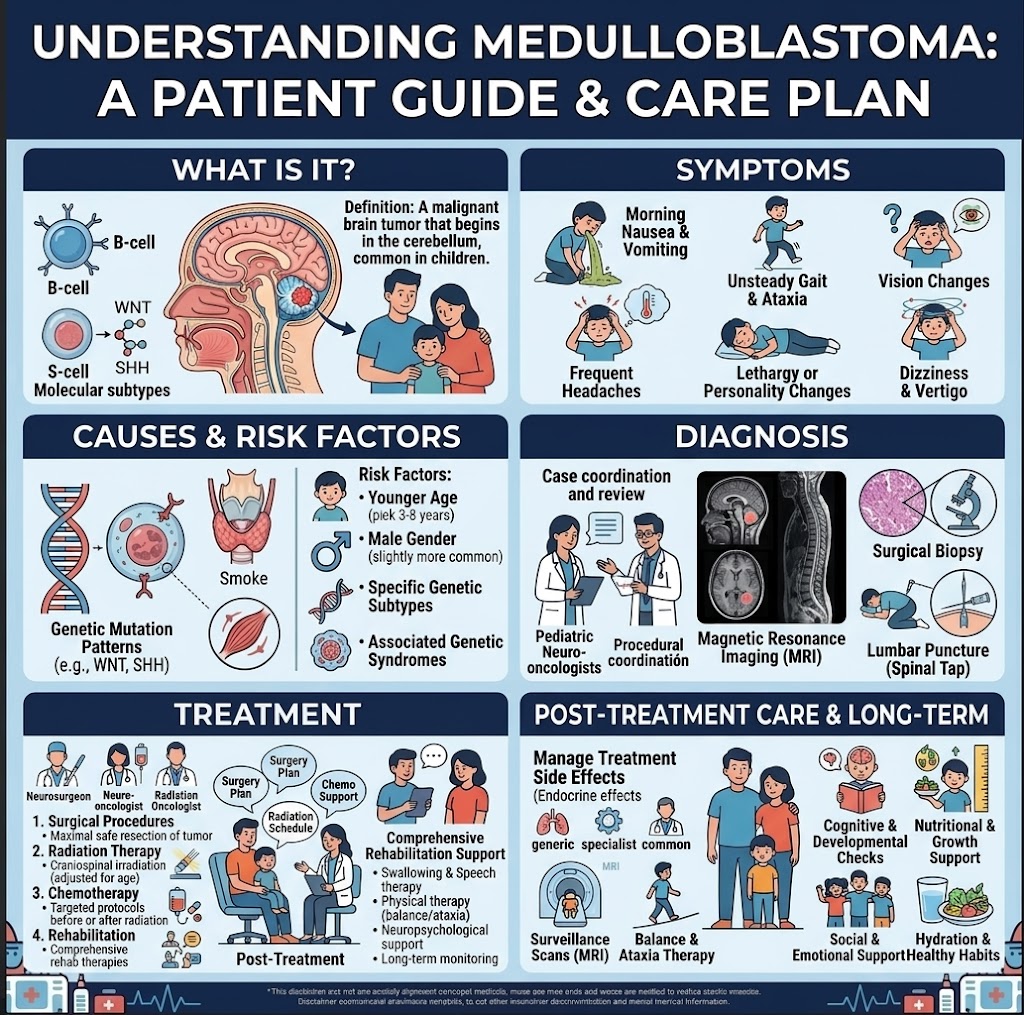
Medulloblastoma (muh-dul-o-blas-TOE-muh) is a cancerous brain tumor beginning in the cerebellum. This part of the brain, located at the lower back, controls muscle coordination, balance, and movement. The tumor involves rapid cell growth that can spread via cerebrospinal fluid, which surrounds the brain and spinal cord. It rarely spreads beyond the central nervous system. While uncommon, medulloblastoma is the most prevalent cancerous brain tumor in young children, though it can affect any age. A family history of certain genetic syndromes, like Gorlin or Turcot syndrome, can increase risk.
Understanding the Condition
Medulloblastoma: Understanding a Rare Pediatric Brain Cancer
Understanding the Condition
Medulloblastoma (muh-dul-o-blas-TOE-muh) is a cancerous brain tumor beginning in the cerebellum. This part of the brain, located at the lower back, controls muscle coordination, balance, and movement. The tumor involves rapid cell growth that can spread via cerebrospinal fluid, which surrounds the brain and spinal cord. It rarely spreads beyond the central nervous system. While uncommon, medulloblastoma is the most prevalent cancerous brain tumor in young children, though it can affect any age. A family history of certain genetic syndromes, like Gorlin or Turcot syndrome, can increase risk.
Common Symptoms
Double Vision: Seeing two images of a single object.
Poor Coordination: Difficulty performing smooth, controlled movements.
Unsteady Walk: Trouble maintaining balance, leading to an unsteady or wobbly gait.
Consultation Guide
Which Specialist to Meet
Before your visit, prepare a detailed list of your symptoms (onset, changes), past medical conditions, all current medications/supplements, known family history of cancer/genetic syndromes, and questions for the doctor.
Book a doctor visit near me
Consultation Guide
External Ventricular Drain (EVD): A temporary tube placed in the brain to drain excess cerebrospinal fluid, relieving pressure (hydrocephalus). Used in emergencies or around surgery until fluid flow normalizes or other treatment is in place. (Duration: Temporary, typically days to a few weeks, until the underlying cause of fluid buildup is resolved or a permanent solution is implemented.)
Diagnostic Procedures
Neurological Examination
A neurological exam assesses brain, spinal cord, nerve, and muscle function to identify nervous system issues.
What to Expect
A specialist checks reflexes, strength, balance, coordination, vision, and cognitive skills. This quick exam involves simple tasks, taking minutes to an hour.
Brain Magnetic Resonance Imaging (MRI)
An MRI uses strong magnets and radio waves to produce detailed images of the brain, often including the neck and spine, to detect tumors or structural changes without radiation.
What to Expect
You lie still on a table that moves into a tube-shaped scanner. It's noisy, so earplugs are common. Though painless, the enclosed space can be uncomfortable. Scans usually take 30-60 minutes.
CT Scan (Computed Tomography Scan)
A CT scan uses X-rays and computer processing to create detailed cross-sectional 'slice' images of bones, vessels, and soft tissues, surpassing standard X-ray detail.
What to Expect
You lie on a table moving through a doughnut-shaped machine. You may hold your breath. It's quick and painless; a contrast dye might be used for better visualization, causing a warm sensation. Scans take 5-30 minutes.
Lumbar Puncture (Spinal Tap)
This procedure collects cerebrospinal fluid (CSF) from your lower back for lab analysis, detecting infections, inflammation, or cancer cells in the fluid protecting your brain and spinal cord.
What to Expect
You lie on your side or sit leaning forward. The doctor numbs your lower back, then inserts a thin needle between spinal bones to collect CSF. You may feel pressure. Afterward, lying flat may be advised to prevent headaches. Takes 30-45 minutes.
A needle biopsy removes a small tissue or cell sample from a suspicious area using a thin needle. This sample is examined in a lab for cancer signs.
What to Expect
After numbing the area, the doctor, often guided by imaging, inserts the needle for the sample. You may feel pressure. The procedure takes 15-60 minutes; some soreness is common afterward.
Emotional and Mental Health Support: Coping with diagnosis and treatment is challenging. Psychologists, social workers, or support groups offer valuable strategies and resources for patients and families.
Treatment Options
Initial consultation is typically with a primary care physician, followed by referrals to specialists such as a neurologist (brain and nervous system disorders), a neuro-oncologist (brain cancer), a neurosurgeon (brain surgery), and, for children, a pediatric oncologist (children's cancer).
Preparations Before Your Visit
Surgical Procedures
Brain Tumor Surgery: Removes the brain tumor. The main goal is to safely remove as much as possible without damaging healthy brain tissue. Partial removal may necessitate further treatments. (Duration: Variable, typically several hours, followed by hospital recovery for days to weeks, and full recovery over months.)
Medications
Chemotherapy: Uses potent medications to kill fast-growing cancer cells throughout the body. Administered alone or combined, it can have various side effects. (Duration: Cycles usually span several months to over a year, depending on the regimen and response. Each cycle involves treatment days followed by rest.)
Therapies
Radiation Therapy: Uses high-energy beams (X-rays or protons) to damage and destroy cancer cells by targeting their genetic material. Modern techniques precisely aim beams, minimizing harm to healthy tissues. Can be external (machine) or internal (implant). (Duration: Often daily over several weeks (e.g., 5-7 weeks), with weekend breaks. Total duration varies by tumor type and stage.)
Supportive Procedures
Ongoing Medical Check-ups: Post-treatment, regular follow-up appointments are vital, including exams, neurological assessments, and imaging (like MRI), to monitor for recurrence or late treatment effects.
Supportive Rehabilitation Therapies: Therapies like physical (movement), occupational (daily skills), and speech (communication) help regain function and improve quality of life after treatment.
Addressing Long-Term Treatment Effects: Proactive monitoring and management of potential long-term issues like hormonal imbalances or cognitive changes are crucial for ongoing health.
Adopting a Healthy Lifestyle: A balanced diet, appropriate exercise, adequate sleep, and stress management contribute to overall health and resilience during and after treatment.
Prevention & Long-Term Wellbeing
Prevention
Genetic Counseling for High-Risk Syndromes: Families with genetic conditions linked to medulloblastoma risk (e.g., Gorlin, Turcot syndromes) can seek genetic counseling to understand risks and discuss monitoring, though direct prevention isn't generally possible.
Long-Term Monitoring & Support
Maintaining Optimal Nutrition: A dietitian can help ensure proper nutrition for recovery, managing side effects, and overall well-being, possibly through special diets or supplements.
Tags & Topics
Notice an error or need an update?
Help us keep medical information accurate. Report incorrect info or suggest an edit.


