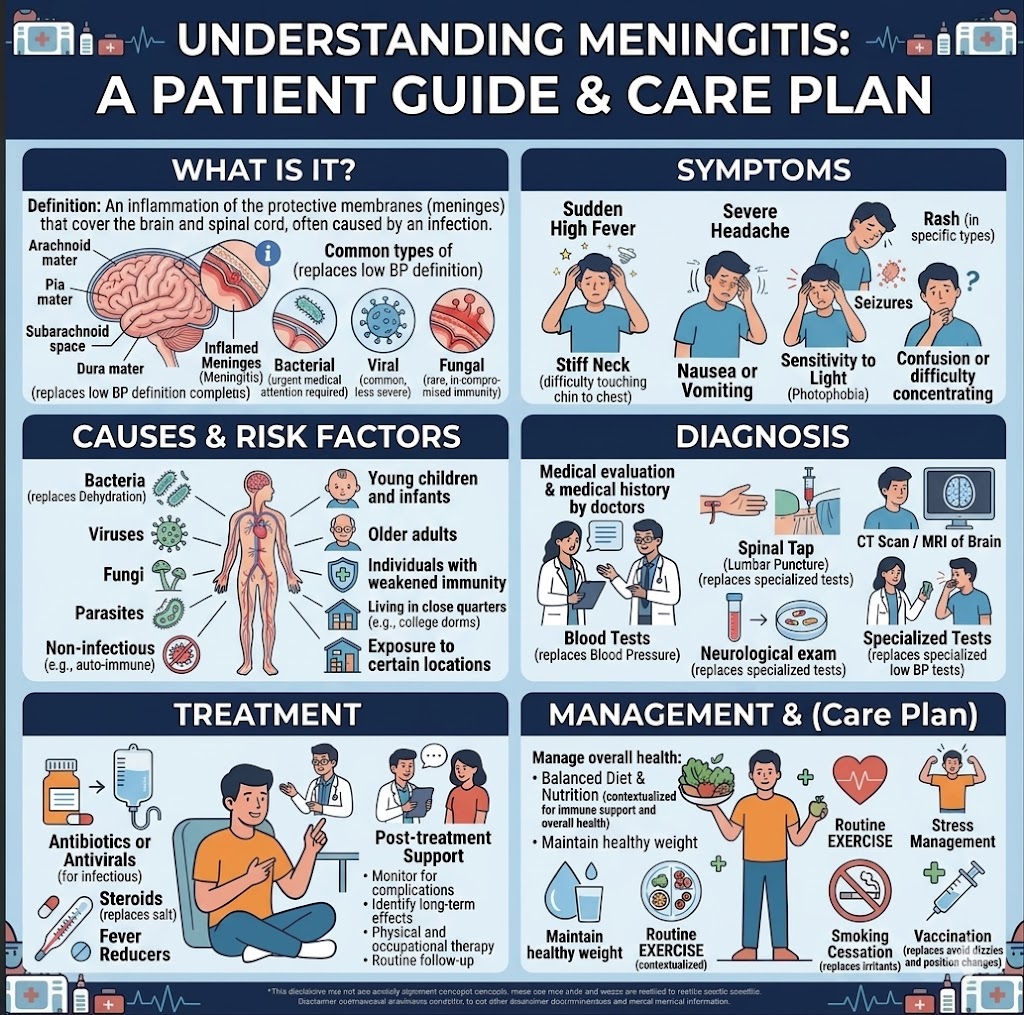
Meningitis is a serious condition involving infection and inflammation of the protective layers (called meninges) and fluid surrounding the brain and spinal cord. This inflammation typically causes symptoms like severe headache, fever, and a stiff neck. While viral infections are the most common cause and often resolve on their own, bacterial meningitis is life-threatening and requires immediate medical attention with antibiotics. Fungi and parasites can also cause meningitis. Early diagnosis and prompt treatment are crucial to prevent severe complications, including death.
Understanding the Condition
Meningitis: Understanding the Brain and Spinal Cord Infection
Understanding the Condition
Meningitis is a serious condition involving infection and inflammation of the protective layers (called meninges) and fluid surrounding the brain and spinal cord. This inflammation typically causes symptoms like severe headache, fever, and a stiff neck. While viral infections are the most common cause and often resolve on their own, bacterial meningitis is life-threatening and requires immediate medical attention with antibiotics. Fungi and parasites can also cause meningitis. Early diagnosis and prompt treatment are crucial to prevent severe complications, including death.
Common Symptoms
Sudden High Fever: A rapid increase in body temperature, often one of the first signs.
Stiff Neck: Difficulty or pain when trying to move the neck forward, making it hard to touch the chin to the chest.
Severe Headache: An intense and persistent headache that is often different from typical headaches.
Nausea or Vomiting: Feeling sick to the stomach and throwing up.
Confusion or Trouble Concentrating: Difficulty thinking clearly, remembering things, or staying focused.
Sleepiness or Trouble Waking: Unusual drowsiness, or difficulty being roused from sleep.
Sensitivity to Light: Discomfort or pain in the eyes when exposed to bright light (photophobia).
Loss of Appetite or Thirst: Lack of desire to eat or drink.
Skin Rash: Sometimes, a rash may appear, especially with certain types of bacterial meningitis, indicating a rapidly worsening condition.
Consultation Guide
Which Specialist to Meet
You should first see a general practitioner or go to an emergency room for immediate assessment. If meningitis is suspected, you may then be referred to specialists such as an infectious disease doctor (who treats infections) or a neurologist (who specializes in brain and nerve disorders).
Preparations Before Your Visit
Before your visit, make a list of all your symptoms, including when they started and how severe they are. Be prepared to share your medical history, any recent travels, exposure to sick individuals, and your vaccination record. List all medications you are currently taking. Prepare any questions you may have for the doctor.
Book a doctor visit near me
A computerized tomography (CT) scan uses X-rays and computer technology to create detailed cross-sectional images of the brain and skull. While it cannot directly diagnose meningitis, it can help identify complications like brain swelling, fluid accumulation, or abscesses, or rule out other conditions that might cause similar symptoms.
Pain and Fever Relievers: Over-the-counter or prescription medications to manage headache and fever symptoms. (Duration: As needed during recovery.)
Supportive Care and Therapies
Rehabilitation and Support: If lasting damage occurs, physical therapy, occupational therapy, speech therapy, or other support services may be necessary to help manage symptoms and improve quality of life.
Consultation Guide
You will lie on a movable table that slides into a large, donut-shaped machine. You'll need to remain very still during the scan. The scanner will rotate around your head, taking multiple images. You may hear whirring noises. Sometimes, a special dye (contrast material) is injected into a vein to highlight certain areas, which might cause a warm sensation. The procedure is relatively quick, typically lasting 5-15 minutes.
Brain Magnetic Resonance Imaging (MRI)
Brain MRI uses powerful magnets and radio waves to generate highly detailed images of the brain and spinal cord. It provides more intricate views of soft tissues compared to a CT scan, which can be useful for detecting subtle inflammation, swelling, or other brain abnormalities associated with meningitis or its complications.
Antiviral Medications: For certain types of viral meningitis (e.g., caused by herpes simplex virus), specific antiviral drugs may be prescribed. (Duration: Varies from a few days to a couple of weeks, depending on the virus.)
Antifungal Medications: If meningitis is caused by a fungal infection, specific antifungal medications are used. (Duration: Can be prolonged, often several weeks to months.)
Vaccinations: Specific vaccines can protect against certain types of bacterial meningitis, including those caused by pneumococcal, meningococcal, and Haemophilus influenzae type b (Hib) bacteria. Following recommended vaccination schedules is highly effective.
Hand Hygiene: Wash hands thoroughly and often with soap and water, especially before eating, after using the toilet, after being in public places, or after touching animals. Teach children proper hand-washing techniques.
Avoid Sharing Personal Items: Do not share drinks, food, straws, eating utensils, lip balms, or toothbrushes with others, as germs can spread through these items.
Diagnostic Procedures
Lumbar Puncture (Spinal Tap)
This is a key diagnostic test for meningitis. A thin needle is inserted into the lower back to collect a sample of cerebrospinal fluid (CSF), the fluid that surrounds the brain and spinal cord. The CSF is then analyzed in a laboratory to identify the specific type of infection (bacterial, viral, fungal, or parasitic) and to measure markers of inflammation.
What to Expect
You will typically lie on your side with your knees drawn up to your chest, or sit bent forward. The area on your lower back will be cleaned and numbed with a local anesthetic. A thin needle is then carefully inserted between two vertebrae to collect a small amount of CSF. You might feel some pressure or a brief sting. It's crucial to remain very still during the procedure, which usually takes about 30-45 minutes. Afterwards, you may be asked to lie flat for a period to reduce the risk of headache.
What to Expect
What to Expect
You will lie on a table that slides into a long, narrow tube-shaped machine. The machine generates loud banging and clicking noises, so you will usually be offered earplugs or headphones. It's very important to remain completely still throughout the scan. If a contrast dye is needed, it will be administered intravenously. The procedure can take 30-60 minutes or longer, and some individuals may experience discomfort due to the enclosed space.
Treatment Options
Medications
Antibiotics: For bacterial meningitis, potent antibiotics are administered, typically intravenously (IV), to kill the infection. Early treatment is critical to prevent severe complications or death. (Duration: Usually 7 to 21 days, depending on the specific bacteria and severity of the infection.)
Corticosteroids: These medications may be given in some cases of bacterial meningitis to help reduce brain swelling and inflammation. (Duration: Typically a short course, usually a few days, often alongside antibiotics.)
Hospitalization: Many cases of meningitis, especially bacterial, require hospitalization for close monitoring, intravenous medication, and supportive care. (Duration: Varies from a few days to several weeks, depending on severity and complications.)
External Ventricular Drain (EVD): In severe cases where meningitis leads to a buildup of fluid in the brain (hydrocephalus), a temporary tube (EVD) may be surgically placed to drain excess cerebrospinal fluid and relieve pressure. (Duration: Typically temporary, until the brain can manage fluid flow independently or another treatment is established.)
Prevention & Long-Term Wellbeing
Rest and Hydration: Adequate rest and fluid intake are essential for recovery, whether at home for mild viral cases or in the hospital. (Duration: Throughout the recovery period.)
Prevention
Maintain a Healthy Lifestyle: Support a strong immune system by getting enough sleep, exercising regularly, and eating a balanced diet rich in fruits, vegetables, and whole grains.
Cover Coughs and Sneezes: Always cover your mouth and nose when you cough or sneeze, ideally into your elbow or a tissue, to prevent the spread of germs.
Food Safety During Pregnancy: Pregnant individuals should take precautions against Listeria infection by thoroughly cooking meats (including hot dogs and lunch meats) to a safe temperature and only consuming cheeses made from pasteurized milk.
Long-Term Monitoring and Management
Follow-Up Medical Care: Regular follow-up appointments with medical professionals are crucial, especially after bacterial meningitis, to monitor recovery and detect any potential long-term complications.
Screening for Complications: Meningitis can lead to serious long-term issues such as hearing loss, vision problems, memory issues, learning disabilities, or brain damage. Regular screenings and evaluations are important to identify these complications early.
Tags & Topics
Notice an error or need an update?
Help us keep medical information accurate. Report incorrect info or suggest an edit.


