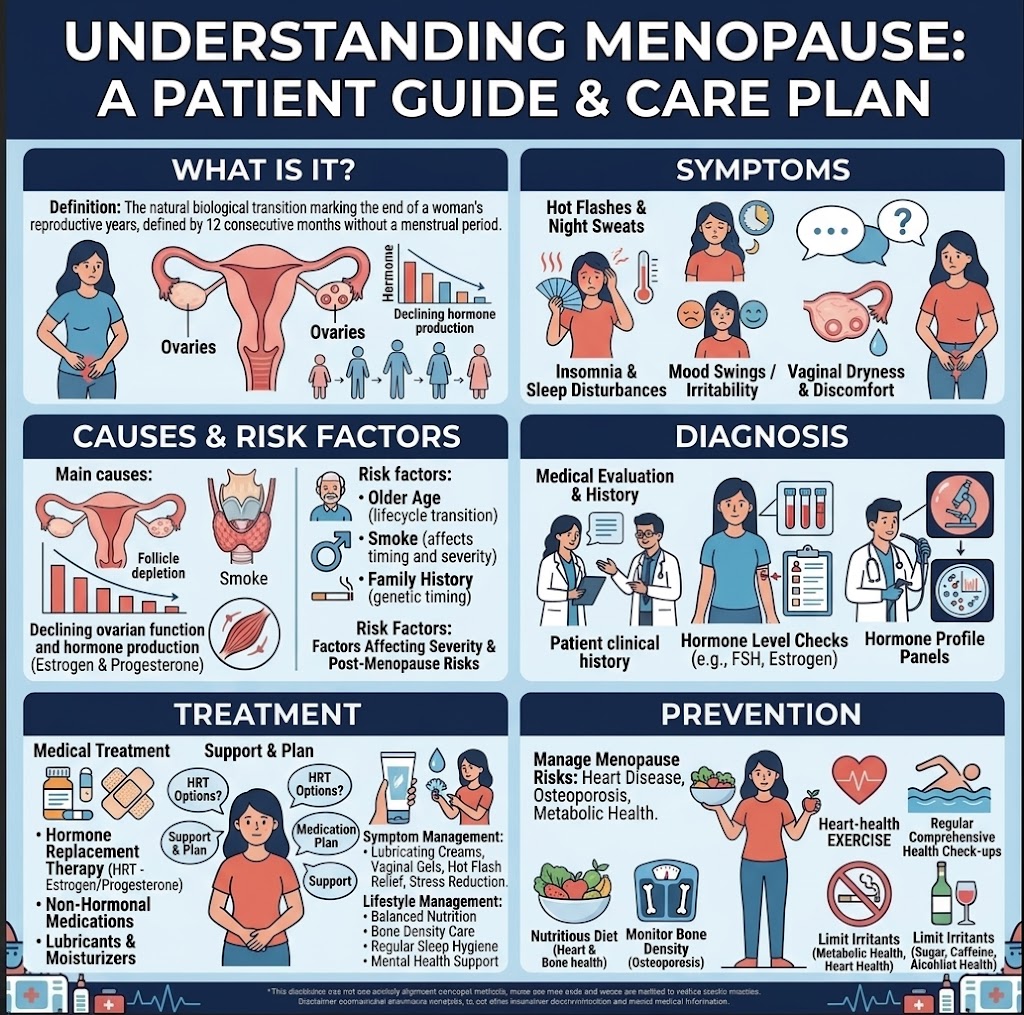
Menopause is a natural biological process marking the end of a woman's reproductive years, confirmed when she has gone 12 consecutive months without a menstrual period. This transition typically occurs in a woman's 40s or 50s, with the average age being 51 in the United States. While a natural life stage, the physical and emotional changes during menopause can significantly impact daily life, potentially leading to disrupted sleep, reduced energy levels, and mood shifts. Various effective treatments are available, ranging from simple lifestyle adjustments to medical therapies, to help manage these symptoms.
Understanding the Condition
Menopause: A Comprehensive Guide
Understanding the Condition
Menopause is a natural biological process marking the end of a woman's reproductive years, confirmed when she has gone 12 consecutive months without a menstrual period. This transition typically occurs in a woman's 40s or 50s, with the average age being 51 in the United States. While a natural life stage, the physical and emotional changes during menopause can significantly impact daily life, potentially leading to disrupted sleep, reduced energy levels, and mood shifts. Various effective treatments are available, ranging from simple lifestyle adjustments to medical therapies, to help manage these symptoms.
Common Symptoms
Irregular Periods: Menstrual cycles may become unpredictable, changing in length, flow, and frequency.
Vaginal Dryness: Tissues in the vagina can become thinner, drier, and less elastic, leading to discomfort.
Hot Flashes: Sudden, intense feelings of heat, often accompanied by sweating and flushed skin, usually affecting the face, neck, and chest.
Night Sweats: Hot flashes that occur during sleep, often severe enough to disrupt sleep.
Sleep Problems: Difficulty falling or staying asleep, or waking up frequently.
Mood Changes: Increased irritability, anxiety, or feelings of sadness.
Brain Fog: Challenges with memory, concentration, and finding the right words.
Consultation Guide
Which Specialist to Meet
You might first consult your general practitioner (family doctor or primary care physician). They can often manage initial symptoms or refer you to a gynecologist (a doctor specializing in female reproductive health) or an endocrinologist (a doctor specializing in hormones).
Preparations Before Your Visit
Before your visit, consider keeping a journal of your symptoms, including their frequency, intensity, and how they affect your daily life. Note any changes in your menstrual cycle. Compile a list of all medications, supplements, and vitamins you are currently taking. Be prepared to discuss your medical history, including any family history of conditions like heart disease or osteoporosis. It is crucial to report any vaginal bleeding or spotting that occurs after you have confirmed menopause (i.e., after 12 consecutive months without a period).
Book a doctor visit near me
Menopause is primarily diagnosed clinically based on your age and the consistent absence of a menstrual period for 12 consecutive months. While no specific blood test definitively diagnoses menopause itself, tests may be performed to rule out other causes of symptoms or to assess for complications.
Your doctor will discuss your symptoms and medical history. No special procedures are typically required to diagnose menopause itself, but a physical exam may be part of a comprehensive assessment.
Assessing Bone Health (Bone Density Scan/DEXA Scan)
Avoid Triggers: Limit smoking, excessive alcohol, and caffeine, which can sometimes worsen menopause symptoms. (Duration: Ongoing)
Vaginal Lubricants/Moisturizers: Use over-the-counter products to alleviate vaginal dryness and discomfort during sex. (Duration: As needed)
Regular Sexual Activity: Maintaining regular sexual activity or vaginal stimulation helps preserve vaginal tissue health and elasticity. (Duration: Ongoing)
Local (Vaginal) Estrogen Therapy: Delivered directly to the vagina via creams, rings, or tablets. Primarily treats vaginal dryness, discomfort during sex, and some urinary symptoms with minimal absorption into the bloodstream. (Duration: Can be used long-term as needed for symptom relief.)
Hormone Therapy for Primary Ovarian Insufficiency: For women experiencing premature menopause (before age 40) due to ovaries not producing enough hormones, hormone therapy is often recommended to protect bone density, heart health, and brain function. (Duration: Typically continued until around the average age of natural menopause (around 51).)
Non-Hormonal Medications for Hot Flashes: Certain antidepressant medications, blood pressure medications, or anti-seizure drugs can help manage hot flashes if hormone therapy is not suitable for you. (Duration: Varies based on symptom relief and tolerance.)
Complementary Therapies
Acupuncture: Involves inserting thin needles into specific body points. It may help alleviate hot flashes and other menopause symptoms, as well as aid in pain and stress management for some individuals. (Duration: Typically involves several sessions over weeks or months, as recommended by a practitioner.)
Specific Symptom Management
Managing Symptoms and Complications
Healthy Lifestyle: Continue to prioritize a balanced diet, regular physical activity, adequate sleep, and stress management to support general wellbeing and mitigate symptoms.
Maintain Vaginal Health: Regular use of vaginal moisturizers or local estrogen therapy can prevent and treat vaginal dryness and discomfort, improving sexual health.
Bladder Control: Practice pelvic floor exercises (Kegels) to strengthen muscles and help manage urinary incontinence. Staying hydrated can also reduce the frequency of urinary tract infections.
Report Postmenopausal Bleeding: Any vaginal bleeding after menopause is not normal and requires immediate evaluation by a healthcare provider to rule out serious underlying conditions.
Emotional Support: Seek professional help if experiencing significant mood changes, anxiety, or depression. Counseling or support groups can provide valuable assistance.
Consultation Guide
Any vaginal bleeding after menopause is unusual and requires immediate medical evaluation to identify the cause.
Diagnostic Procedures
What to Expect
As bone weakening (osteoporosis) risk increases after menopause, a bone density scan is a common way to assess bone strength. A DEXA scan is a non-invasive imaging test that measures the mineral content of your bones, typically focusing on the hip and spine, which are common fracture sites.
What to Expect
You lie comfortably on a padded table while a mechanical arm passes over you, sending low-dose X-rays. The procedure is quick (10-20 minutes), painless, and you can remain clothed, though metal objects like jewelry or belts may need to be removed.
Investigating Postmenopausal Bleeding
What to Expect
Your doctor will conduct a physical exam and may order further tests, such as ultrasound, hysteroscopy, or biopsy, to examine the uterus and vagina. What specific procedure to expect will depend on the initial findings and your doctor's assessment.
Testosterone Therapy (for Low Sex Drive): May be considered for postmenopausal women with low libido that is not resolved by other treatments. However, long-term safety and effectiveness are not well-established, and it carries potential side effects (e.g., acne, unwanted hair growth). It is not government-approved for this use in women in many countries. (Duration: Typically short-term and closely monitored due to limited long-term safety data.)
Bone Density Screening: Discuss regular bone density tests (DEXA scans) with your doctor to monitor for osteoporosis and take preventative measures if needed.
Treatment Options
Medications (Hormone Therapy)
Systemic Hormone Therapy: Replaces estrogen lost during menopause to effectively relieve hot flashes, night sweats, and vaginal dryness. Available as pills, skin patches, gels, or sprays. If you have a uterus, a progestogen is prescribed alongside estrogen to protect the uterine lining. (Duration: Often used for a few years, with risks and benefits re-evaluated regularly with your doctor.)
Medications (Non-Hormonal Options)
Cardiovascular Health Monitoring: Be proactive in managing blood pressure, cholesterol, and blood sugar levels through diet, exercise, and medication if necessary, as heart disease risk increases after menopause.
Breast Cancer Screening: Continue regular mammograms as recommended by your healthcare provider for early detection.
Prevention & Long-Term Wellbeing
Home Remedies and Lifestyle Changes
Cooling Strategies: Dress in layers, use a fan, and drink cold beverages to manage hot flashes. (Duration: Ongoing as needed)
Regular Physical Activity: Engage in consistent exercise to enhance mood, energy, sleep quality, and bone health. (Duration: Ongoing)
Nutrient-Rich Diet: Prioritize a balanced diet rich in fruits, vegetables, whole grains, and calcium-rich foods. (Duration: Ongoing)
Stress Management: Practice relaxation techniques such as meditation or deep breathing to help manage stress. (Duration: Ongoing)
Prevention and Long-Term Monitoring
Routine Health Check-ups: Maintain regular doctor visits to monitor overall health and screen for age-related conditions, ensuring early detection and management.
Tags & Topics
Notice an error or need an update?
Help us keep medical information accurate. Report incorrect info or suggest an edit.


