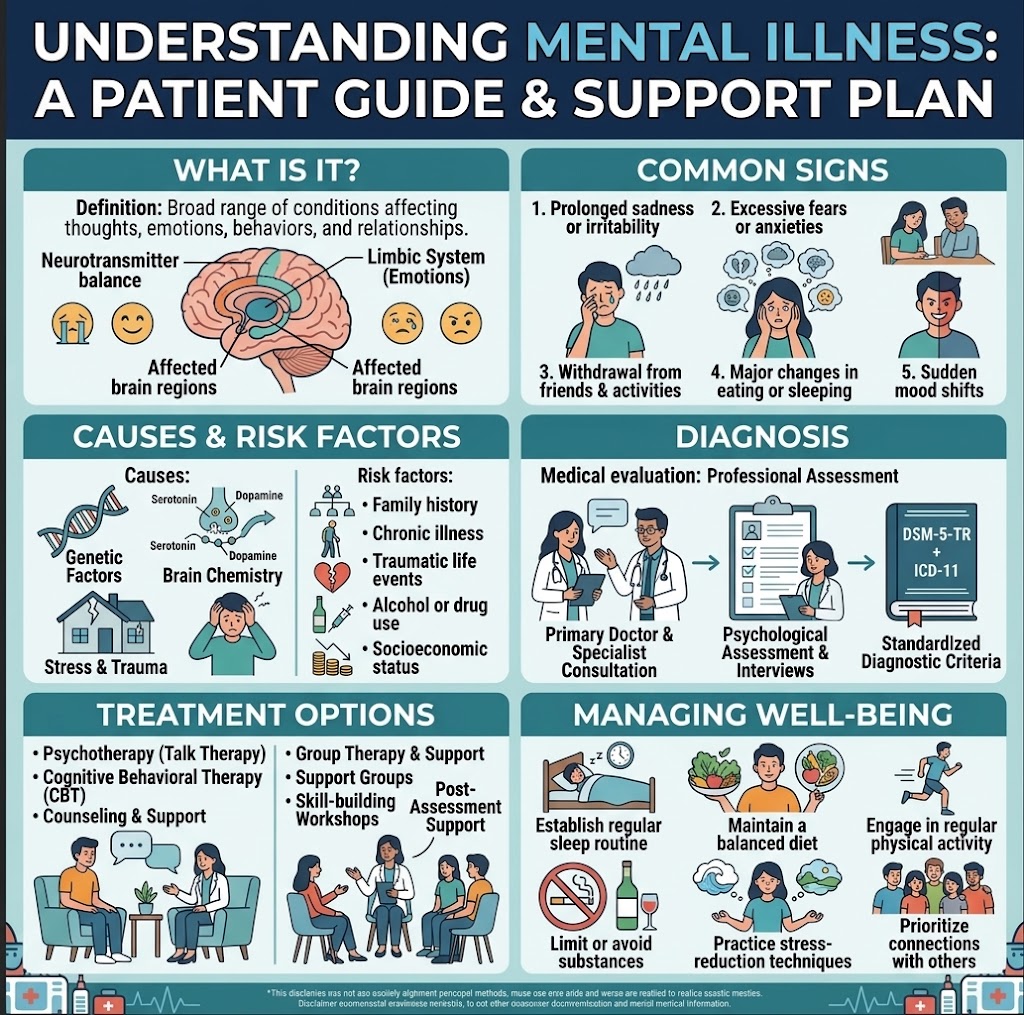
Mental illness, also known as mental health disorders, refers to a wide range of conditions that affect your mood, thinking, and behavior. While temporary mental health concerns are common, a mental illness involves persistent signs and symptoms that cause significant distress and impair daily functioning in areas like school, work, or relationships. These conditions are complex, stemming from a combination of genetic factors (family history, inherited traits), environmental influences (stressors before birth, trauma), and imbalances in brain chemistry (neurotransmitters).Risk factors include a family history of mental illness, major life stressors (e.g., financial problems, loss of a loved one), chronic medical conditions, traumatic brain injury, past traumatic experiences (e.g., abuse, combat), substance use, and social isolation. Untreated mental illness can lead to severe emotional, behavioral, and physical health problems. Complications may include chronic unhappiness, strained relationships, social isolation, substance misuse, difficulties at work or school, legal and financial issues, self-harm, and an increased risk of suicide. It can also weaken the immune system and increase the risk of other physical conditions like heart disease. Most mental illnesses are manageable with appropriate treatment.
Understanding the Condition
Understanding Mental Illness
Understanding the Condition
Mental illness, also known as mental health disorders, refers to a wide range of conditions that affect your mood, thinking, and behavior. While temporary mental health concerns are common, a mental illness involves persistent signs and symptoms that cause significant distress and impair daily functioning in areas like school, work, or relationships. These conditions are complex, stemming from a combination of genetic factors (family history, inherited traits), environmental influences (stressors before birth, trauma), and imbalances in brain chemistry (neurotransmitters).Risk factors include a family history of mental illness, major life stressors (e.g., financial problems, loss of a loved one), chronic medical conditions, traumatic brain injury, past traumatic experiences (e.g., abuse, combat), substance use, and social isolation. Untreated mental illness can lead to severe emotional, behavioral, and physical health problems. Complications may include chronic unhappiness, strained relationships, social isolation, substance misuse, difficulties at work or school, legal and financial issues, self-harm, and an increased risk of suicide. It can also weaken the immune system and increase the risk of other physical conditions like heart disease. Most mental illnesses are manageable with appropriate treatment.
Common Symptoms
Persistent Sadness or Low Mood: Feeling down, hopeless, or losing interest in activities for extended periods.
Confused Thinking: Difficulty concentrating, making decisions, or experiencing disorganized thoughts.
Excessive Fears & Worries: Intense, often irrational anxiety, panic attacks, or overwhelming feelings of guilt.
Extreme Mood Swings: Noticeable shifts between periods of intense highs (mania) and lows (depression).
Social Withdrawal: Avoiding friends, family, and usual social activities.
Fatigue & Sleep Issues: Significant tiredness, low energy, or persistent problems with sleeping.
Changes in Perception: Experiencing delusions (fixed false beliefs), paranoia, or hallucinations (seeing or hearing things that aren't real).
Difficulty Coping: Inability to manage daily problems, stress, or minor setbacks effectively.
Relationship Challenges: Trouble understanding or relating to situations and people, leading to strained connections.
Substance Misuse: Developing problems with alcohol or drug use as a coping mechanism.
Eating Habit Changes: Major shifts in appetite, weight, or eating patterns (e.g., overeating, undereating).
Changes in Libido: Unexplained or significant shifts in sexual drive.
Anger or Violence: Frequent, excessive anger, hostility, or aggressive and violent behavior.
Suicidal Thoughts: Thoughts of self-harm or ending one's life. This is a medical emergency requiring immediate help.
Consultation Guide
Which Specialist to Meet
Before your visit, make a list of all your symptoms, noting when they started and how they affect your daily life. Include any major life stressors, recent changes, or traumatic experiences. Gather information about your medical history, including any ongoing health conditions and all medications you are currently taking (including supplements). Prepare a list of questions you want to ask the provider. Consider bringing a trusted family member or friend for support and to help recall details.
Book a doctor visit near me
A healthcare provider will conduct a thorough physical examination and discuss your medical history, including past and present health conditions and medications. This step is crucial to rule out any physical illnesses or medication side effects that might be causing or contributing to your mental health symptoms.
You will undergo a standard check-up, including vital signs measurement, and a detailed conversation about your health background. The doctor will ask about your general well-being and any physical concerns you may have, ensuring that medical causes for your symptoms are investigated.
Various blood tests or other lab analyses may be ordered to check for underlying physical health problems, such as thyroid disorders, vitamin deficiencies, or other physiological imbalances that can manifest with symptoms resembling mental illness.
A mental health professional will conduct a comprehensive evaluation of your thoughts, feelings, behaviors, and life experiences. This involves in-depth interviews and may include standardized questionnaires or psychological tests to gather information about your symptoms and their impact.
You will engage in a confidential conversation with the mental health professional, answering questions about your symptoms, personal history, family background, and how your current difficulties affect your daily functioning and relationships. This detailed discussion helps the professional understand your condition and arrive at an accurate diagnosis.
Delusional Parasitosis Evaluation
Psychiatric Medications: Various classes of medications are used to help manage symptoms by rebalancing brain chemistry. These include drugs to improve mood, reduce anxiety, stabilize extreme mood changes, or alleviate psychotic symptoms like delusions or hallucinations. The specific type depends on the diagnosis. (Duration: Varies, from several months to years, or potentially lifelong for chronic conditions. Dosage and duration are closely monitored by a doctor.)
Talk Therapy (Psychotherapy): This involves talking with a mental health professional to understand your specific issues, learn healthy coping mechanisms, and change unhelpful thought patterns and behaviors. Many types exist, tailored to individual needs (e.g., cognitive-behavioral therapy, dialectical behavior therapy), helping to manage stress, resolve conflicts, and improve relationships. (Duration: Can range from short-term (weeks to months) for specific issues to long-term (months to years) for chronic conditions or deeper personal growth. Sessions are typically weekly or bi-weekly.)
Deep Brain Stimulation (DBS): A surgical procedure where electrodes are implanted in specific brain areas. These electrodes deliver controlled electrical impulses, regulated by a pacemaker-like device placed under the skin in the chest, to modify brain activity and alleviate symptoms. It is used for severe movement disorders and sometimes for psychiatric conditions like obsessive-compulsive disorder when other treatments have failed. (Duration: Long-term; once implanted, the device operates continuously, requiring periodic adjustments.)
Pay Attention to Warning Signs: Learn to recognize early indicators of your symptoms. Work with your doctor or therapist to identify triggers and create a plan for managing symptoms if they return. Contact your provider if you notice changes in how you feel, and consider involving family or friends in watching for these signs.
Seek Help Promptly: Mental health conditions are often easier to treat when addressed early, before symptoms become severe. Long-term maintenance treatment can also help prevent symptom relapse.
Consultation Guide
Blood samples will typically be drawn from a vein in your arm. Depending on the suspected cause, other samples like urine may also be collected. These procedures are usually quick and cause minimal discomfort, helping to identify or exclude physical health issues.
Mental Health Assessment
A healthcare professional will perform a physical examination and may order lab tests (e.g., skin scrapings, blood work) to definitively rule out any actual parasitic or infectious cause. Despite negative test results, the person's firm conviction about infestation persists. The diagnosis focuses on recognizing the persistent, false belief as a mental health condition, rather than a physical infestation.
Electroconvulsive Therapy (ECT): Performed under general anesthesia, small electric currents pass through the brain to intentionally cause a brief, controlled seizure. This procedure can rapidly change brain chemistry and is highly effective for severe depression, mania, or catatonia, especially when other treatments haven't worked. Modern ECT is much safer and more refined than past versions. (Duration: Typically involves 6-12 treatments administered 2-3 times per week, potentially followed by maintenance treatments.)
Diagnostic Procedures
To address mental health concerns, you might consult several types of specialists. A **Psychiatrist** is a medical doctor (M.D. or D.O.) specializing in mental health who can diagnose conditions, prescribe medications, and offer talk therapy. A **Psychologist** typically holds a doctoral degree (Ph.D. or Psy.D.) and is trained in understanding thoughts, emotions, and behaviors; they diagnose conditions and provide various forms of talk therapy, but usually cannot prescribe medication. A **Psychiatric Mental Health Nurse** (PMHN or PMH-APRN) is a registered nurse with advanced training in mental health; advanced practice nurses can diagnose, treat, and in many states, prescribe medication.
Preparations Before Your Visit
Physical Exam and Medical History Review
What to Expect
What to Expect
What to Expect
This diagnostic process is for a condition where a person holds a fixed, false belief of being infested by organisms (like parasites, mites, or worms), even after medical examinations and laboratory tests confirm no actual infection. This condition is also known as delusional infestation, with Morgellons disease being a specific form.
What to Expect
Treatment Options
Medications
Transcranial Magnetic Stimulation (TMS): A non-invasive procedure using magnetic fields to stimulate nerve cells in specific brain regions. An electromagnetic coil placed on the scalp delivers magnetic pulses that activate areas involved in mood control. It is used for major depression, obsessive-compulsive disorder, and to help stop smoking, particularly when other treatments haven't been effective. (Duration: Typically involves 20-30 minute sessions, five times a week for 4-6 weeks.)
Vagus Nerve Stimulation (VNS): This involves using a device, often surgically implanted in the chest, to send regular electrical impulses to the vagus nerve. This nerve connects to areas of the brain that affect mood and seizure activity. It's approved for certain types of epilepsy and depression resistant to other treatments. Non-surgical external devices are also available for conditions like cluster headaches and migraines. (Duration: Long-term; once implanted, the device provides continuous or intermittent stimulation and requires periodic adjustments.)
Get Routine Medical Care: Regular physical check-ups are important. Don't neglect visits to your primary care provider, especially if you're not feeling well, as physical health problems or medication side effects can impact your mental state.
Prevention & Long-Term Wellbeing
Lifestyle and Self-Care
Healthy Lifestyle Adjustments: Adopting a balanced diet, ensuring sufficient sleep, engaging in regular physical activity, and practicing stress-management techniques (like mindfulness or meditation). Avoiding alcohol and recreational drugs is also crucial for mental well-being. (Duration: Ongoing; lifelong commitment for sustained benefits.)
Prevention and Early Intervention
Practice Self-Care: Ensure you get enough sleep, maintain a healthy diet, and engage in regular physical activity. Try to maintain a consistent daily schedule to support overall mental and physical health.
Long-Term Wellbeing and Managing Stigma
Overcoming Stigma: Stigma often arises from misunderstanding. Educate yourself and others about mental health conditions, challenge negative attitudes, and choose to speak openly about your experiences. Connecting with supportive communities and accepting your condition can significantly improve your quality of life.
Building Resilience: Develop healthy coping strategies for stress, improve problem-solving skills, and foster strong, supportive relationships. These elements enhance your ability to adapt and bounce back from adversity.
Continuous Support: Engage in ongoing therapy or support groups as needed. Involve trusted family and friends in your care plan so they can help monitor warning signs and provide consistent support.
Tags & Topics
Notice an error or need an update?
Help us keep medical information accurate. Report incorrect info or suggest an edit.


