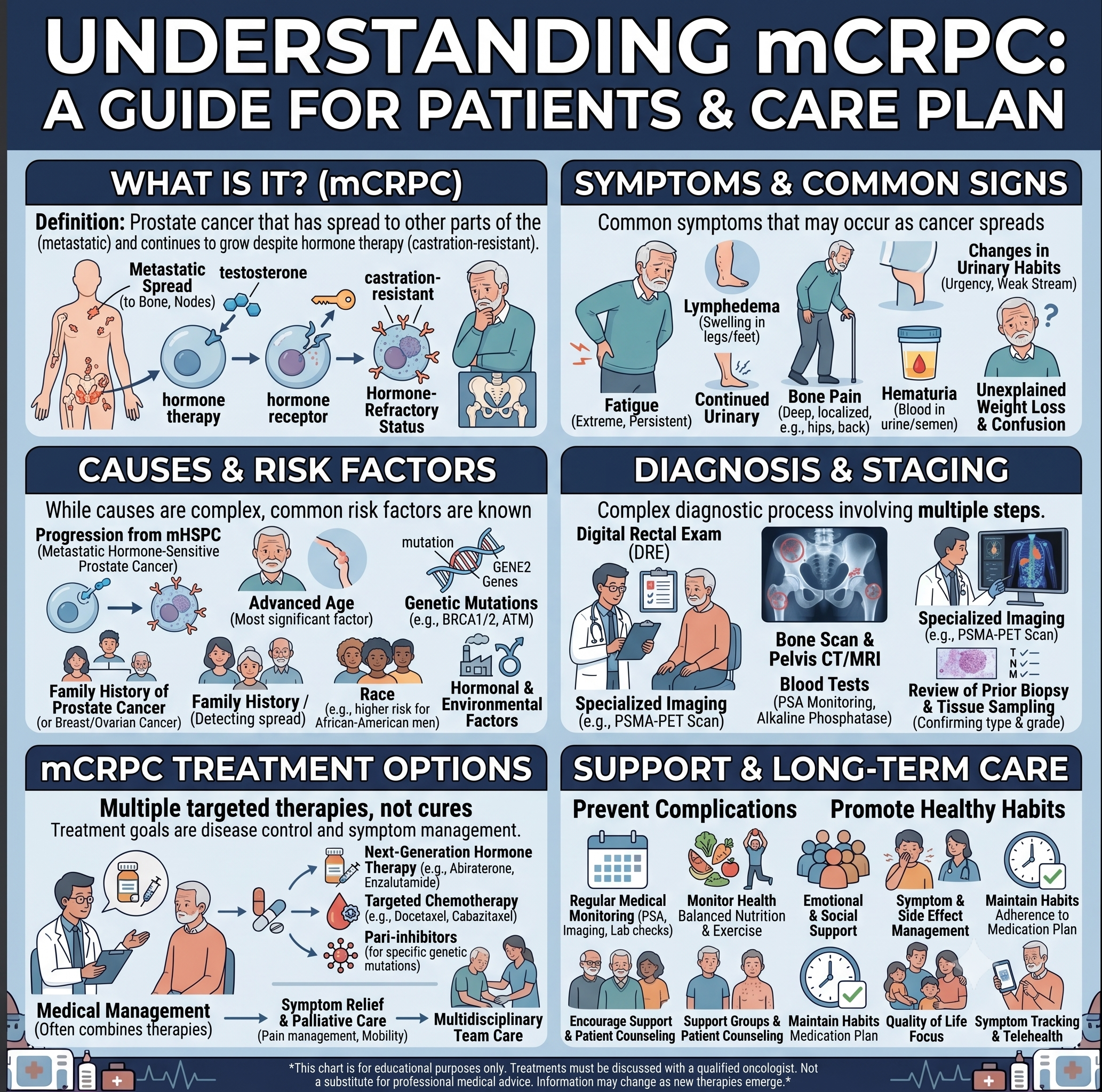
Metastatic castration-resistant prostate cancer (mCRPC) is a serious form of prostate cancer. It occurs when prostate cancer cells have spread from the prostate gland to other parts of the body (metastatic) and no longer respond to standard hormone therapy (castration-resistant).Prostate cancer typically relies on testosterone to grow. Hormone therapy, also known as androgen deprivation therapy (ADT), works by significantly lowering testosterone levels in the body, often controlling the cancer for years. However, cancer cells can adapt over time, learning to grow even with very low testosterone. When this happens, the cancer is considered "castration-resistant." If this resistant cancer has also spread beyond the prostate, it is called mCRPC.Treatments for mCRPC aim to manage the disease, relieve symptoms, and extend life, but they are not usually a cure.
Understanding the Condition
Metastatic Castration-Resistant Prostate Cancer (mCRPC): A Patient Guide
Understanding the Condition
Metastatic castration-resistant prostate cancer (mCRPC) is a serious form of prostate cancer. It occurs when prostate cancer cells have spread from the prostate gland to other parts of the body (metastatic) and no longer respond to standard hormone therapy (castration-resistant).Prostate cancer typically relies on testosterone to grow. Hormone therapy, also known as androgen deprivation therapy (ADT), works by significantly lowering testosterone levels in the body, often controlling the cancer for years. However, cancer cells can adapt over time, learning to grow even with very low testosterone. When this happens, the cancer is considered "castration-resistant." If this resistant cancer has also spread beyond the prostate, it is called mCRPC.Treatments for mCRPC aim to manage the disease, relieve symptoms, and extend life, but they are not usually a cure.
Common Symptoms
Urinary Issues: Difficulty starting urination, straining to urinate, or a weak urine stream.
Bone Pain/Fragility: Bones that break easily without a clear injury, which can indicate cancer spread to bones.
Fatigue: Persistent and extreme tiredness.
Weakness: Weakness in the arms and legs, which can signal nerve involvement.
Consultation Guide
Which Specialist to Meet
You should consult with an oncologist (a doctor specializing in cancer treatment), potentially a urologist (a surgeon specializing in urinary and male reproductive systems), and a palliative care specialist for symptom management and quality of life support. A genetic counselor may also be helpful to discuss inherited risks.
Preparations Before Your Visit
Before your appointment, gather all your medical records, including previous test results and treatment history. Make a detailed list of all your symptoms, including when they started and how severe they are. Write down any questions you have for the doctor. Consider bringing a trusted family member or friend for support and to help remember information.
Book a doctor visit near me
Palliative Care: Specialized medical care focusing on relief from pain and other symptoms of a serious illness, improving quality of life alongside cancer treatments.
Supportive Care: Seeking emotional support through counseling or support groups, and maintaining open communication with your healthcare team about symptoms and side effects.
Diagnostic Procedures
A blood test that measures the level of prostate-specific antigen (PSA), a protein produced by prostate cells. High PSA levels can indicate prostate cancer, but also other prostate conditions.
What to Expect
A healthcare professional will draw a small sample of blood, usually from a vein in your arm. This is a quick procedure, similar to any routine blood test.
CT Scan (Computed Tomography Scan)
An imaging test that uses X-rays and computer processing to create detailed cross-sectional pictures of organs, bones, and soft tissues inside your body. It helps find where cancer may have spread.
What to Expect
You will lie on a narrow table that slides into a large, doughnut-shaped machine. The machine takes multiple X-ray images from different angles. You may receive a contrast dye, either orally or through an intravenous (IV) line, to enhance the images. You will need to lie still during the scan, which typically takes 10-30 minutes.
A nuclear imaging test that uses a small amount of radioactive tracer injected into the bloodstream. This tracer collects in areas of bone where there is abnormal metabolism, which can indicate cancer spread to the bones or other bone conditions.
What to Expect
A radioactive tracer will be injected into a vein, and you'll wait a few hours for it to travel through your body and absorb into your bones. Then, you will lie on a table while a special camera scans your body, detecting the radiation from the tracer. The scan itself usually takes about 30 minutes to an hour.
PSMA PET Scan (Prostate-Specific Membrane Antigen Positron Emission Tomography Scan)
A specialized PET scan that uses a radioactive tracer designed to attach specifically to prostate-specific membrane antigen (PSMA) proteins, which are often found in high amounts on prostate cancer cells, including those that have spread. This allows for precise detection of prostate cancer anywhere in the body.
What to Expect
A radioactive tracer will be injected into a vein in your arm. You will then wait for about an hour for the tracer to distribute throughout your body. Afterward, you will lie still on a narrow table that slides into the PET scanner. The scanner detects the tracer, creating images that highlight cancer cells. The scan typically lasts 15-30 minutes and may be combined with a CT or MRI scan for more detailed anatomical information.
What to Expect
A sample for genetic testing is typically collected via a blood draw or a cheek swab. These procedures are quick and involve minimal discomfort. Your doctor or a genetic counselor will discuss the implications of the results with you.
Advanced Hormone Therapy: These medicines target the cancer's ability to use testosterone or other hormones in different ways than initial hormone therapy. They aim to further block hormone pathways that cancer cells might be using. (Duration: Ongoing, often for many years, as long as effective and side effects are manageable.)
Chemotherapy: Uses powerful drugs to kill fast-growing cancer cells throughout the body. (Duration: Given in cycles over several months, depending on the specific drugs and the cancer's response.)
Targeted Therapy: Medicines that specifically target certain weaknesses or changes in cancer cells, often with fewer side effects than traditional chemotherapy. (Duration: Varies, can be ongoing for extended periods if effective.)
Radiopharmaceutical Therapy: Uses radioactive drugs that are injected into the bloodstream and travel to cancer cells (often in bones) to deliver radiation directly, killing cancer cells while minimizing harm to healthy tissue. (Duration: Typically a series of infusions given over several weeks or months.)
Clinical Trials: Participation in research studies testing new treatments or combinations of existing treatments. These can offer access to cutting-edge therapies not yet widely available. (Duration: Varies greatly depending on the trial protocol; typically ongoing for the study period.)
Regular Monitoring: Adhering to scheduled blood tests (like PSA) and imaging scans to track cancer's response to treatment and detect progression.
Treatment Options
Analysis of your DNA to identify inherited gene changes (mutations) that may be linked to your prostate cancer, which can inform treatment decisions and family risk.
External Beam Radiation Therapy: High-energy beams precisely aimed at specific tumor sites from a machine outside the body to destroy cancer cells. (Duration: Daily sessions over several weeks for localized treatment, or shorter courses for pain relief.)
Stereotactic Body Radiotherapy (SBRT): A highly focused type of external radiation that delivers very high doses of radiation to a precise tumor area in fewer sessions. (Duration: Usually 1 to 5 sessions.)
Healthy Lifestyle: As tolerated, a healthy diet, physical activity, and stress management can support overall well-being and treatment tolerance.
Prevention & Long-Term Wellbeing
Managing the Disease and Quality of Life
Tags & Topics
Notice an error or need an update?
Help us keep medical information accurate. Report incorrect info or suggest an edit.


