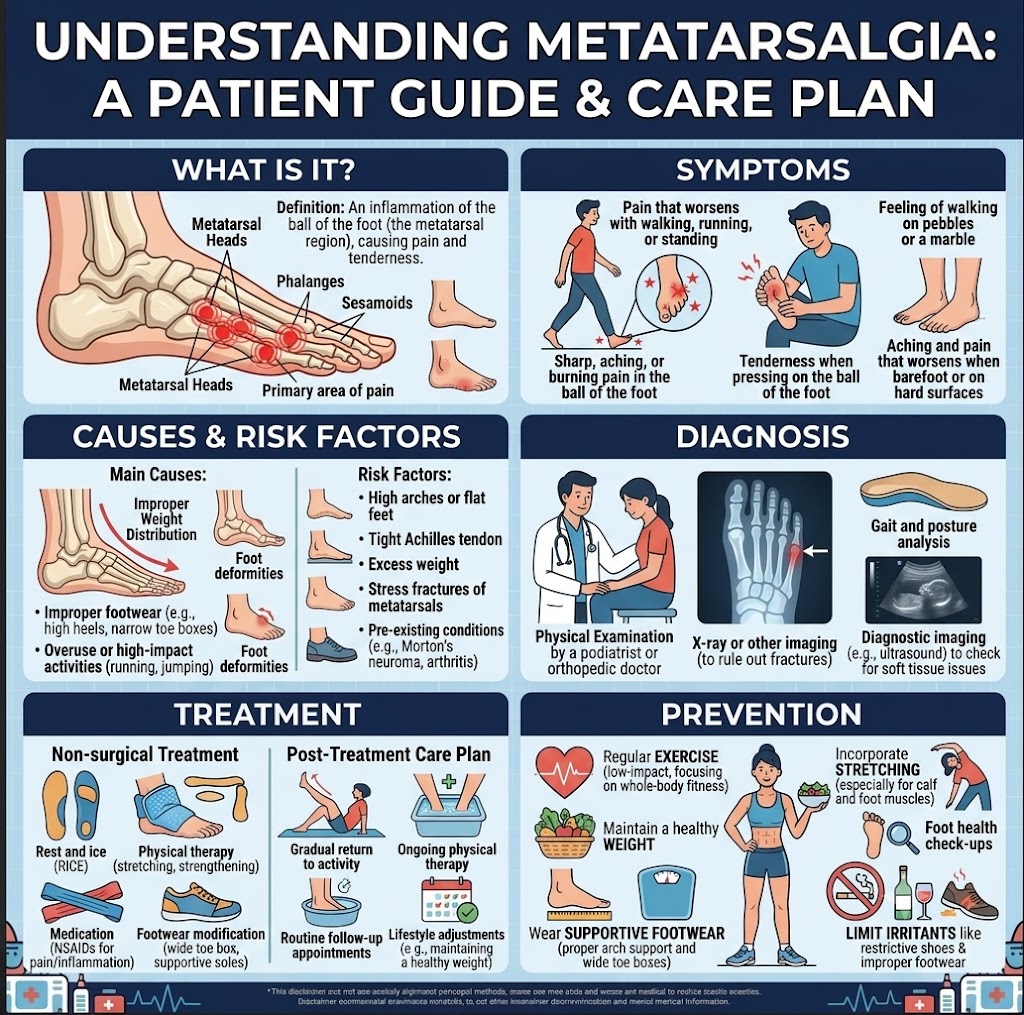
Metatarsalgia (met-uh-tahr-SAL-juh) is a common condition characterized by pain and irritation in the ball of the foot, the area just behind your toes. This discomfort often stems from inflammation in the long bones of the foot called metatarsals. It typically arises from activities involving high impact, such as running and jumping, or can be influenced by the natural structure of a person's feet and the type of shoes they wear (e.g., shoes that are too tight or too loose). While metatarsalgia is rarely serious, it can significantly hinder daily movement and make walking painful. If left untreated, this foot pain can lead to changes in your gait, potentially causing discomfort in other areas of the same foot, the opposite foot, or even higher up in the body, such as the lower back or hip.
Understanding the Condition
Metatarsalgia: Understanding Ball-of-Foot Pain
Understanding the Condition
Metatarsalgia (met-uh-tahr-SAL-juh) is a common condition characterized by pain and irritation in the ball of the foot, the area just behind your toes. This discomfort often stems from inflammation in the long bones of the foot called metatarsals. It typically arises from activities involving high impact, such as running and jumping, or can be influenced by the natural structure of a person's feet and the type of shoes they wear (e.g., shoes that are too tight or too loose). While metatarsalgia is rarely serious, it can significantly hinder daily movement and make walking painful. If left untreated, this foot pain can lead to changes in your gait, potentially causing discomfort in other areas of the same foot, the opposite foot, or even higher up in the body, such as the lower back or hip.
Common Symptoms
Burning Pain: A sharp, aching, or burning sensation in the ball of your foot, which often feels worse during activities like standing, walking, running, or flexing your feet, and typically improves with rest.
Numbness or Tingling: A sensation of pins and needles or numbness in the toes, particularly those near the painful area.
Pebble Sensation: A feeling as though you have a small stone or pebble inside your shoe when you are walking.
Worsening Pain: Pain that becomes more intense when you remove your shoes or are walking barefoot, as well as during high-impact activities.
Consultation Guide
Which Specialist to Meet
Initial consultation can be with a primary care physician, who may then refer you to a podiatrist (a specialist in foot and ankle conditions) or an orthopedic surgeon (a specialist in bone and joint conditions) if your symptoms are persistent or require more specialized evaluation and treatment.
Preparations Before Your Visit
Before your doctor's visit, make a list of your symptoms, noting when they started, what activities make them worse or better, and how they affect your daily life. Gather information about your current medications, any other health conditions you have, and details about your exercise routine and footwear. It can be helpful to bring the shoes you wear most often to your appointment for your doctor to examine.
Book a doctor visit near me
Rest and Ice Application: Avoiding activities that aggravate your foot pain, combined with regularly applying ice packs to the affected area for 15-20 minutes several times a day to reduce swelling and discomfort. (Duration: Until symptoms significantly improve, typically a few days to several weeks.)
Consultation Guide
An X-ray is a quick, painless imaging test that uses a small amount of radiation to create detailed pictures of the bones inside your body. For metatarsalgia, a foot X-ray allows your doctor to examine the bones of your foot, especially the metatarsals, to rule out potential causes like stress fractures, other types of bone fractures, arthritis, or structural bone deformities that might be contributing to your foot pain.
Diagnostic Procedures
What to Expect
During a foot X-ray, you will be asked to remove your shoes and socks. A radiologic technician will guide you to position your foot on a special imaging plate, often requiring you to hold it in different angles to capture various views. You will need to remain still for a few seconds while the images are taken. The process is generally quick, painless, and typically takes only a few minutes. You may be asked to wear a lead apron for protection, although the radiation dose is very low.
Treatment Options
Over-the-Counter Pain Relief: Using non-prescription pain relievers, such as non-steroidal anti-inflammatory medications (NSAIDs), to help manage pain and reduce inflammation. (Duration: As needed for pain, generally for short-term relief.)
Foot Surgery: In rare instances, when conservative treatments have failed to provide relief and there are significant underlying foot deformities or structural issues, surgery may be considered to correct the mechanical problems contributing to metatarsalgia. (Duration: Recovery typically takes several weeks to months, with full healing and return to normal activity potentially taking up to a year.)
Address Foot Deformities: Seek early medical advice and treatment for existing foot conditions such as bunions, hammertoes, or rigid high arches, as these can alter foot mechanics and increase susceptibility to metatarsalgia.
Regular Foot Care: Be attentive to any changes in foot comfort or appearance. Incorporate regular foot and calf stretches into your routine to maintain flexibility and strength.
Activity Modification: Learn to identify and modify activities that trigger or worsen your foot pain. This might involve adjusting your running mileage, choosing lower-impact exercise alternatives, or taking more frequent rest breaks.
Follow-Up with Specialist: If you have a history of metatarsalgia or a chronic condition, periodic follow-up appointments with a foot specialist can help monitor your condition, adjust treatment as needed, and prevent recurrence.
Prevention & Long-Term Wellbeing
Supportive Footwear and Inserts: Wearing shoes with adequate cushioning, a wide toe box, and low heels. Utilizing arch supports, metatarsal pads, or custom orthotics in your shoes to evenly distribute pressure away from the painful area. (Duration: Ongoing and long-term, for continued support and prevention.)
Physical Therapy: Engaging in specific exercises and stretches guided by a physical therapist to strengthen the muscles in your foot, improve flexibility, and correct any walking imbalances or mechanics that may contribute to metatarsalgia. (Duration: Typically several weeks to a few months, depending on severity and progress.)
Injections: Corticosteroid injections can be administered directly into the inflamed area to provide potent anti-inflammatory effects and temporary pain relief, especially in cases of severe or persistent pain. (Duration: Relief often lasts for weeks to several months; repeat injections may be considered after a suitable interval.)
Prevention
Choose Proper Footwear: Always wear shoes that fit correctly, offer ample cushioning, have a wide toe box, and provide good arch support. Avoid high heels, shoes that are too tight, or those that lack sufficient support.
Use Supportive Inserts: Regularly incorporate shock-absorbing insoles, custom orthotics, or metatarsal pads into your shoes, especially if you have high arches, flat feet, or engage in high-impact physical activities.
Manage Activity Levels: Gradually increase the intensity, duration, and frequency of high-impact exercises like running or jumping. Include cross-training in your routine to reduce repetitive stress on your feet.
Maintain a Healthy Weight: Reducing excess body weight helps lessen the pressure on the ball of your foot, thereby significantly decreasing your risk of developing or worsening metatarsalgia.
Tags & Topics
Notice an error or need an update?
Help us keep medical information accurate. Report incorrect info or suggest an edit.


