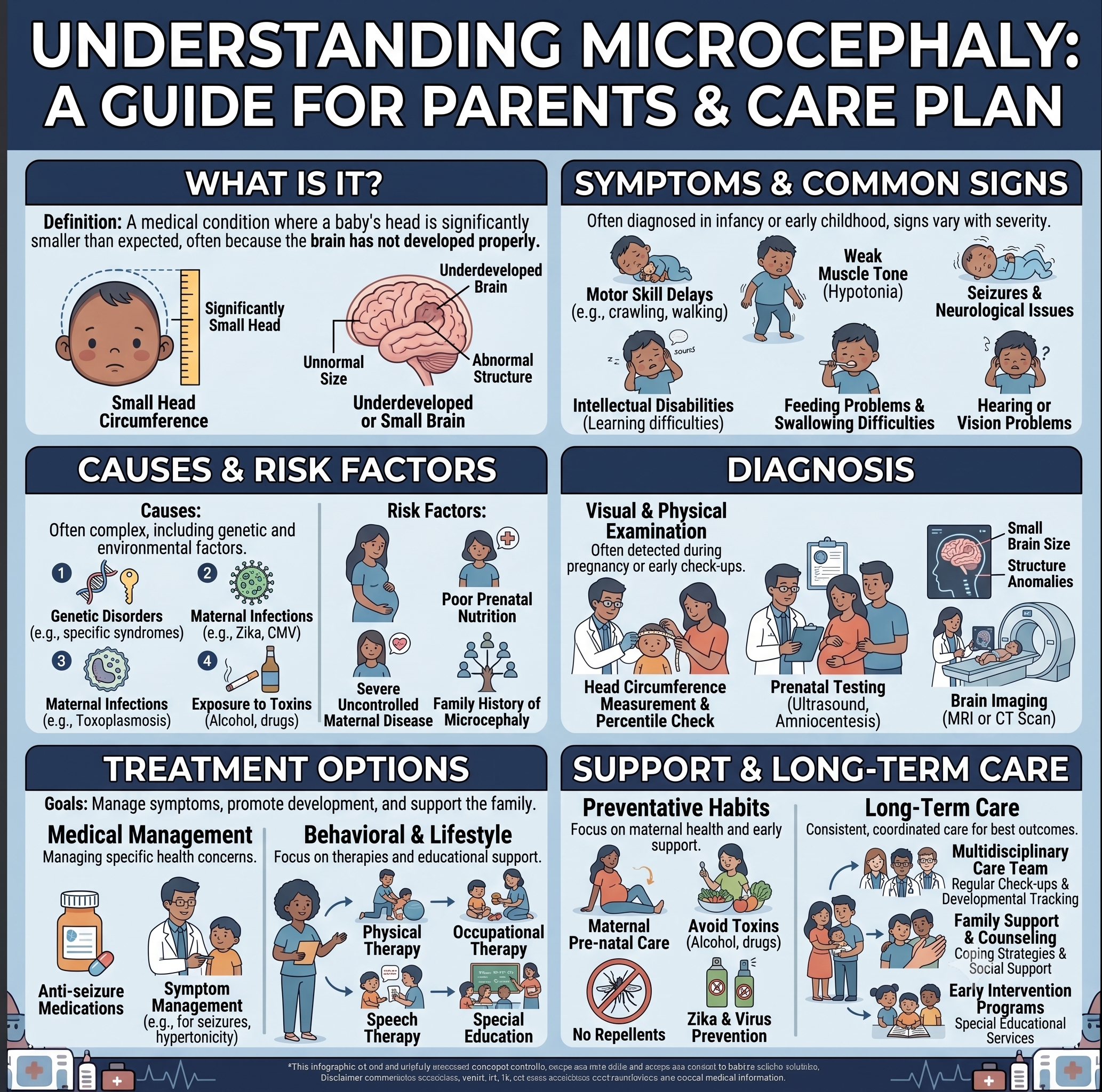
Microcephaly (pronounced my-kroh-SEF-uh-lee) is an uncommon neurological condition where a baby's head is noticeably smaller than expected for their age and sex. This often happens because the brain didn't develop fully during pregnancy or stopped growing properly after birth. While the condition itself doesn't have a cure, early support through various therapies can significantly enhance a child's development and overall quality of life.
Understanding the Condition
Microcephaly: Understanding and Managing a Smaller Head Size
Understanding the Condition
Common Symptoms
Smaller Head Size: The main sign of microcephaly is a head circumference (the distance around the child's head) that is significantly smaller than what is typical for other children of the same age and sex. Doctors use special growth charts to compare measurements and identify this difference.
Sloping Forehead: In more severe cases of microcephaly, a child may also have a forehead that appears to slope backward.
Consultation Guide
Which Specialist to Meet
Before your appointment, gather your child's health records, including growth charts if available, and any details about your pregnancy and their birth. Make a list of your child's symptoms, developmental milestones, and any questions you have for the doctor. Discuss any family history of small head size or neurological conditions.
Book a doctor visit near me
Symptomatic Management
Consultation Guide
Microcephaly (pronounced my-kroh-SEF-uh-lee) is an uncommon neurological condition where a baby's head is noticeably smaller than expected for their age and sex. This often happens because the brain didn't develop fully during pregnancy or stopped growing properly after birth. While the condition itself doesn't have a cure, early support through various therapies can significantly enhance a child's development and overall quality of life.
If you suspect your child has microcephaly, start by consulting with your child's pediatrician. They may then refer you to specialists such as a pediatric neurologist (a doctor specializing in children's brain conditions), a geneticist (to investigate genetic causes), and a developmental specialist (to assess and guide therapy needs).
Preparations Before Your Visit
A healthcare professional will draw a small sample of blood, usually from a vein in your arm, using a needle. The process is quick and may cause a brief pinch or sting. For infants, blood may be drawn from a heel prick. The blood sample is then sent to a laboratory for analysis.
Understanding Genetic Risks: If microcephaly is suspected to have a genetic cause, consulting a genetic counselor can help families understand the risk of recurrence in future pregnancies and explore family planning options. This is a one-time or short-term consultation, but can inform long-term family decisions.
Regular Medical Check-ups: Consistent follow-up appointments with pediatricians and specialists are vital to monitor the child's growth, development, and address any emerging health issues promptly. This is lifelong care.
Monitoring for Complications: Vigilant observation for potential complications such as seizures, feeding problems, or developmental plateaus allows for timely intervention and management. Ongoing monitoring throughout life.
Support and Resources
Connecting with Support Groups: Joining parent support groups provides emotional support, shared experiences, and practical advice from other families facing similar challenges. Long-term benefit.
Diagnostic Procedures
Brain CT Scan (Computed Tomography)
A Brain CT scan uses special X-ray technology and a computer to create detailed cross-sectional images, like 'slices,' of the brain, skull, blood vessels, and soft tissues. This quick test helps doctors identify issues like abnormal brain structure, bleeding, swelling, or tumors, providing more detail than standard X-rays.
What to Expect
You will lie on a movable table that slides into a large, doughnut-shaped machine. The scanner will rotate around your head, taking pictures from different angles. You might hear whirring noises. In some cases, a special 'contrast dye' may be injected into a vein to make certain structures show up more clearly. The procedure is generally quick, typically lasting only a few minutes, and you'll need to stay very still. For children, sedation might be used to ensure they remain still, and lower radiation doses are always used.
Brain MRI (Magnetic Resonance Imaging)
A Brain MRI uses strong magnets and radio waves, instead of X-rays, to create highly detailed images of the brain. This test provides clearer 'slices' of brain tissue and structure than a CT scan, helping doctors identify subtle abnormalities, tumors, or other conditions affecting brain development and function. It can also image the neck and spine if needed.
What to Expect
You will lie on a bed that slides into a large, tube-shaped machine. The machine makes loud knocking or thumping noises during the scan, so you will typically be offered earplugs or headphones. It's crucial to remain completely still throughout the procedure, which can last from 30 minutes to an hour or more. Some people might feel enclosed or anxious in the scanner, but open MRI machines are available for those with claustrophobia. MRI does not use radiation and is generally considered very safe.
Complete Blood Count (CBC)
A Complete Blood Count (CBC) is a routine blood test that measures various components of your blood, including red blood cells, white blood cells, and platelets. While not directly diagnosing microcephaly, it can help identify underlying conditions that might contribute to or be associated with microcephaly, such as infections or other systemic issues affecting overall health and development.
What to Expect
Accessing Early Intervention Programs: Enrollment in early intervention services as soon as microcephaly is diagnosed is critical to maximize developmental potential through coordinated therapies. Begins early in life and can continue through childhood.
Promoting Development at Home
Stimulating Activities: Engaging the child in age-appropriate stimulating activities, play, and interactions helps foster cognitive, social, and motor development. Ongoing daily practice.
Treatment Options
Therapies
Physical Therapy: Helps improve movement, strength, and balance, addressing motor skill delays. (Duration: Often ongoing for many years, tailored to the child's changing needs.)
Occupational Therapy: Focuses on developing daily living skills like feeding, dressing, and fine motor coordination. (Duration: Typically ongoing, adapted as the child grows.)
Speech and Language Therapy: Aids in communication skills, including speaking, understanding, and alternative communication methods. (Duration: Usually ongoing, depending on the child's communication progress.)
Developmental and Educational Support: Provides specialized learning strategies and educational programs tailored to the child's cognitive abilities and learning pace. (Duration: Long-term support, integrated into schooling and home life.)
Medication Management: If complications like seizures occur, specific medications can be prescribed to control them. (Duration: Individualized, often long-term under medical supervision.)
Prevention & Long-Term Wellbeing
Nutritional Support: For feeding difficulties, special feeding techniques, dietary modifications, or in severe cases, tube feeding may be necessary to ensure adequate nutrition and growth. (Duration: Varies based on improvement in feeding abilities.)
Behavioral Therapy: Addresses behavioral challenges that may arise, helping children develop coping mechanisms and social skills. (Duration: Individualized, often long-term with ongoing adjustments.)
Supportive Home Environment: Creating a stimulating and safe environment, consistent routines, and providing loving support are crucial for a child's overall well-being and development. (Duration: Ongoing throughout the child's life.)
Maintaining a Healthy Lifestyle: Ensuring a balanced diet, adequate sleep, and a safe, loving home environment contributes significantly to the child's overall health and well-being. Lifelong commitment.
Tags & Topics
Notice an error or need an update?
Help us keep medical information accurate. Report incorrect info or suggest an edit.


