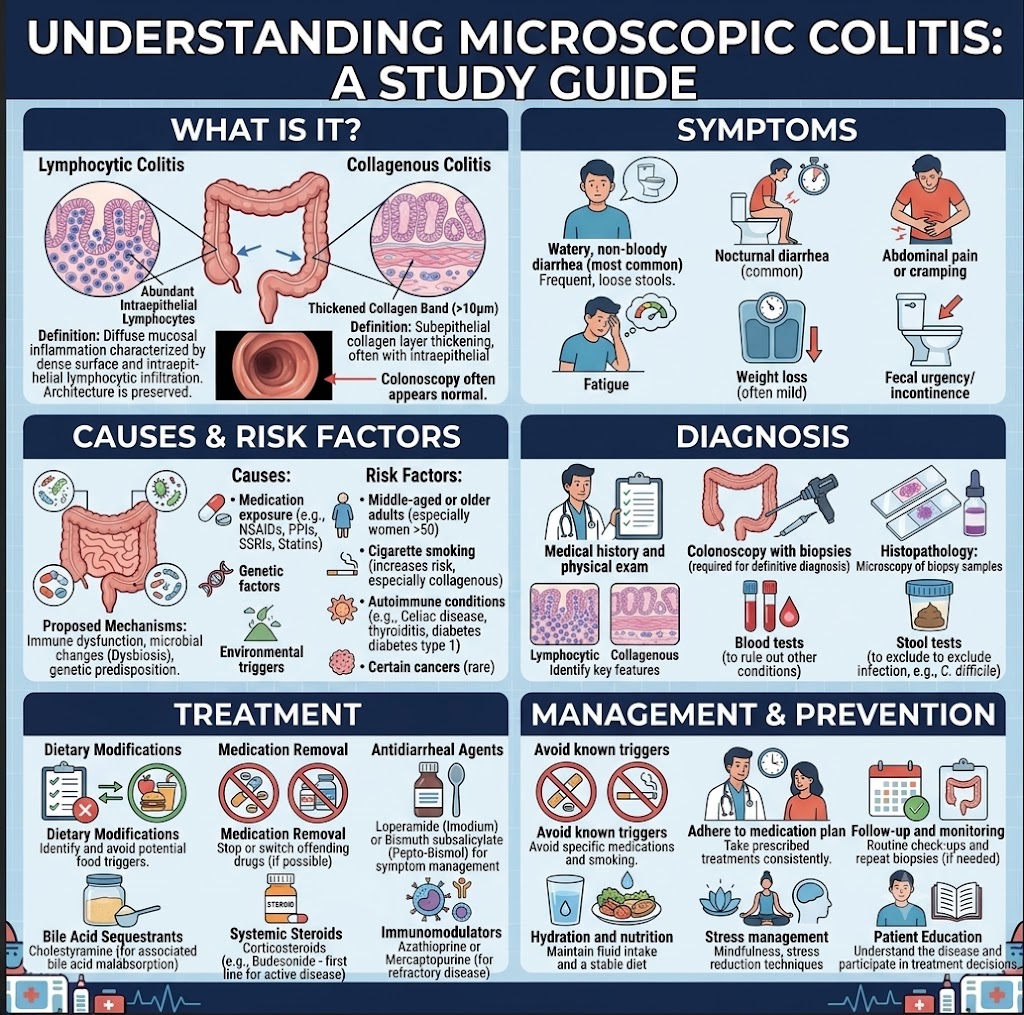
Microscopic colitis is an inflammatory condition affecting the large intestine, also known as the colon. Unlike other types of colitis, the inflammation is only visible when colon tissue is examined under a microscope, appearing normal to the naked eye during an endoscopy. This condition primarily causes chronic watery diarrhea. There are two main types: collagenous colitis, characterized by an abnormal layer of collagen in the colon tissue, and lymphocytic colitis, marked by an increased number of white blood cells called lymphocytes. Both types share similar symptoms, diagnostic methods, and treatments, and are believed to be variations of the same underlying condition.
Understanding the Condition
Microscopic Colitis: Understanding Symptoms, Diagnosis, and Treatment
Understanding the Condition
Microscopic colitis is an inflammatory condition affecting the large intestine, also known as the colon. Unlike other types of colitis, the inflammation is only visible when colon tissue is examined under a microscope, appearing normal to the naked eye during an endoscopy. This condition primarily causes chronic watery diarrhea. There are two main types: collagenous colitis, characterized by an abnormal layer of collagen in the colon tissue, and lymphocytic colitis, marked by an increased number of white blood cells called lymphocytes. Both types share similar symptoms, diagnostic methods, and treatments, and are believed to be variations of the same underlying condition.
Common Symptoms
Watery Diarrhea: Frequent, persistent watery bowel movements, often the most prominent symptom.
Abdominal Discomfort: Pain, cramping, or bloating in the belly area.
Weight Loss: Unexplained loss of body weight.
Fecal Incontinence: Difficulty controlling bowel movements, leading to accidental leakage.
Dehydration: A state where the body lacks sufficient water due to fluid loss from chronic diarrhea, potentially causing fatigue, dizziness, and dry mouth.
Consultation Guide
Which Specialist to Meet
You should consult a gastroenterologist, a doctor specializing in digestive system disorders. For initial assessment, your primary care physician can also provide guidance and referrals.
Preparations Before Your Visit
Before your appointment, prepare a detailed log of your symptoms, including their frequency, duration, and severity, particularly regarding diarrhea and abdominal pain. List all medications you are currently taking (prescription, over-the-counter, and supplements). Be ready to discuss your complete medical history, including any autoimmune conditions or family history of digestive issues. Noting your typical dietary habits can also be helpful. Prepare a list of questions for your doctor to ensure all your concerns are addressed.
Book a doctor visit near me
Dietary Adjustments: Identifying and avoiding foods that trigger symptoms, such as caffeine, alcohol, dairy products, gluten, or high-fat foods. A low-FODMAP diet may also be recommended. (Duration: Ongoing as needed)
Anti-Diarrhea Medications: Over-the-counter or prescription medications to help reduce the frequency and urgency of bowel movements. (Duration: As needed for symptom relief)
Trigger Avoidance: Working with your doctor to identify and avoid specific medications (e.g., certain pain relievers, acid reducers) or foods that might exacerbate your symptoms.
Managing Associated Conditions: For individuals with co-occurring autoimmune diseases (like celiac disease or rheumatoid arthritis), effective management of these conditions can sometimes improve microscopic colitis symptoms.
Regular Medical Follow-ups: Maintaining regular appointments with your gastroenterologist to monitor symptoms, adjust treatment as needed, and ensure long-term remission.
Stress Management: Implementing stress-reduction techniques such as mindfulness, yoga, or meditation, as stress can sometimes influence digestive symptoms.
Consultation Guide
Hydration: Drinking plenty of fluids, especially water and electrolyte-rich beverages, to prevent dehydration caused by chronic diarrhea. (Duration: Ongoing)
Diagnostic Procedures
Colonoscopy with Biopsy
This is the primary diagnostic procedure. A colonoscopy involves examining the entire length of the large intestine using a thin, flexible tube with a camera. Crucially, tiny tissue samples (biopsies) are taken from different sections of the colon. These samples are then examined under a microscope by a pathologist to identify the specific cellular changes characteristic of microscopic colitis, which are not visible during the visual examination alone.
What to Expect
Treatment Options
Medications
Anti-Inflammatory Medications: Specific medications designed to reduce inflammation in the colon. These are often the first line of targeted treatment. (Duration: Typically for several weeks to months, with gradual tapering)
Bile Acid Binders: Medications that help absorb excess bile acids in the colon, which can sometimes contribute to diarrhea. (Duration: As prescribed, often long-term if effective)
Immune System Modulators: For more severe or persistent cases, medications that suppress or modulate the immune system may be used to control inflammation. (Duration: Can be long-term, depending on response)
Prevention & Long-Term Wellbeing
Before the procedure, you'll need to follow a strict diet and take a special laxative preparation to completely cleanse your colon. On the day of the procedure, you will typically receive sedation to ensure comfort and minimize discomfort. The doctor will gently insert the scope through your rectum and guide it through your colon. During this time, the doctor will visually inspect the colon lining and take small biopsies. The procedure usually takes 30-60 minutes. After the procedure, you'll recover from sedation, may feel some mild cramping or bloating due to air in the colon, and will need someone to drive you home.
Lifestyle and Home Remedies
Prevention and Long-Term Management
Smoking Cessation: Quitting smoking is strongly advised, as research indicates a link between tobacco use and an increased risk or worsening of microscopic colitis.
Nutritional Support: Addressing any nutritional deficiencies that may arise from chronic diarrhea through diet or supplements, as advised by your healthcare provider.
Tags & Topics
Notice an error or need an update?
Help us keep medical information accurate. Report incorrect info or suggest an edit.


