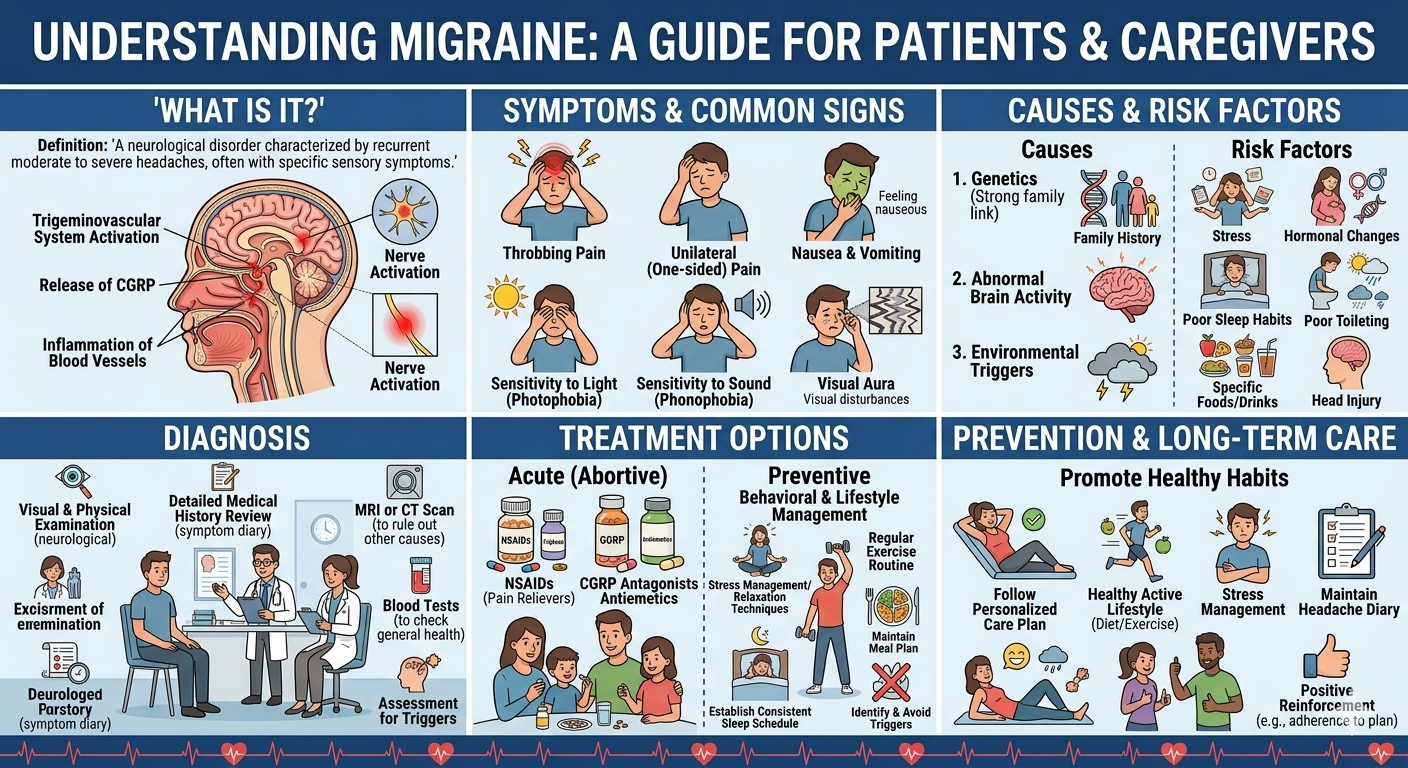
A migraine is a severe type of headache that often causes intense throbbing pain or a pulsing sensation, usually on one side of the head. It's often accompanied by symptoms like nausea, vomiting, and extreme sensitivity to light and sound. Migraine attacks can be debilitating, lasting for hours to several days, significantly disrupting daily life. While the exact causes aren't fully understood, genetic and environmental factors are believed to play a role, involving brain chemical imbalances and nerve pathways.
Understanding the Condition
Understanding Migraine: A Guide for Non-Medical Persons
Understanding the Condition
A migraine is a severe type of headache that often causes intense throbbing pain or a pulsing sensation, usually on one side of the head. It's often accompanied by symptoms like nausea, vomiting, and extreme sensitivity to light and sound. Migraine attacks can be debilitating, lasting for hours to several days, significantly disrupting daily life. While the exact causes aren't fully understood, genetic and environmental factors are believed to play a role, involving brain chemical imbalances and nerve pathways.
Common Symptoms
General Migraine Symptoms: Migraines can affect children, teenagers, and adults. They are more than just a bad headache and often involve a combination of symptoms like intense throbbing pain, pulsing sensation (often on one side of the head), nausea, vomiting, and extreme sensitivity to light, sound, or even smells. Movement can worsen the pain.
Migraine Stages and Their Symptoms: Migraines can progress through four stages, though not everyone experiences all of them:* **Prodrome (Warning Signs):** One or two days before a migraine, you might notice subtle changes such as constipation, mood swings (from depression to elation), food cravings, neck stiffness, increased urination, fluid retention, or frequent yawning.* **Aura (Sensory Disturbances):** For some, an aura occurs before or during a migraine. These are reversible nervous system symptoms, typically visual. They usually start gradually and can last up to an hour. Common visual auras include seeing flashes of light, bright spots, zigzags, or having blind spots. Auras can also cause tingling on one side of the face, arm, or leg, or temporary difficulty speaking. When people refer to 'ocular migraine', they usually mean 'migraine with aura' (affecting both eyes), or less commonly, 'retinal migraine' (a rare condition causing temporary vision loss in one eye).* **Attack (Headache Phase):** This is when the head pain is most severe, often described as throbbing or pulsing, usually on one side. Nausea, vomiting, and heightened sensitivity to light and sound are common.* **Postdrome (After-Effects):** After a migraine attack, you might feel drained, confused, or have mood changes. Sudden head movements can briefly bring back the pain.
Consultation Guide
Which Specialist to Meet
You should consult a general healthcare professional or a neurologist (a doctor specializing in brain and nervous system disorders) if you suspect you have migraines, or if your headaches are severe, frequent, or suddenly change.
Preparations Before Your Visit
Before your visit, keep a diary of your headaches. Note down when they occur, how long they last, the severity of the pain, any other symptoms you experience (like nausea or aura), and potential triggers (foods, stress, sleep patterns). List all current medications you are taking, including over-the-counter drugs and supplements. Be prepared to discuss your medical history and any family history of migraines.
Book a doctor visit near me
Migraine is primarily diagnosed based on your reported symptoms and medical history. There are no specific lab tests or imaging studies that can definitively confirm or rule out migraine.
Your doctor will ask detailed questions about your headache symptoms, their frequency, severity, and any associated symptoms like light/sound sensitivity, nausea, or changes in daily function. They will also inquire about your general health and family medical history.
Neurological Examination
A neurological exam checks how well different parts of your nervous system (brain, spinal cord, nerves, muscles) are working. It helps to find nervous system conditions and what might be causing them, often to rule out other conditions that could mimic migraine symptoms.
A brain CT scan uses X-rays and computer processing to create detailed cross-sectional images (slices) of your brain, bones, blood vessels, and soft tissues. It's often used in emergency situations for head injuries or sudden stroke-like symptoms, or to rule out other serious conditions like bleeding or tumors.
A brain MRI uses powerful magnets and radio waves to create highly detailed images of the brain and surrounding structures. It's often used to diagnose conditions like stroke, tumors, or multiple sclerosis, which might have symptoms similar to migraine, or to investigate the cause of persistent headaches.
Acute Treatment Medications: These medicines are taken at the first sign of a migraine to stop it from getting worse or relieve symptoms. They can include pain relievers, specific migraine drugs, or anti-nausea medications. Some are available as nasal sprays or injections if oral medications cause nausea. (Duration: As needed for an attack (typically 1-2 doses per attack); avoid overuse.)
Consultation Guide
Identifying Risk Factors: Migraines often run in families. They typically start in teenage years, peak in the 30s, and are three times more common in women. Hormonal changes, especially during menstruation and pregnancy, are significant factors.
Diagnostic Procedures
What to Expect
What to Expect
During the exam, your healthcare professional will assess your reflexes, muscle strength, coordination, balance, and senses. They may also test your mental status, memory, and speech. The exam typically involves simple tasks and observations and does not involve any discomfort.
Brain CT Scan (Computerized Tomography)
What to Expect
You will lie on a movable table that slides into a large, doughnut-shaped machine. You may be asked to lie still and hold your breath briefly. Sometimes, a special dye (contrast material) is injected into a vein to highlight certain structures. The scan is usually quick and painless, though some people may feel a brief warm sensation from the contrast dye.
Brain MRI (Magnetic Resonance Imaging)
What to Expect
You will lie on a movable table that slides into a long, tube-shaped machine. The machine makes loud knocking or buzzing noises, so you may be offered earplugs or headphones. It's crucial to remain very still during the scan, which can last from 30 to 60 minutes or more. Some people may feel confined in the enclosed space. As with CT, contrast dye might be used.
Lumbar Puncture (Spinal Tap)
A lumbar puncture is a procedure where a needle is inserted into the lower back to collect a sample of cerebrospinal fluid (CSF), the fluid surrounding your brain and spinal cord. This test is used to diagnose serious infections (like meningitis), bleeding around the brain, or certain neurological disorders.
What to Expect
You will typically lie on your side with your knees drawn up to your chest, or sit and lean forward. The doctor will clean the area and numb it with local anesthetic. A thin needle is then carefully inserted between two bones in your lower spine to collect a small amount of CSF. You might feel pressure or brief discomfort as the needle goes in. The procedure usually takes about 30-45 minutes.
Addressing Gastrointestinal Issues: Nausea and vomiting are common with migraines, and research suggests a link between migraines and conditions like reflux, diarrhea, constipation, Irritable Bowel Syndrome, and celiac disease. Treating these digestive issues might reduce migraine frequency or intensity.
Treatment Options
Medications
Preventive Medications: These drugs are taken regularly to reduce the frequency and severity of migraine attacks. They may include certain types of antidepressants, blood pressure medications, or anti-seizure drugs. The best option varies for each person. (Duration: Daily or as prescribed, often for several months to years under medical supervision.)
Therapies and Procedures
Onabotulinum Toxin A Injections: These injections are used for the preventive treatment of chronic migraines. The substance is injected into specific areas of the head and neck to help reduce the frequency and severity of attacks. (Duration: Administered by a doctor every 12 weeks.)
Transcranial Magnetic Stimulation (TMS): This device transmits a signal to the brain, aiming to reduce brain overactivity associated with migraines. It's cleared for both acute treatment and prevention of migraines. (Duration: Used as needed for acute attacks or regularly for prevention, under medical guidance.)
Acupuncture: Involves inserting very thin needles into specific points on the body, believed to balance energy flow or stimulate nerves to release natural painkillers. It's used for pain relief and overall wellness. (Duration: Multiple sessions (e.g., weekly) over several weeks or months.)
Biofeedback: A mind-body technique that uses electronic sensors to provide real-time information about body functions (like heart rate, muscle tension). This helps you learn to control these functions to reduce stress and migraine triggers. (Duration: Several training sessions, with ongoing practice at home.)
Surgical Procedures
Occipital Nerve Stimulation: A surgical procedure for severe, chronic migraines that haven't responded to other treatments. A small device is implanted at the base of the skull, sending electrical impulses to the occipital nerve. This is still considered a treatment under development, with inconsistent results and limited long-term data. (Duration: Implanted device; benefits can last for years but may require surgical revision.)
Avoiding Medication Overuse Headaches: Taking painkillers too often (e.g., more than 14 days a month for simple pain relievers, or more than 9 days a month for specific migraine drugs) can ironically lead to more headaches, creating a painful cycle. Always follow your doctor's instructions for medication use.
Safe Medication Combinations: Discuss all your medications with your doctor, especially when combining migraine drugs with antidepressants, as rare but serious interactions like serotonin syndrome can occur, though the risk is generally low when used as directed.
Prevention & Long-Term Wellbeing
Home Remedies and Lifestyle Changes
Rest and Relaxation: At the first sign of a migraine, take a break from activities and rest in a quiet, dark room. Relaxation techniques can help reduce pain and stress. (Duration: As needed during an attack)
Caffeine in Moderation: Small amounts of caffeine early in an attack can sometimes relieve pain and enhance the effects of pain relievers. However, too much caffeine can lead to withdrawal headaches or interfere with sleep. (Duration: Acute use; careful monitoring of intake)
Sleep Hygiene: Establish a consistent sleep schedule, ensure your bedroom is dark and quiet, and avoid large meals, caffeine, and alcohol before bed. Poor sleep can trigger migraines. (Duration: Ongoing)
Understanding and Avoiding Triggers
Hormonal Changes: Fluctuations in estrogen levels (e.g., before or during periods, pregnancy, menopause) can trigger migraines. Some hormonal medicines may worsen or improve migraines.
Dietary Factors: Alcohol (especially wine), too much caffeine, aged cheeses, salty and processed foods, or skipping meals can act as triggers. Food additives like aspartame and MSG may also be culprits.
Environmental Stimuli: Bright or flashing lights, loud sounds, and strong smells (perfumes, paint thinner, smoke) can induce migraines in sensitive individuals.
Stress Management: Stress from work or home is a common migraine trigger. Finding ways to manage stress through relaxation, exercise, or hobbies can be beneficial.
Sleep Patterns: Both too little and too much sleep can trigger migraines. Aim for consistent, adequate sleep.
Physical Activity and Weather: Intense physical exertion and changes in weather or barometric pressure can provoke migraines in some people. Learning to anticipate and mitigate these effects (e.g., staying hydrated, managing indoor climate) can help.
Long-Term Management and Prevention
Tags & Topics
Notice an error or need an update?
Help us keep medical information accurate. Report incorrect info or suggest an edit.


