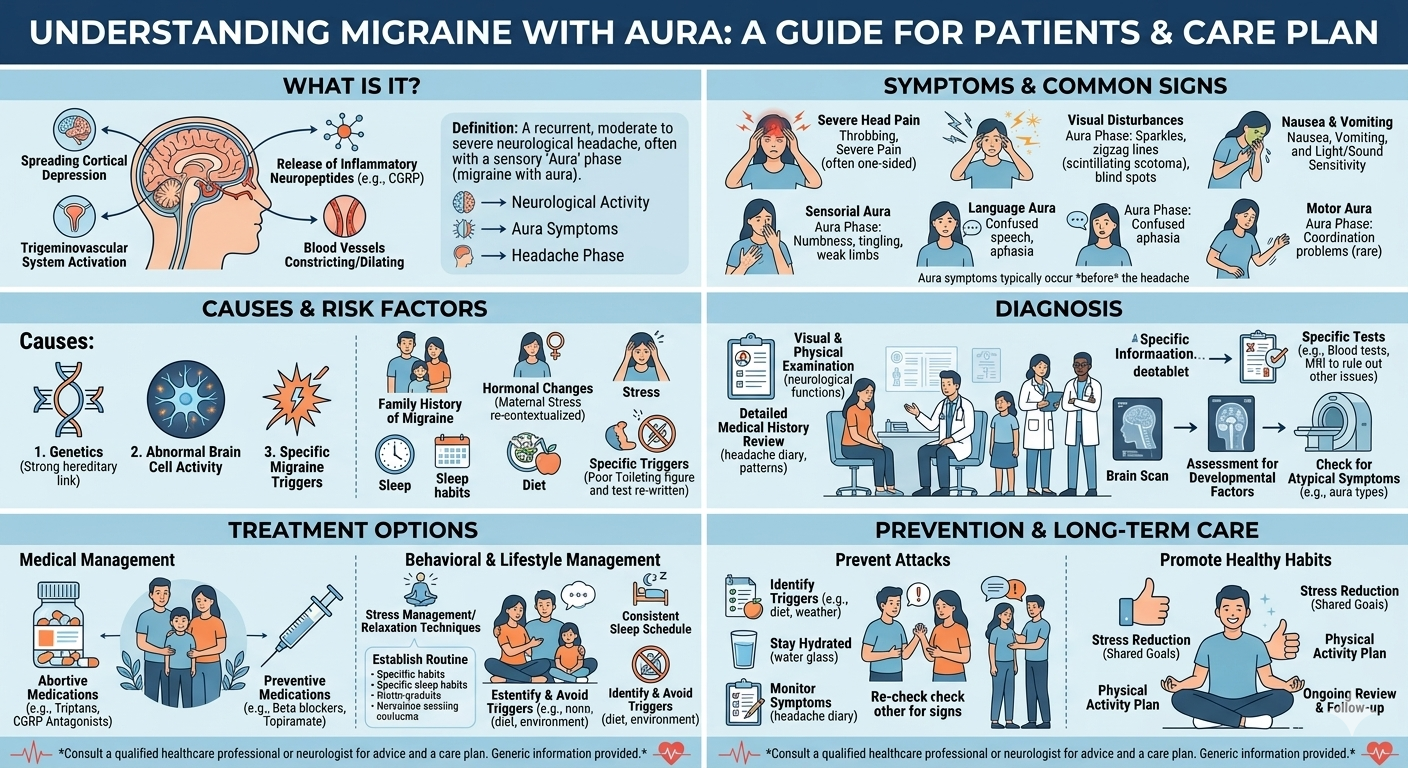
Migraine with aura is a specific type of recurring headache that involves temporary nervous system symptoms, known as an 'aura,' either before or at the same time as the headache pain. These aura symptoms usually last less than an hour and most often affect vision, but can also cause tingling, speech difficulties, or, rarely, muscle weakness. Treatments for migraine with aura are generally similar to those for other migraines, focusing on preventing attacks and relieving symptoms once they start, alongside self-care and lifestyle adjustments.
Understanding the Condition
Migraine with Aura: Understanding and Managing a Recurring Headache
Understanding the Condition
Migraine with aura is a specific type of recurring headache that involves temporary nervous system symptoms, known as an 'aura,' either before or at the same time as the headache pain. These aura symptoms usually last less than an hour and most often affect vision, but can also cause tingling, speech difficulties, or, rarely, muscle weakness. Treatments for migraine with aura are generally similar to those for other migraines, focusing on preventing attacks and relieving symptoms once they start, alongside self-care and lifestyle adjustments.
Common Symptoms
Aura Symptoms (Typically occur before or during headache): Aura symptoms are temporary disturbances of the nervous system. They typically appear within an hour of headache onset and usually last less than 60 minutes. Rarely, an aura can occur without a headache, more commonly in people over 50. These symptoms are like an electrical or chemical wave moving across parts of the brain.
Visual Aura (Most Common): These symptoms often begin in the center of your vision and spread outwards. They can include: - **Flashing or Shimmering Lights:** Brief flashes or shimmering effects. - **Zigzag Lines:** Bright, geometric lines, sometimes resembling the walls of a medieval fort (known as a 'fortification spectrum'), which may expand into C-shapes. - **Blind Spots:** Areas where vision is temporarily lost, or a partial loss of vision. - **Bright Spots or Shapes:** Seeing various bright, sometimes geometric, patterns.
Sensory Aura: This type of aura typically starts as a tingling sensation or numbness in one part of the body, often an arm or hand, and may slowly travel up the limb over 10-20 minutes. It can also spread to one side of the face and tongue.
Speech or Language Aura: Temporary difficulty with speaking or understanding language, often described as slurred speech or trouble finding the right words.
Motor Aura (Rare): This involves temporary muscle weakness, usually affecting the limbs and possibly the face on one side of the body. This is a rare form of migraine.
Headache Phase: Following or accompanying the aura, people typically experience intense head pain, which can be accompanied by nausea, vomiting, and increased sensitivity to light and sound.
Distinguishing from Retinal Migraine: Migraine with aura should not be confused with retinal migraine. Retinal migraine causes similar vision changes, but these symptoms occur in only one eye and are sometimes not followed by a headache.
Consultation Guide
Which Specialist to Meet
You should initially consult your primary care physician, who may then refer you to a neurologist (a doctor specializing in brain and nervous system disorders) or a headache specialist for further evaluation and management.
Preparations Before Your Visit
Before your appointment, keep a detailed record of your migraine attacks. This 'migraine diary' should include: the date and time of each attack, specific symptoms (including aura details), duration, potential triggers, and any medications or treatments you tried and whether they were effective. Also, list all your current medications, supplements, and any allergies. Prepare a list of questions for your doctor.
Book a doctor visit near me
A CT scan uses X-rays and a computer to create detailed cross-sectional images (like 'slices') of your head, including the brain, skull bones, and blood vessels. It provides more detail than standard X-rays and is often used to quickly check for issues like bleeding, swelling, or tumors, especially after head injuries or sudden symptoms that might suggest a stroke.
A brain MRI uses a powerful magnet, radio waves, and a computer to produce highly detailed images of your brain, and sometimes your neck and spine. It creates numerous 'slice' images, allowing doctors to see structures in great detail without using X-ray radiation. This test is crucial for diagnosing various conditions, including stroke, tumors, and multiple sclerosis, and for investigating symptoms like persistent headaches, vision changes, or seizures.
Acute/Abortive Medications: These medicines are taken at the very first sign of a migraine attack, including aura symptoms, to stop the headache and associated symptoms (like nausea) from developing or worsening. (Duration: Taken as needed for individual attacks, typically effective within 1-2 hours.)
Nerve-Blocking Injections: Injections of a purified substance derived from a specific toxin can be used to block certain nerve signals that contribute to chronic migraine. These injections relax muscles and can help prevent migraine attacks. (Duration: Effects typically last several months, requiring repeat injections for ongoing benefit.)
Cognitive Behavioral Therapy (CBT): CBT is a type of talk therapy that helps you identify and change unhelpful thinking patterns and behaviors. It can be effective in learning to cope with chronic pain, manage stress, and reduce the impact of migraine on daily life. (Duration: Often a structured, short-term therapy, typically 6-20 sessions, with practice exercises between sessions.)
Relaxation Techniques: Practices such as deep breathing exercises, meditation, yoga, or professional massage can help reduce stress and muscle tension, which are common migraine triggers. Learning to relax can lessen the frequency and intensity of attacks. (Duration: Ongoing, as needed for stress management and daily wellbeing.)
Home Remedies & Self-Care
Ongoing Symptom Tracking: Maintain your migraine diary. This continuous record is invaluable for monitoring long-term patterns, understanding treatment responses, and guiding future medical decisions.
Prompt Medical Attention for New or Changing Symptoms: Even if you have a history of migraines, seek immediate medical attention if your headache pattern suddenly changes, if headaches feel significantly different, or if you experience new and severe neurological symptoms like sudden vision loss in one eye, difficulty speaking or understanding, or muscle weakness on one side of your body. These could be signs of more serious conditions, such as a stroke, which require urgent evaluation.
Consultation Guide
You will lie on a movable table that slides into a large, donut-shaped machine. You'll need to stay very still during the scan, which typically takes a few minutes. The machine may make some clicking or whirring noises. Sometimes, a special dye called contrast is injected into a vein in your arm to highlight certain areas; this might cause a temporary warm sensation or a metallic taste in your mouth.
Brain MRI (Magnetic Resonance Imaging)
Diagnostic Procedures
Brain CT Scan (Computerized Tomography)
What to Expect
What to Expect
You will lie on a padded table that slides into a long, narrow tube-shaped machine. The machine generates a strong magnetic field and emits loud knocking or thumping noises during the scan, so you'll usually be given earplugs or headphones. It's essential to remain completely still throughout the procedure, which can last from 30 minutes to an hour or more. Some people may feel uncomfortable in the enclosed space, but open or wider MRI machines are available.
Treatment Options
Medications
Preventative Medications: These medications are taken regularly, often daily, to reduce the frequency, severity, and duration of migraine attacks. They work by various mechanisms to stabilize brain activity. (Duration: Long-term, ongoing, as prescribed by your doctor.)
Regular Medical Follow-ups: Continue to have regular appointments with your doctor to review your migraine pattern, discuss the effectiveness of treatments, and make any necessary adjustments to your management plan.
Prevention & Long-Term Wellbeing
Lifestyle Adjustments: Maintaining a regular sleep schedule, eating meals at consistent times, staying well-hydrated, and engaging in regular, moderate exercise can significantly help in preventing migraines. Identifying and avoiding personal triggers (like certain foods, smells, or bright lights) is also crucial. (Duration: Ongoing, daily practice as part of a healthy lifestyle.)
Prevention Strategies
Trigger Identification and Avoidance: Use a migraine diary to identify personal triggers such as specific foods, stress, lack of sleep, hormonal changes, strong scents, or environmental factors. Once identified, actively work to minimize exposure to these triggers.
Maintain a Consistent Lifestyle: Sticking to regular sleep patterns (even on weekends), consistent meal times, and a structured exercise routine can help stabilize your body's systems and reduce migraine susceptibility.
Stress Management: Incorporate stress-reduction techniques into your daily life, such as mindfulness, meditation, deep breathing exercises, or gentle stretching. Managing stress is key, as it's a significant migraine trigger for many.
Stay Hydrated and Eat Balanced Meals: Dehydration and skipping meals can trigger migraines. Ensure adequate fluid intake and regular, nutritious meals to maintain stable blood sugar levels.
Long-Term Monitoring & When to Seek Help
Tags & Topics
Notice an error or need an update?
Help us keep medical information accurate. Report incorrect info or suggest an edit.


