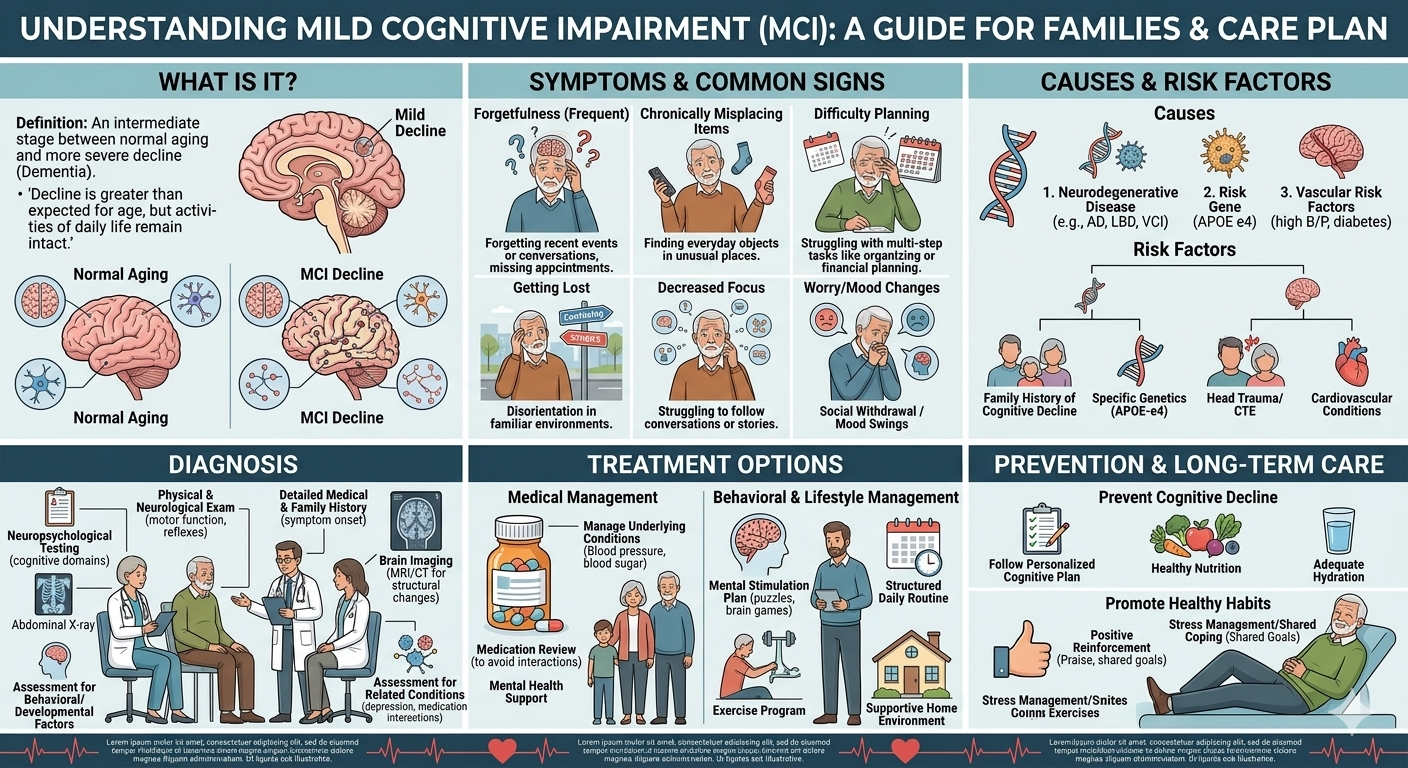
Mild cognitive impairment (MCI) describes a stage where a person experiences noticeable changes in their thinking and memory abilities, but these changes are not severe enough to interfere with daily life or usual activities. It's often considered a transition stage between the typical memory lapses that come with aging and the more significant decline seen in dementia. Individuals with MCI may recognize their mental abilities have shifted, and family or close friends might also observe these changes. While MCI increases the risk of developing dementia, such as Alzheimer's disease, it's important to note that for some, symptoms may remain stable, or even improve over time.
Understanding the Condition
Mild Cognitive Impairment (MCI): Understanding Memory Changes and Brain Health
Understanding the Condition
Mild cognitive impairment (MCI) describes a stage where a person experiences noticeable changes in their thinking and memory abilities, but these changes are not severe enough to interfere with daily life or usual activities. It's often considered a transition stage between the typical memory lapses that come with aging and the more significant decline seen in dementia. Individuals with MCI may recognize their mental abilities have shifted, and family or close friends might also observe these changes. While MCI increases the risk of developing dementia, such as Alzheimer's disease, it's important to note that for some, symptoms may remain stable, or even improve over time.
Common Symptoms
Forgetfulness: Forgetting recent events, conversations, or important information more often than before.
Missing Appointments: Difficulty remembering and keeping track of scheduled appointments or social gatherings.
Loss of Focus: Losing one's train of thought easily during conversations or having trouble following the plot of a book or movie.
Language Difficulties: Struggling to find the right words during conversation or trouble understanding complex language.
Problem-Solving Challenges: Finding it harder to make decisions, complete multi-step tasks, or follow instructions.
Disorientation in Familiar Places: Trouble navigating or finding their way around places they know well.
Impaired Judgment: Demonstrating poorer judgment than previously.
Observable Changes: Family members or close friends often notice these changes in thinking and memory.
Consultation Guide
Which Specialist to Meet
A primary care physician is a good starting point and can refer you to specialists like a neurologist (a doctor specializing in the brain and nervous system), a geriatrician (a doctor specializing in older adults), or a neuropsychologist (who assesses cognitive function).
Preparations Before Your Visit
Before your visit, make a list of all your symptoms and when they started, details about your medical history, all medications you take (including over-the-counter and supplements), and any questions you have. It's helpful to bring a family member or close friend who can describe the changes they've noticed.
Book a doctor visit near me
Symptom Tracking: Keep a record of any new or worsening changes in memory, thinking, or behavior to discuss with your doctor.
Consultation Guide
You will lie on a motorized table that slides into a large, doughnut-shaped machine. You must lie still during the scan, which usually takes only a few minutes. You may hear humming or clicking sounds. In some cases, a special dye (contrast) might be injected into a vein to highlight specific areas, which can cause a temporary warm sensation.
Brain Magnetic Resonance Imaging (MRI)
Prevention and Risk Factor Management
Regular Physical Activity: Engage in moderate to vigorous exercise most days of the week to improve blood flow to the brain and support overall brain health.
Diagnostic Procedures
Neurological Examination
This is a series of tests performed by a doctor to assess how well different parts of your nervous system (brain, spinal cord, nerves, muscles) are functioning. It helps identify issues affecting the nervous system.
What to Expect
The doctor will ask about your medical history and test your balance, reflexes, muscle strength, sensation, coordination, and mental status. This might involve simple tasks like walking in a straight line, identifying objects, answering questions, or solving basic problems. The exam can range from a few minutes to over an hour.
Brain CT Scan (Computerized Tomography)
A CT scan uses X-rays and computer processing to create detailed cross-sectional images (slices) of your head, including the brain, bone, and blood vessels. It's useful for quickly identifying issues like bleeding, swelling, or tumors.
What to Expect
A brain MRI uses powerful magnets and radio waves to generate highly detailed images of your brain and surrounding structures, without using radiation. It provides more intricate details than a CT scan, aiding in the diagnosis of conditions like stroke, tumors, multiple sclerosis, and can detect subtle brain changes often seen in MCI.
What to Expect
You will lie on a movable bed that slides into a long, narrow tube-shaped machine. The machine makes loud banging and knocking noises, so you will be given earplugs or headphones. It's crucial to remain completely still for the duration of the scan, which can last from 30 minutes to over an hour. Some people may feel confined due to the enclosed space. As with a CT, a contrast dye may be injected to enhance image clarity.
Treatment Options
Medications
Management of Co-existing Health Issues: While there are no specific medications for MCI itself, treating underlying conditions like high blood pressure, high cholesterol, diabetes, depression, or sleep apnea with prescribed medicines can help improve overall brain health and potentially slow cognitive decline. (Duration: Ongoing, as directed by your doctor.)
Therapies
Brain Training and Cognitive Therapies: Engaging in activities and exercises designed to improve memory, problem-solving, and attention. This can involve working with a cognitive therapist or using specialized computer programs to practice mental skills. (Duration: Varies based on individual needs, often involves structured sessions followed by ongoing practice.)
Quality Sleep: Prioritize 7-9 hours of restful sleep nightly and address any sleep disorders, such as obstructive sleep apnea, with appropriate treatment.
Manage Chronic Health Conditions: Work with your doctor to effectively manage conditions like high blood pressure, high cholesterol (especially LDL), diabetes, and depression.
Avoid Harmful Substances: Limit alcohol consumption and completely avoid smoking to protect brain health.
Protect Against Head Injuries: Reduce your risk of head trauma by wearing helmets during activities like cycling and using seatbelts in vehicles.
Address Sensory Impairments: Seek treatment for untreated hearing loss (e.g., hearing aids) and vision loss through regular eye exams and corrective measures.
Limit Environmental Exposure: Reduce exposure to air pollution whenever possible.
Regular Medical Check-ups: Schedule routine appointments with your healthcare provider to monitor your cognitive function, overall health, and adjust any management strategies as needed.
Prevention & Long-Term Wellbeing
Structured Health Programs: Participating in guided programs that focus on a healthy diet, regular physical exercise, and stress reduction techniques specifically tailored to support brain health. (Duration: Ongoing, as part of a long-term health plan.)
Healthy, Balanced Diet: Follow a diet rich in fruits, vegetables, whole grains, and healthy fats (like the Mediterranean diet) while limiting saturated fats, processed foods, and excessive sugar.
Mental Stimulation: Keep your mind active by engaging in puzzles, reading, learning new skills or languages, and playing strategic games.
Social Engagement: Maintain an active social life with friends, family, and community groups to foster cognitive health and reduce isolation.
Tags & Topics
Notice an error or need an update?
Help us keep medical information accurate. Report incorrect info or suggest an edit.


