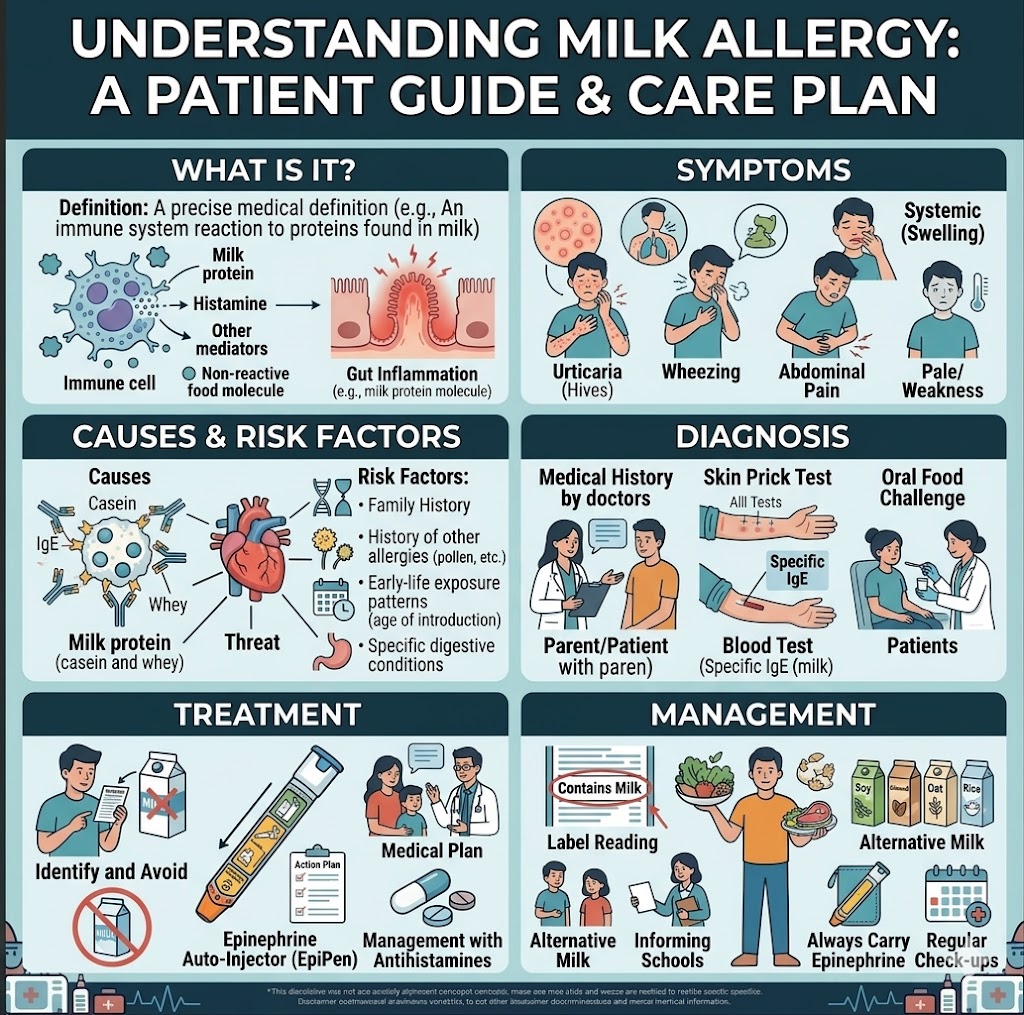
Milk allergy is an immune system reaction to proteins found in milk and milk-containing products. It's particularly common in children. While cow's milk is the primary trigger, milk from other mammals like goats or sheep can also cause reactions. Symptoms can appear quickly after consuming milk, ranging from mild skin or digestive issues to severe, life-threatening reactions. It's crucial to differentiate a true milk allergy from conditions like milk protein intolerance or lactose intolerance, which do not involve the immune system and cause mainly digestive symptoms. Fructose intolerance, a separate condition, involves difficulty absorbing a type of sugar found in fruits and processed foods, leading to digestive upset.
Understanding the Condition
Understanding Milk Allergy, Intolerance, and Related Digestive Issues
Understanding the Condition
Milk allergy is an immune system reaction to proteins found in milk and milk-containing products. It's particularly common in children. While cow's milk is the primary trigger, milk from other mammals like goats or sheep can also cause reactions. Symptoms can appear quickly after consuming milk, ranging from mild skin or digestive issues to severe, life-threatening reactions. It's crucial to differentiate a true milk allergy from conditions like milk protein intolerance or lactose intolerance, which do not involve the immune system and cause mainly digestive symptoms. Fructose intolerance, a separate condition, involves difficulty absorbing a type of sugar found in fruits and processed foods, leading to digestive upset.
Common Symptoms
Immediate Milk Allergy Symptoms (minutes to a few hours): Red, itchy bumps on the skin (hives); a whistling sound during breathing (wheezing); vomiting; diarrhea; stomach cramps; swelling of the lips, tongue, or throat; itching or tingling around the mouth; persistent cough; and runny nose.
Delayed Milk Allergy Symptoms (may take more time to develop): Loose stools, sometimes with blood (especially in infants); unexplained, intense crying (colic) in babies; and poor growth or failure to gain weight as expected.
Life-Threatening Reaction (Anaphylaxis): Milk allergy can cause anaphylaxis, a severe and potentially deadly reaction. This can narrow the airways, making breathing difficult, and lead to a sudden drop in blood pressure. Immediate medical attention is vital if these symptoms occur.
Symptoms of Milk Protein Intolerance or Lactose Intolerance: These conditions are not true allergies and typically involve digestive issues like bloating, gas, stomach pain, and diarrhea after consuming milk, without involving the immune system.
Symptoms of Fructose Intolerance: When the body struggles to absorb fructose (a sugar in fruits, honey, and many processed foods), it can lead to symptoms such as stomach pain, bloating, gas, and diarrhea.
Consultation Guide
Which Specialist to Meet
Before your visit, keep a detailed symptom diary noting what you or your child ate, when symptoms appeared, their nature, and duration. List all current medications, including over-the-counter drugs, vitamins, and supplements. Prepare a list of questions for the doctor and gather any relevant personal or family medical history, including past allergic reactions.
Book a doctor visit near me
Regular Medical Check-ups: Schedule periodic visits with an allergist to monitor the allergy, especially for children who may outgrow it. Discuss any new symptoms or concerns.
Diagnostic Procedures
It is recommended to consult an allergist for diagnosis and management of milk allergy. For children, a pediatrician can provide initial assessment and referrals. A registered dietitian is essential for creating a balanced eating plan tailored to manage milk allergy or fructose intolerance, ensuring all necessary nutrients are received.
Preparations Before Your Visit
A common method where small amounts of suspected allergy-causing substances (allergens) are applied to the skin to observe for a reaction, such as a red, itchy bump.
What to Expect
Tiny drops of milk proteins (or other suspected allergens) are placed on your forearm or back, and the skin is lightly pricked or scratched through each drop. After about 15-20 minutes, the site is checked for a raised, red bump resembling a mosquito bite, which indicates a possible allergy. These tests are generally safe but may not be recommended if you have severe eczema, are taking certain medications like antihistamines, or have a history of severe reactions (anaphylaxis) to the substance being tested.
Blood Tests (In Vitro Immunoglobulin E (IgE) Antibody Tests)
These tests measure specific allergy antibodies (IgE) in your blood, which the immune system produces in response to allergens.
What to Expect
A small blood sample is drawn from a vein, typically in your arm, similar to a routine blood test. The sample is then sent to a laboratory for analysis, with results usually available in a few days to a week. This test is a useful alternative when skin tests are not possible or safe.
Considered the most accurate diagnostic tool, this involves consuming gradually increasing amounts of a suspected food allergen under strict medical supervision to observe for an allergic reaction.
What to Expect
Performed in a medical facility, often a hospital or allergy clinic, with emergency equipment readily available. You or your child will be given tiny, measured portions of milk (or the suspected food) over several hours. Medical staff will closely monitor for any allergic reactions. If a reaction occurs, the test is stopped, and treatment is given. If no reaction occurs after consuming a full serving, the allergy is considered ruled out.
Re-evaluation for Outgrowing Allergy: For children, an allergist may periodically re-evaluate the allergy through specific tests or supervised food challenges to determine if it has been outgrown.
Managing Fructose Intolerance
Treatment Options
Milk Allergy Management
Strict Avoidance of Milk and Milk Products: This is the primary treatment. Carefully read food labels, as milk ingredients can be hidden in many processed foods. Be aware of cross-contamination risks in shared kitchens or when dining out. (Duration: Lifelong for individuals who do not outgrow the allergy; typically until allergy is outgrown in children, which can take several years.)
Emergency Medication for Anaphylaxis: For individuals at risk of severe reactions (anaphylaxis), a prescribed auto-injector containing emergency medication is essential. Training on how and when to use it is critical for the individual and their caregivers. (Duration: Carried at all times for immediate use in case of accidental exposure.)
Fructose Intolerance Management
Carrying Emergency Medication: If prescribed, always carry an auto-injector for anaphylaxis and ensure you, and those close to you, know how and when to use it.
Cross-Contamination Awareness: Be vigilant about shared utensils, cutting boards, and cooking surfaces that may have come into contact with milk products.
Dining Out Safely: Inform restaurant staff about the allergy and inquire about ingredients and food preparation methods before ordering.
Long-Term Management and Monitoring
Prevention & Long-Term Wellbeing
Dietary Modifications: Limiting high-fructose foods such as certain fruits (apples, pears, watermelon), fruit juices, high-fructose corn syrup (found in many processed foods), and some vegetables (asparagus, peas). Some individuals can tolerate lower-fructose foods (grapes, blueberries, carrots) in small amounts, especially when eaten with other foods. (Duration: Ongoing, managed through a personalized eating plan developed with a registered dietitian.)
Prevention of Allergic Reactions
Meticulous Label Reading: Always check food labels for milk and milk-derived ingredients. Be aware of various names for milk proteins (e.g., casein, whey) to avoid accidental exposure.
Informing Others: Educate family, friends, caregivers, school staff, and restaurant personnel about the allergy, its severity, and emergency procedures.
Nutritional Guidance: Work with a registered dietitian to ensure a balanced diet that meets all nutritional needs despite avoiding milk, especially for children. They can recommend appropriate calcium and vitamin D sources.
Personalized Eating Plan: Consult a registered dietitian to develop a tailored diet that limits high-fructose foods while ensuring adequate nutrition and preventing deficiencies.
Gradual Introduction of Foods: Some individuals may tolerate small amounts of lower-fructose foods. A dietitian can help explore this gradually to find individual tolerance levels and expand dietary options.
Tags & Topics
Notice an error or need an update?
Help us keep medical information accurate. Report incorrect info or suggest an edit.


