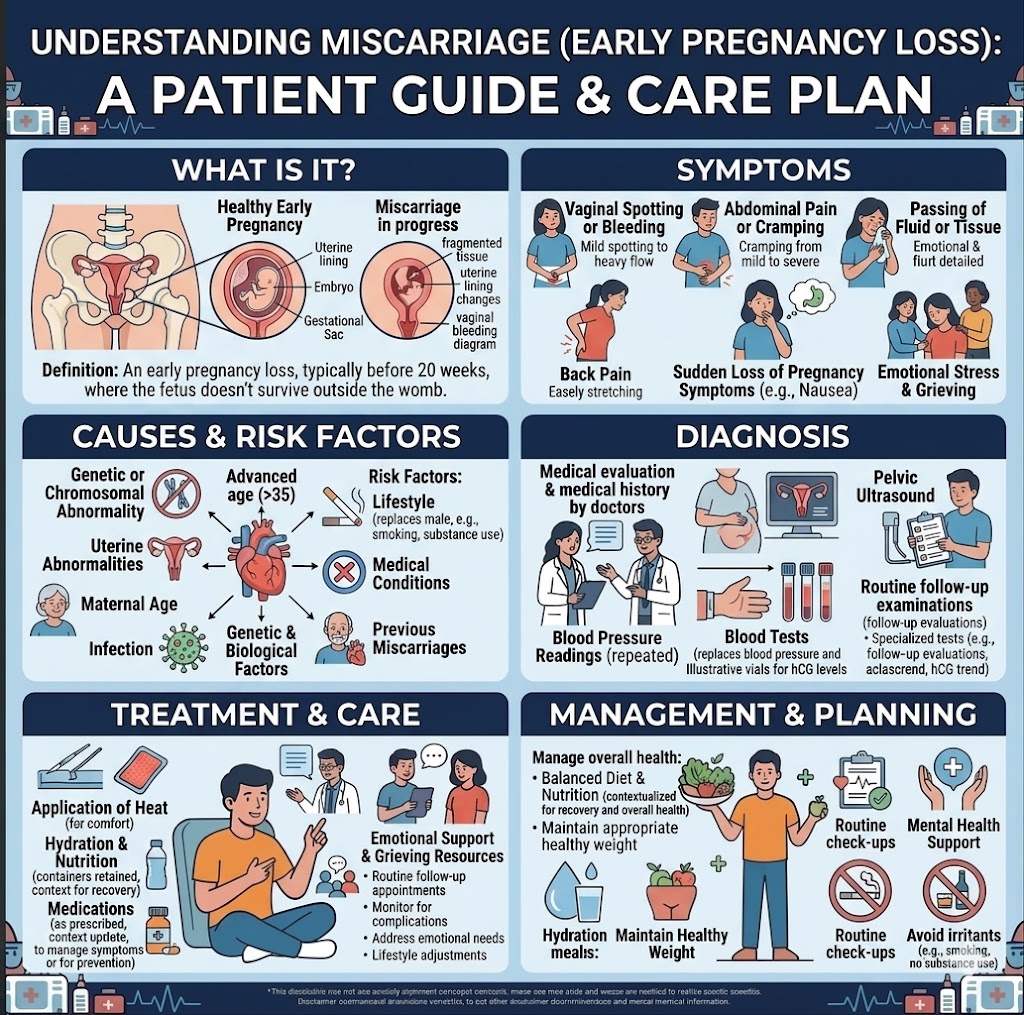
Miscarriage is the unexpected loss of a pregnancy before the 20th week. While it affects about 10% to 20% of known pregnancies, the actual number is likely higher as many occur very early, often before a pregnancy is even confirmed. The term 'miscarriage' can be misleading, as it rarely implies fault on the part of the pregnant person. Most miscarriages happen because the developing baby does not form properly. Though common, experiencing a miscarriage is a deeply challenging event. Learning about its causes, risk factors, and available care can be a crucial step toward emotional healing.
Understanding the Condition
Understanding Miscarriage: Causes, Symptoms, and Support
Understanding the Condition
Common Symptoms
Vaginal Bleeding: This can range from light spotting to heavy bleeding, sometimes with blood clots, and may or may not be accompanied by pain.
Pelvic or Lower Back Pain/Cramping: Discomfort can feel similar to menstrual cramps, ranging from mild to severe, located in the lower abdomen or back.
Passing Fluid or Tissue: This involves passing clear fluid or pieces of tissue from the vagina. If tissue is passed, it should be collected in a clean container and brought to your healthcare provider for examination.
Fast Heartbeat: A rapid pulse can sometimes be a symptom, especially if significant blood loss occurs.
Consultation Guide
Which Specialist to Meet
If you suspect a miscarriage or have any concerning symptoms, you should consult with your primary care provider or an obstetrician-gynecologist (OB-GYN). For recurrent miscarriages, a reproductive endocrinologist or a genetic counselor may be recommended.
Preparations Before Your Visit
Before your visit, make a list of your symptoms, including when they started and their severity. Gather your medical history, including any previous pregnancies, existing health conditions, and all medications or supplements you are taking. Prepare any questions you have. If you have passed tissue from your vagina, place it in a clean container and bring it with you to the appointment.
Book a doctor visit near me
Consultation Guide
Miscarriage is the unexpected loss of a pregnancy before the 20th week. While it affects about 10% to 20% of known pregnancies, the actual number is likely higher as many occur very early, often before a pregnancy is even confirmed. The term 'miscarriage' can be misleading, as it rarely implies fault on the part of the pregnant person. Most miscarriages happen because the developing baby does not form properly. Though common, experiencing a miscarriage is a deeply challenging event. Learning about its causes, risk factors, and available care can be a crucial step toward emotional healing.
If tissue is passed from the vagina during a suspected miscarriage, it can be collected and sent to a laboratory for microscopic examination. This can confirm the miscarriage and, in some cases, provide information about its cause, such as chromosomal issues.
Avoid Known Risk Factors: Refrain from smoking, excessive alcohol consumption, and the use of illicit drugs, which are all linked to an increased risk of miscarriage.
Maintain a Healthy Weight: Being underweight or overweight has been associated with a higher risk of miscarriage. Aim for a healthy body mass index (BMI) before and during pregnancy.
Manage Chronic Health Conditions: Work closely with your healthcare team to keep any existing conditions, such as diabetes or thyroid disease, well-controlled before and during pregnancy.
Consider Genetic Counseling: If you experience two or more miscarriages, genetic counseling may be beneficial to explore potential underlying chromosomal or genetic causes in either partner.
Diagnostic Procedures
A pelvic exam is a physical check of your reproductive organs to assess their health. It can help identify any unusual changes in the vulva, vagina, cervix, uterus, and ovaries.
What to Expect
During a pelvic exam, you will lie on an examination table with your feet placed in stirrups. Your healthcare provider will first visually inspect your external genitalia. Then, a speculum – a medical instrument – will be gently inserted into your vagina to open it slightly, allowing the provider to view your cervix. A bimanual exam follows, where the provider inserts two gloved fingers into your vagina while gently pressing on your abdomen with their other hand to feel your uterus and ovaries for any abnormalities. The entire exam typically lasts only a few minutes.
Ultrasound (Sonography)
An ultrasound uses high-frequency sound waves to create real-time images of internal body structures. It helps visualize the uterus, ovaries, and any developing pregnancy to assess its viability and development.
What to Expect
You may be asked to wear loose clothing. For an abdominal ultrasound, a gel is applied to your lower abdomen, and a transducer (a small, handheld device) is moved across your skin. For a transvaginal ultrasound, a slimmer transducer, covered with a protective sheath and gel, is gently inserted into your vagina to provide clearer images of the uterus and ovaries. The images are displayed on a screen, and the procedure is generally painless. Depending on the type, you might be asked to have a full or empty bladder.
What to Expect
If you pass tissue at home, you will be instructed to place it in a clean, airtight container and bring it to your healthcare provider's office or the hospital. The tissue will then be sent to a pathology lab where specialists will analyze its cellular structure under a microscope.
Blood tests can measure levels of pregnancy hormones, such as human chorionic gonadotropin (HCG), to monitor the status of the pregnancy. They can also check for anemia if heavy bleeding occurs or identify certain genetic conditions in parents in cases of recurrent miscarriages.
What to Expect
A small blood sample will be taken, usually from a vein in your arm. The area will be cleaned, and a needle will be inserted, causing a brief pinch. The blood is collected into a tube and sent to a lab for analysis. This is a quick procedure with minimal discomfort.
Treatment Options
Conservative Approaches
Expectant Management: This approach involves waiting for the body to naturally pass the remaining pregnancy tissue without intervention. It is often chosen for early miscarriages when there are no signs of infection or heavy bleeding. (Duration: Can take several days to a few weeks for the process to complete.)
Medication-Assisted Tissue Expulsion: Certain medications can be prescribed, taken orally or inserted vaginally, to help the uterus contract and expel any remaining pregnancy tissue. This option is often chosen when expectant management is not desired or suitable. (Duration: The process of tissue expulsion typically occurs within a few hours to a few days after medication, with bleeding possibly continuing for weeks.)
Procedural Treatments
Treatment for Uterine Infection (Septic Miscarriage): If pregnancy tissue remaining in the uterus leads to an infection, immediate medical intervention is critical. This involves strong medications to fight the infection and often a D&C to remove infected tissue. (Duration: Antibiotic treatment typically lasts 7-14 days. The D&C is a single procedure.)
Management of Heavy Bleeding (Hemorrhage): Severe vaginal bleeding, or hemorrhage, requires prompt medical attention. Treatment may include medications to help the uterus contract, blood transfusions if significant blood loss has occurred, or surgical intervention in severe, uncontrolled cases. (Duration: Duration varies based on severity, from a few hours of monitoring to longer hospital stays and follow-up care.)
Discuss Medications and Supplements: Take a daily multivitamin, especially one containing folic acid, as advised by your doctor. If you've had previous miscarriages, ask your healthcare provider if low-dose aspirin is appropriate for you.
Limit Caffeine Intake: Many experts recommend limiting caffeine to no more than 200 milligrams per day (roughly a 12-ounce cup of coffee) during pregnancy. Discuss safe levels with your care team.
Long-Term Monitoring and Emotional Support
Seek Emotional Support: Connect with support groups, grief counseling, or mental health professionals to help process the emotional impact of a miscarriage. It's important to allow time for emotional healing.
Prevention & Long-Term Wellbeing
Dilation and Curettage (D&C): A minor surgical procedure to remove tissue from inside the uterus. The cervix is gently dilated (opened), and a specialized surgical instrument (curette) or a suction device is used to carefully clear the uterine lining. (Duration: The procedure itself usually takes 15-30 minutes and is typically performed as an outpatient procedure. Recovery involves a few days to a week of rest.)
Management of Complications
Prevention and Lifestyle
Seek Regular Prenatal Care: Attend all recommended appointments during pregnancy to ensure optimal health for both you and the developing baby.
Attend Follow-Up Care: Ensure you go to all recommended follow-up appointments with your healthcare provider to monitor physical recovery and discuss future pregnancy planning.
Tags & Topics
Notice an error or need an update?
Help us keep medical information accurate. Report incorrect info or suggest an edit.


