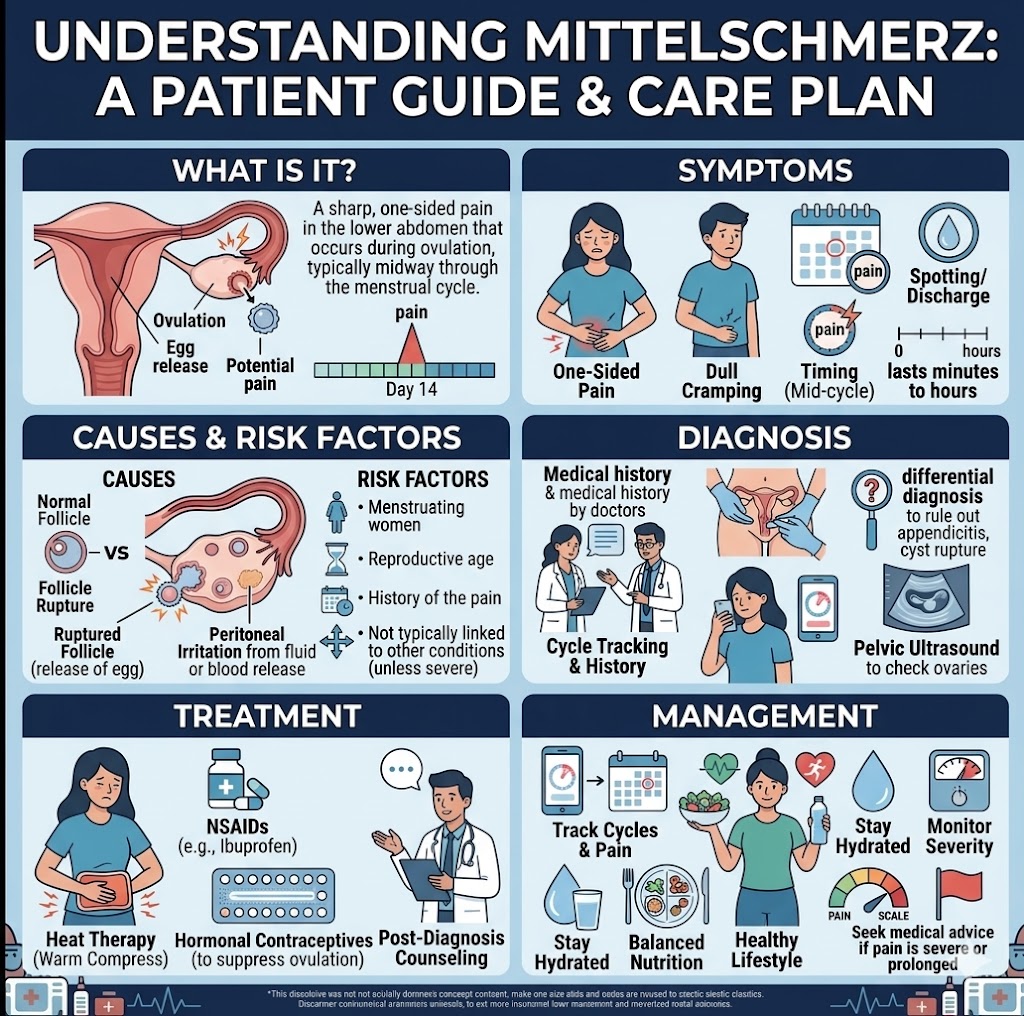
Mittelschmerz, a German word meaning 'middle pain,' is a common type of one-sided lower abdominal discomfort that some individuals experience during ovulation. It typically occurs midway through the menstrual cycle, roughly 14 days before the next period, when an egg is released from an ovary. While often mild and self-resolving, understanding its symptoms and when to seek medical advice is important for distinguishing it from more serious conditions.
Understanding the Condition
Mittelschmerz: Understanding Mid-Cycle Pain
Understanding the Condition
Mittelschmerz, a German word meaning 'middle pain,' is a common type of one-sided lower abdominal discomfort that some individuals experience during ovulation. It typically occurs midway through the menstrual cycle, roughly 14 days before the next period, when an egg is released from an ovary. While often mild and self-resolving, understanding its symptoms and when to seek medical advice is important for distinguishing it from more serious conditions.
Common Symptoms
One-Sided Lower Abdominal Pain: The pain is distinctly felt on one side of the lower abdomen, corresponding to the ovary releasing an egg. This side can vary each month or remain consistent for several cycles.
Type of Pain: The discomfort can be dull and achy, similar to menstrual cramps, or it can manifest as sharp, sudden twinges.
Duration: Mittelschmerz typically lasts from a few minutes to a few hours, though it can occasionally extend for up to one or two days.
Associated Symptoms: Some individuals may also notice slight vaginal bleeding or a change in discharge alongside the pain.
Severity: The pain is rarely severe, but if it is, or if accompanied by other concerning symptoms, medical evaluation is crucial.
Consultation Guide
Which Specialist to Meet
Before your appointment, it's helpful to track your menstrual cycle for a few months. Note the exact dates of your periods and when you experience lower abdominal pain. Record the pain's characteristics (dull, sharp, aching), its severity, how long it lasts, and any other accompanying symptoms like bleeding, nausea, or fever. Be prepared to discuss your medical history and current medications. Write down any questions you have for your doctor.
Book a doctor visit near me
Symptom Tracking: Keep a detailed record of your menstrual cycle and any associated pain. Note the day the pain occurs, its characteristics, duration, and severity. This information can help you and your doctor understand your body's patterns and rule out other conditions.
When to Seek Medical Attention: While mittelschmerz is usually harmless, it's important to be aware of symptoms that could indicate a more serious condition. Contact your doctor if your pelvic pain becomes severe, is accompanied by symptoms like nausea, vomiting, fever, or if the pain persists beyond a few days. These could be signs of conditions such as appendicitis, pelvic inflammatory disease, or an ectopic pregnancy, which require urgent medical evaluation.
Consultation Guide
Your doctor will perform a general physical exam, which may include gently pressing on your abdomen to locate the pain and check for tenderness. A pelvic exam might also be conducted to assess your reproductive organs, identify any inflammation, tenderness, or unusual growths, and check for signs of infection, helping to rule out other causes of pain.
During a physical exam, you'll lie on an examination table while the doctor feels your abdomen. For a pelvic exam, you'll lie on your back with your feet in stirrups. The doctor will visually inspect the external genitalia, then use a speculum (a medical instrument) to gently open the vaginal walls to view the cervix. They will then insert gloved fingers into the vagina while simultaneously pressing on your abdomen to feel the uterus and ovaries for any abnormalities. This procedure might cause some pressure or mild discomfort but is usually not painful.
An ultrasound uses sound waves to create images of your internal organs. For abdominal or pelvic pain, it can visualize the uterus, ovaries, fallopian tubes, and surrounding structures to check for cysts, fibroids, inflammation, or fluid that could be causing the pain. It's particularly useful for ruling out conditions like ovarian cysts, appendicitis, or ectopic pregnancy.
Diagnostic Procedures
Physical and Pelvic Exam
What to Expect
What to Expect
For a pelvic ultrasound, you may be asked to drink several glasses of water before the test to ensure a full bladder, which helps visualize the organs. You'll lie on an examination table. A gel will be applied to your lower abdomen, and a small handheld device (transducer) will be moved across your skin. The transducer sends out sound waves that create images on a monitor. Sometimes, a transvaginal ultrasound might be performed, where a thinner transducer is gently inserted into the vagina for clearer images of the uterus and ovaries. This is generally painless but may involve some pressure.
Blood tests may be ordered to check for signs of infection or inflammation, or to confirm pregnancy. A complete blood count (CBC) can detect elevated white blood cells, indicating an infection. A pregnancy test is crucial to rule out an ectopic pregnancy, where a fertilized egg implants outside the uterus, which can be a medical emergency.
What to Expect
A healthcare professional will draw a small sample of blood, usually from a vein in your arm. This involves a quick prick as the needle is inserted, and then you might feel a slight pressure as the blood is collected into vials. The process is usually quick, and you may experience minor bruising at the site afterwards.
Treatment Options
Preparations Before Your Visit
Warm Compress or Bath: Applying a warm compress or heating pad to the lower abdomen, or taking a warm bath, can help relax muscles and ease discomfort. (Duration: As needed for pain relief.)
Rest: Allowing your body to rest can also contribute to alleviating mild pain. (Duration: As needed.)
Medications
Over-the-Counter Pain Relievers: Non-prescription medications, such as ibuprofen or naproxen, can effectively reduce mild to moderate mittelschmerz pain by decreasing inflammation. (Duration: As needed, typically for a few hours to one or two days per cycle.)
Hormonal Birth Control: For individuals experiencing troublesome or recurrent mittelschmerz, a doctor may prescribe hormonal birth control pills. These medications primarily work by preventing ovulation, meaning no egg is released, thereby stopping the mid-cycle pain. Some types may also thicken cervical mucus and thin the uterine lining to prevent pregnancy, offering additional benefits. (Duration: Typically taken daily for several months or years, as prescribed by your doctor.)
Prevention & Long-Term Wellbeing
Prevention
Understanding Natural Body Changes: Mittelschmerz is a natural part of the menstrual cycle for some individuals, linked to the process of ovulation. As such, it cannot be entirely prevented without suppressing ovulation.
Long-Term Monitoring
Tags & Topics
Notice an error or need an update?
Help us keep medical information accurate. Report incorrect info or suggest an edit.


