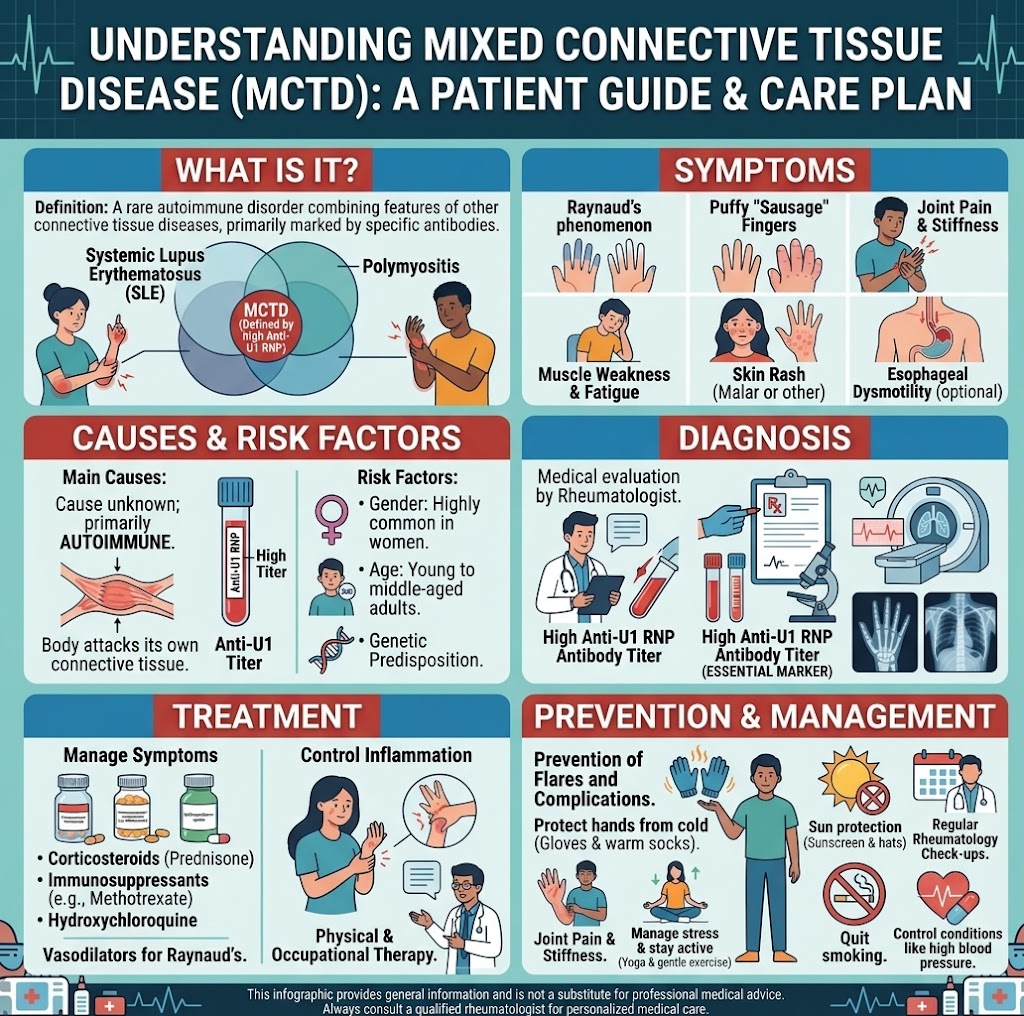
Mixed Connective Tissue Disease, or MCTD, is a rare autoimmune condition where the body's immune system mistakenly attacks its own healthy tissues. It exhibits a combination of symptoms typically seen in other rheumatic diseases like lupus, scleroderma, and myositis. Symptoms often develop gradually over several years and can affect various parts of the body, including vital organs, which can make diagnosis challenging. There is currently no cure for MCTD, but treatments focus on managing symptoms, controlling inflammation, and preventing potential organ damage to improve quality of life.
Understanding the Condition
Mixed Connective Tissue Disease (MCTD): Understanding and Management
Understanding the Condition
Mixed Connective Tissue Disease, or MCTD, is a rare autoimmune condition where the body's immune system mistakenly attacks its own healthy tissues. It exhibits a combination of symptoms typically seen in other rheumatic diseases like lupus, scleroderma, and myositis. Symptoms often develop gradually over several years and can affect various parts of the body, including vital organs, which can make diagnosis challenging. There is currently no cure for MCTD, but treatments focus on managing symptoms, controlling inflammation, and preventing potential organ damage to improve quality of life.
Common Symptoms
Puffy Hands and Fingers: Noticeable swelling and puffiness of the hands and fingers, often an early sign.
Joint Pain and Swelling: Discomfort, tenderness, and inflammation in multiple joints, similar to arthritis.
Muscle Weakness: Reduced strength in muscles, making everyday tasks difficult.
Fatigue: Persistent and overwhelming tiredness that doesn't improve with rest.
Low-Grade Fever: A mild, recurring elevation in body temperature without an apparent infection.
Raynaud's Phenomenon: Fingers and toes turning white, then blue, and feeling numb or cold, especially when exposed to cold temperatures or stress.
Consultation Guide
Which Specialist to Meet
If you suspect you have MCTD or experience concerning symptoms, you should consult a rheumatologist. This doctor specializes in diagnosing and treating autoimmune diseases, arthritis, and other conditions affecting joints, muscles, and bones. Depending on which organs are affected, other specialists, such as a pulmonologist for lung issues or a cardiologist for heart problems, may also be involved in your care.
Preparations Before Your Visit
Before your appointment, prepare a detailed list of all your symptoms, including when they started, how often they occur, and what makes them better or worse. Bring a comprehensive list of all medications you currently take, including over-the-counter drugs, vitamins, and supplements. It is also helpful to note down your medical history and any family history of autoimmune conditions. Preparing a list of questions for your doctor can also ensure all your concerns are addressed.
Book a doctor visit near me
Anti-inflammatory Drugs: Used to reduce pain, swelling, and inflammation in joints and muscles. (Duration: As needed for symptom relief, potentially long-term.)
Vascular Dilators: Medications that help widen blood vessels, particularly beneficial for managing severe Raynaud's phenomenon. (Duration: Ongoing as needed to manage symptoms and prevent complications.)
Acid-Reducing Medications: Used to manage symptoms like heartburn or difficulty swallowing related to esophageal involvement. (Duration: As needed or long-term, based on the severity and persistence of symptoms.)
Physical Therapy: Helps maintain joint flexibility, muscle strength, and overall mobility, crucial for preventing stiffness and improving function. (Duration: Ongoing as recommended by a specialist, especially during disease flares or periods of reduced mobility.)
Occupational Therapy: Provides strategies and tools to help individuals adapt to physical limitations, manage daily activities, and maintain independence. (Duration: As needed for adaptive support and learning new ways to perform tasks.)
Stress Management: Techniques like meditation, yoga, or deep breathing can help reduce stress, which can sometimes trigger or worsen symptoms of autoimmune conditions. (Duration: Ongoing practice to improve coping mechanisms and overall well-being.)
Balanced Nutrition: Eating a healthy, anti-inflammatory diet rich in fruits, vegetables, and whole grains can support overall well-being and energy levels. (Duration: Lifelong practice for general health and symptom management.)
Maintain Healthy Weight: Achieving and maintaining a healthy weight can reduce stress on joints and improve overall health, positively impacting symptoms.
Prioritize Rest: Adequate rest and sleep are essential to manage fatigue, a common and often debilitating symptom of MCTD.
Diagnostic Procedures
Antinuclear Antibodies (ANA) Test
The ANA test is a common blood test used as a screening tool for autoimmune diseases. It detects autoantibodies—proteins produced by the immune system that mistakenly target the body's own healthy cell components. A positive ANA result indicates the presence of these autoantibodies, suggesting an autoimmune condition, and usually prompts further investigation.
What to Expect
A healthcare professional will draw a small sample of blood, typically from a vein in your arm. This is a quick procedure, and generally, no special preparation (like fasting) is required beforehand. You might feel a brief sting or pinch at the site of the blood draw.
Extractable Nuclear Antigen (ENA) Test
The ENA test is a blood test often performed after a positive ANA result. It specifically identifies several types of autoantibodies that are associated with particular autoimmune diseases, including MCTD, lupus, and scleroderma. By analyzing a panel of these specific antibodies, the ENA test helps to differentiate between various autoimmune conditions and guide a more precise diagnosis.
What to Expect
Similar to the ANA test, a small blood sample will be taken from a vein in your arm. This procedure is generally quick, and you typically do not need to do any special preparation prior to the test. You may experience minor discomfort or a sensation of pressure during the blood collection.
Further Imaging and Organ Function Tests
If your doctor suspects that MCTD is affecting specific organs, additional tests may be ordered. These can include imaging tests (such as X-rays, CT scans, or ultrasounds) to visualize organs like the lungs, heart, or kidneys. Lung function tests may assess breathing capacity, while specific blood and urine tests evaluate kidney and heart health. These tests help determine the extent of organ involvement and guide treatment decisions.
What to Expect
What to Expect
Treatment Options
Medications
Corticosteroids: Powerful medications that reduce inflammation and suppress the overactive immune system. (Duration: Short-term higher doses for acute flares; lower doses may be used long-term for maintenance.)
Immunosuppressive Agents: Medicines that modulate or dampen the immune system's activity to prevent it from attacking healthy tissues. (Duration: Often prescribed for long-term use, adjusted based on disease activity.)
Regular Medical Monitoring: Consistent follow-up appointments with your rheumatologist and other specialists are vital to track disease activity, monitor organ involvement (lungs, heart, kidneys), and adjust treatment as needed.
Organ Protection: Implementing strategies and treatments to protect vital organs from damage, including regular screenings and prompt management of complications like pulmonary hypertension or kidney disease.
Smoking Cessation: Avoiding smoking is critical to protect lung health, improve circulation, and reduce the risk of vascular complications associated with MCTD.
Vaccinations: Staying up-to-date with recommended vaccinations, especially if on immunosuppressive therapy, is important to protect against infections.
Mental Health Support: Seeking support for the emotional challenges of living with a chronic illness, such as counseling or support groups, can help manage stress and improve mental well-being.
Prevention & Long-Term Wellbeing
Home Remedies & Lifestyle Adjustments
Warmth Protection: Keeping hands and feet consistently warm, especially in cold environments, is crucial for managing Raynaud's phenomenon. (Duration: Ongoing, particularly during colder seasons or in air-conditioned spaces.)
Gentle Exercise: Regular, low-impact physical activity can help reduce joint stiffness, improve circulation, and combat fatigue without overstraining. (Duration: Consistent practice as tolerated, guided by a physical therapist if needed.)
Long-Term Management
Lifestyle Adjustments
Avoid Cold Exposure: Minimize exposure to cold temperatures by dressing warmly, wearing gloves, and using warmers to prevent Raynaud's attacks and protect circulation.
Tags & Topics
Notice an error or need an update?
Help us keep medical information accurate. Report incorrect info or suggest an edit.


