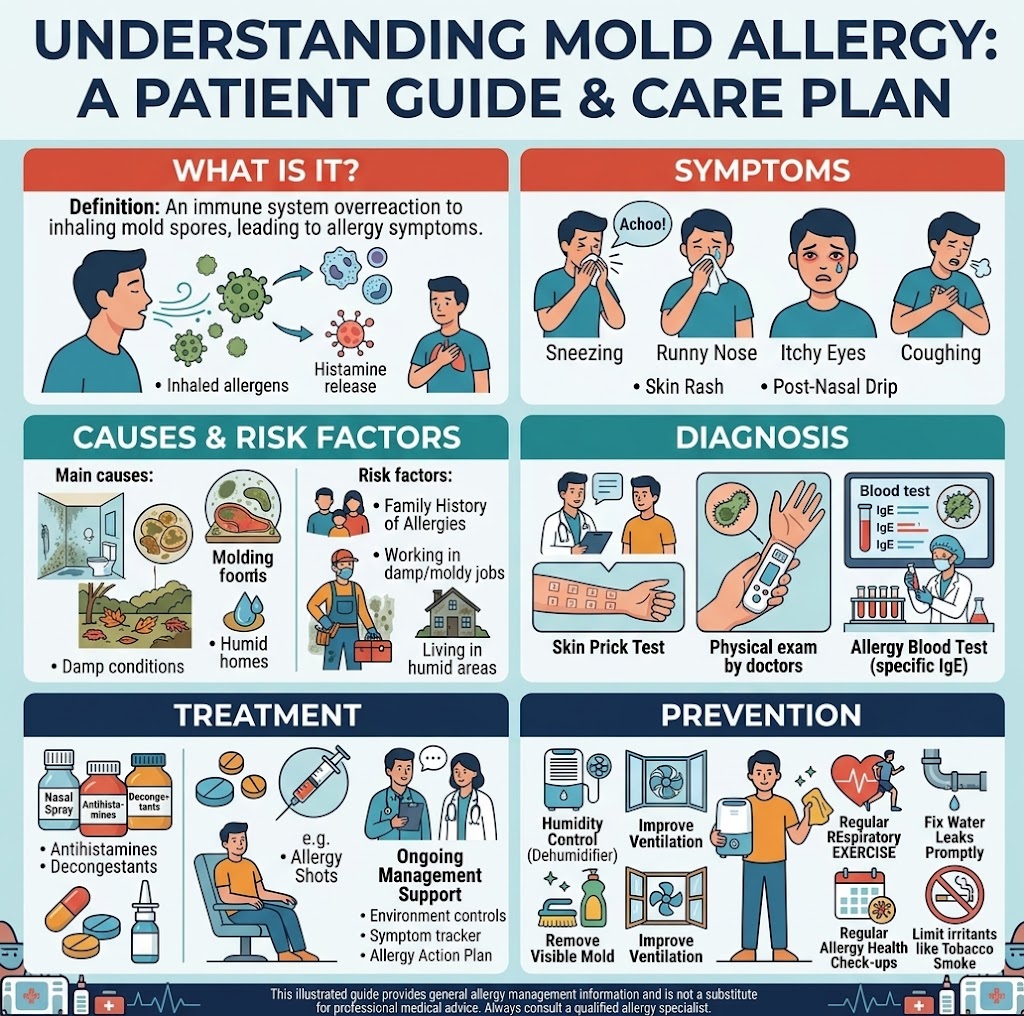
A mold allergy occurs when your immune system overreacts to airborne mold spores, causing uncomfortable symptoms like coughing and itchy eyes. For some, mold allergy is linked to asthma, where exposure triggers breathing difficulties. Management focuses on reducing exposure to specific molds and using medications to control reactions.
Understanding the Condition
A mold allergy occurs when your immune system overreacts to airborne mold spores, causing uncomfortable symptoms like coughing and itchy eyes. For some, mold allergy is linked to asthma, where exposure triggers breathing difficulties. Management focuses on reducing exposure to specific molds and using medications to control reactions.
Common Symptoms
General Allergy Symptoms: Stuffy or runny nose, sneezing, itchy/watery eyes, itchy throat/mouth/ears, coughing, postnasal drip. Mold allergy symptoms, similar to other upper respiratory allergies like hay fever, vary in severity and can be year-round or seasonal. They often worsen in damp conditions or areas with high mold concentrations. Reactions can be immediate or delayed. Common allergenic molds include mildew, Alternaria, Aspergillus, Cladosporium, and Penicillium.
Asthma-Related Symptoms (if linked to mold allergy): Shortness of breath, wheezing (a whistling sound when breathing), chest tightness, persistent coughing.
Consultation Guide
Which Specialist to Meet
Begin with your primary care physician. For persistent or severe symptoms, a referral to an allergist/immunologist is recommended for specialized diagnosis and treatment.
Preparations Before Your Visit
Before your visit, maintain a symptom diary (when, where, triggers), list all medications/supplements, prepare questions, and review your family's allergy history. Your doctor may advise stopping antihistamines before allergy testing.
Book a doctor visit near me
Oral Antihistamines: Block histamine to reduce itching, sneezing, and runny nose. (Duration: As needed for symptoms or daily during allergy periods)
Oral Decongestants: Relieve nasal stuffiness. (Duration: Short-term use only (few days) to prevent rebound congestion)
Bronchodilators (Rescue Inhalers): Rapidly open airways during an asthma attack for quick symptom relief. (Duration: As needed for sudden asthma symptoms)
Symptom Tracking: Continuously monitor and record symptoms and triggers to refine your management plan.
Medication Adherence: Consistently take prescribed medications as directed for optimal symptom control.
Diagnostic Procedures
Mold Allergy: Understanding, Diagnosis, and Management
Understanding the Condition
Exposes your skin to tiny amounts of suspected allergens to observe for a reaction, confirming which specific substances trigger your allergy. Generally reliable for airborne allergens and suitable for most ages.
What to Expect
In a skin prick test, small drops of mold extracts are applied to your forearm or back, and the skin is lightly pricked through each drop. A positive reaction, indicating an allergy, appears as a raised, red, itchy bump within 15-20 minutes. If initial tests are negative but an allergy is suspected, a small amount of allergen may be injected just under the skin (intradermal test). These tests are typically avoided in individuals with severe skin conditions, pregnancy, or a history of severe allergic reactions.
Blood Tests (in vitro IgE antibody tests)
Measures specific allergy-causing antibodies (Immunoglobulin E or IgE) in your blood for various mold allergens. This is a suitable alternative if skin tests cannot be performed due to medical conditions or medications.
What to Expect
A small blood sample is drawn, usually from an arm vein. The sample is analyzed in a lab to quantify IgE levels against specific molds, with results typically available within a few days.
Treatment Options
Medications
Nasal Corticosteroid Sprays: Reduce nasal passage inflammation, relieving sneezing, runny nose, and congestion. (Duration: Daily, often long-term during allergy seasons or constant exposure)
Leukotriene Modifiers: Prescription medications that block allergy and asthma-causing chemicals. (Duration: Daily, long-term)
Therapies
Allergy Shots (Immunotherapy): A series of injections with increasing amounts of specific mold allergens to build immune tolerance. (Duration: Typically a build-up phase (weekly/bi-weekly for months) followed by a maintenance phase (monthly for 3-5 years))
Asthma Management (if mold allergy triggers asthma)
Inhaled Corticosteroids: Daily inhaled medications reduce airway inflammation, preventing asthma attacks. (Duration: Daily, long-term, as prescribed)
Regular Medical Follow-ups: Schedule routine appointments with your allergist/immunologist for ongoing assessment and treatment adjustment.
Asthma Action Plan: If you have mold-triggered asthma, develop a written plan with your doctor for managing flare-ups and knowing when to seek emergency care.
Prevention & Long-Term Wellbeing
Home Remedies & Lifestyle Adjustments
Reduce Mold Exposure: Crucial for management. Keep indoor humidity below 50%, fix water leaks promptly, clean moldy surfaces, improve ventilation. Avoid areas with high mold (e.g., raking leaves, damp basements). (Duration: Ongoing)
Nasal Rinses: Saline nasal irrigation can flush out mold spores and irritants, relieving stuffiness and congestion. (Duration: As needed)
Prevention
Control Indoor Humidity: Maintain indoor humidity below 50% using dehumidifiers, especially in damp areas.
Promptly Address Leaks: Immediately repair water leaks to prevent mold growth.
Clean Mold Thoroughly: Use a bleach solution or commercial cleaner on hard surfaces. For significant mold on porous items, professional remediation may be needed.
Improve Ventilation: Ensure good air circulation in moisture-prone rooms using exhaust fans.
Use Air Filters: Utilize HEPA filters in HVAC systems and change regularly; consider portable HEPA air purifiers.
Outdoor Precautions: Wear an N95 mask when gardening or raking leaves in mold-prone environments.
Manage Indoor Plants: Ensure proper drainage to prevent mold in potting soil.
Long-Term Monitoring
Tags & Topics
Notice an error or need an update?
Help us keep medical information accurate. Report incorrect info or suggest an edit.


