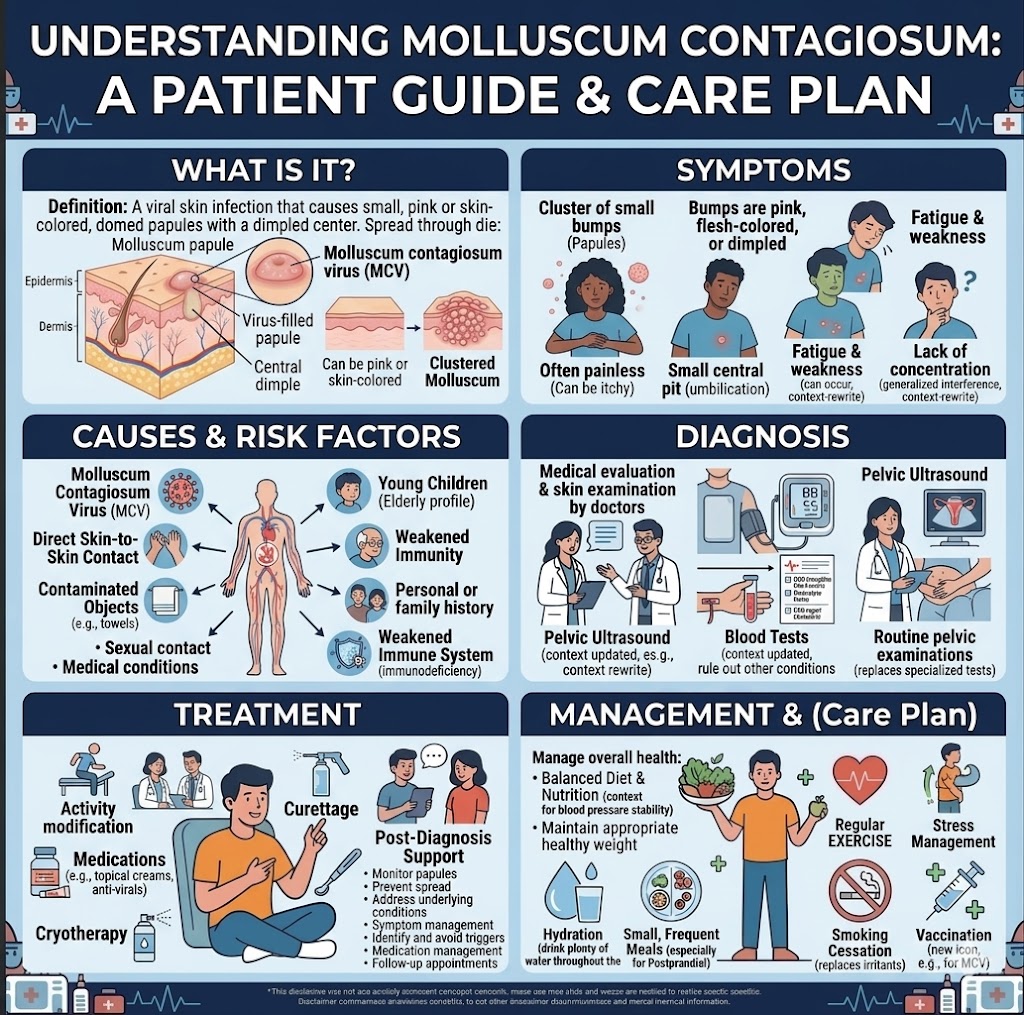
Molluscum contagiosum is a common, mild skin infection caused by a virus. It results in small, raised, firm, and usually painless bumps on the skin. These bumps often have a tiny dent or dimple in the center. While most common in children, it can affect adults, especially those with weakened immune systems or through sexual contact. The infection spreads easily through direct skin-to-skin contact, sharing contaminated items, or self-infection by scratching. Although generally harmless, the bumps can take 6 months to 2 years to disappear on their own if left untreated.
Understanding the Condition
Molluscum Contagiosum: A Guide to Understanding and Managing the Skin Infection
Understanding the Condition
Common Symptoms
Characteristic Skin Bumps: These are small (typically 2-5 millimeters), round, firm, pearl-like bumps that can be skin-colored, pink, or white. A key feature is a central dimple or dent. They can appear anywhere on the body, including the face, neck, trunk, arms, and legs. In adults, bumps may frequently appear in the genital area, inner thighs, or abdomen.
Itchiness or Irritation: While usually painless, the bumps or the surrounding skin can sometimes become itchy or irritated. Scratching can spread the infection to other parts of the body or to other people, and may lead to bacterial infection or scarring.
Inflammation Around Bumps: Occasionally, the skin immediately around the bumps may become red, swollen, or inflamed. This is often a sign that the body's immune system is responding to and trying to clear the virus.
Consultation Guide
Which Specialist to Meet
You should consult with a general practitioner, a pediatrician (for children), or a dermatologist. If lesions are in the genital area for adults, a urologist or gynecologist may also be appropriate.
Preparations Before Your Visit
Consultation Guide
Molluscum contagiosum is a common, mild skin infection caused by a virus. It results in small, raised, firm, and usually painless bumps on the skin. These bumps often have a tiny dent or dimple in the center. While most common in children, it can affect adults, especially those with weakened immune systems or through sexual contact. The infection spreads easily through direct skin-to-skin contact, sharing contaminated items, or self-infection by scratching. Although generally harmless, the bumps can take 6 months to 2 years to disappear on their own if left untreated.
Diagnostic Procedures
Before your appointment, be ready to discuss when you first noticed the bumps, how they have changed or spread, and any itching or discomfort you've experienced. Inform your doctor about any existing medical conditions, especially those affecting your immune system, and a list of any medications you are currently taking. Avoid scratching or picking at the bumps prior to your visit, as this can alter their appearance and make diagnosis harder.
Book a doctor visit near me
Physical Skin Examination
A healthcare provider will visually inspect the skin for the characteristic bumps of molluscum contagiosum. This is often the primary method for diagnosis.
What to Expect
The doctor will carefully examine the affected skin areas, looking for the typical raised, firm, pearl-like bumps with a central dimple. They might use a handheld magnifying tool, called a dermatoscope, for a closer look at the lesions. The examination is quick, non-invasive, and painless.
Skin Biopsy (Rarely Needed)
In uncommon cases where the diagnosis is uncertain or if the bumps have an unusual appearance, a small tissue sample (biopsy) may be taken for microscopic examination.
What to Expect
The doctor will numb a small area of skin with a local anesthetic injection. A tiny piece of skin containing a bump will then be removed using a small surgical blade or a circular punch tool. You may feel a slight sting from the numbing injection, but the procedure itself should be painless. The sample is sent to a laboratory for analysis. After the procedure, a small bandage will be applied, and you will receive instructions on how to care for the wound.
Treatment Options
Watchful Waiting & Home Care
Waiting and Watching (No Treatment): For many individuals, especially children with healthy immune systems, molluscum contagiosum bumps will eventually resolve on their own without specific treatment as the body's immune system clears the virus. This approach is often chosen when bumps are few, not bothersome, or in areas where aggressive treatment might lead to scarring. (Duration: 6 months to 2 years, or sometimes longer)
Avoiding Spread and Irritation: Keeping the bumps covered with clothing or bandages can help prevent scratching, self-infection, and accidental spread to others. Good hygiene practices, such as frequent handwashing, are also important. (Duration: Ongoing until bumps resolve)
Prescription Topical Creams or Solutions: Various medicated creams, gels, or solutions can be applied directly to the bumps. These treatments may work by stimulating the immune system to fight the virus, by gently irritating the bumps to encourage resolution, or by removing the top layers of skin. They are typically applied at home as directed by a doctor. (Duration: Weeks to several months, depending on the specific product and individual response)
Cryotherapy (Freezing): This procedure involves applying liquid nitrogen to freeze and destroy individual molluscum bumps. It is a common and effective method, often causing a small blister that heals over time. (Duration: Typically 1-3 sessions, often spaced 2-4 weeks apart, until bumps resolve)
Curettage (Scraping): A doctor uses a small, spoon-shaped instrument called a curette to gently scrape off individual bumps. This is usually performed after numbing the skin with a local anesthetic. (Duration: A single session per bump, though multiple sessions may be needed for new lesions)
Laser Therapy: Pulsed dye laser therapy can be used to treat molluscum bumps, particularly for widespread lesions or those resistant to other treatments. The laser targets blood vessels within the lesions, causing them to shrink and disappear. (Duration: 1-3 sessions, usually spaced a few weeks apart)
Electrocautery (Burning): This method uses a heated electrical probe to destroy the molluscum bumps. Similar to cryotherapy and curettage, it physically removes the lesions after local anesthetic is applied. (Duration: A single session per bump)
Oral Antivirals or Immune Modulators: In specific situations, such as for individuals with weakened immune systems and widespread or severe molluscum that does not respond to other treatments, oral medications may be prescribed to help fight the virus or enhance the body's immune response. (Duration: Varies based on medication and severity, typically weeks to months)
Monitor for New Lesions: Even after existing bumps have resolved through treatment or naturally, new ones can still appear. Regularly check the skin for any new lesions and consult your doctor if they develop, especially if they are bothersome or spreading.
Watch for Complications: Be vigilant for signs of secondary bacterial infection, such as increased redness, warmth, pain, swelling, or pus around the bumps. Also, monitor for signs of pink eye (conjunctivitis) if lesions are near the eyelids. Seek medical attention if these occur.
Prevention & Long-Term Wellbeing
Prevention of Spread
Avoid Direct Skin Contact: To prevent transmission, avoid direct skin-to-skin contact with someone who has molluscum contagiosum, especially with the bumps themselves. This includes refraining from sexual contact if lesions are present in the genital area.
Do Not Share Personal Items: Do not share towels, clothing, razors, bath sponges, or other personal items that may have come into contact with molluscum bumps. The virus can live on these surfaces for a short period.
Practice Good Hygiene: Wash hands frequently and thoroughly with soap and water, especially after touching affected skin. Keep affected skin areas clean and dry to reduce the risk of secondary infections and spread.
Cover Bumps: Keep existing bumps covered with clothing or a waterproof bandage, particularly during activities like swimming or contact sports, to help prevent spread to others and self-infection to other body parts.
Avoid Scratching or Picking: Resist the urge to scratch, rub, or pick at the bumps. This can easily spread the virus to other areas of your body or to other people, and increases the risk of bacterial infection and scarring.
Manage Underlying Skin Conditions: For individuals with conditions like eczema (atopic dermatitis), keeping the skin well-moisturized and managing flares can help maintain the skin barrier, potentially reducing the risk of the virus entering the skin.
Long-Term Monitoring & Management
Maintain Overall Health: A healthy immune system is crucial for fighting off viral infections. Maintaining a balanced diet, getting enough sleep, and managing stress can contribute to overall immune health and faster resolution of the infection.
Tags & Topics
Notice an error or need an update?
Help us keep medical information accurate. Report incorrect info or suggest an edit.


