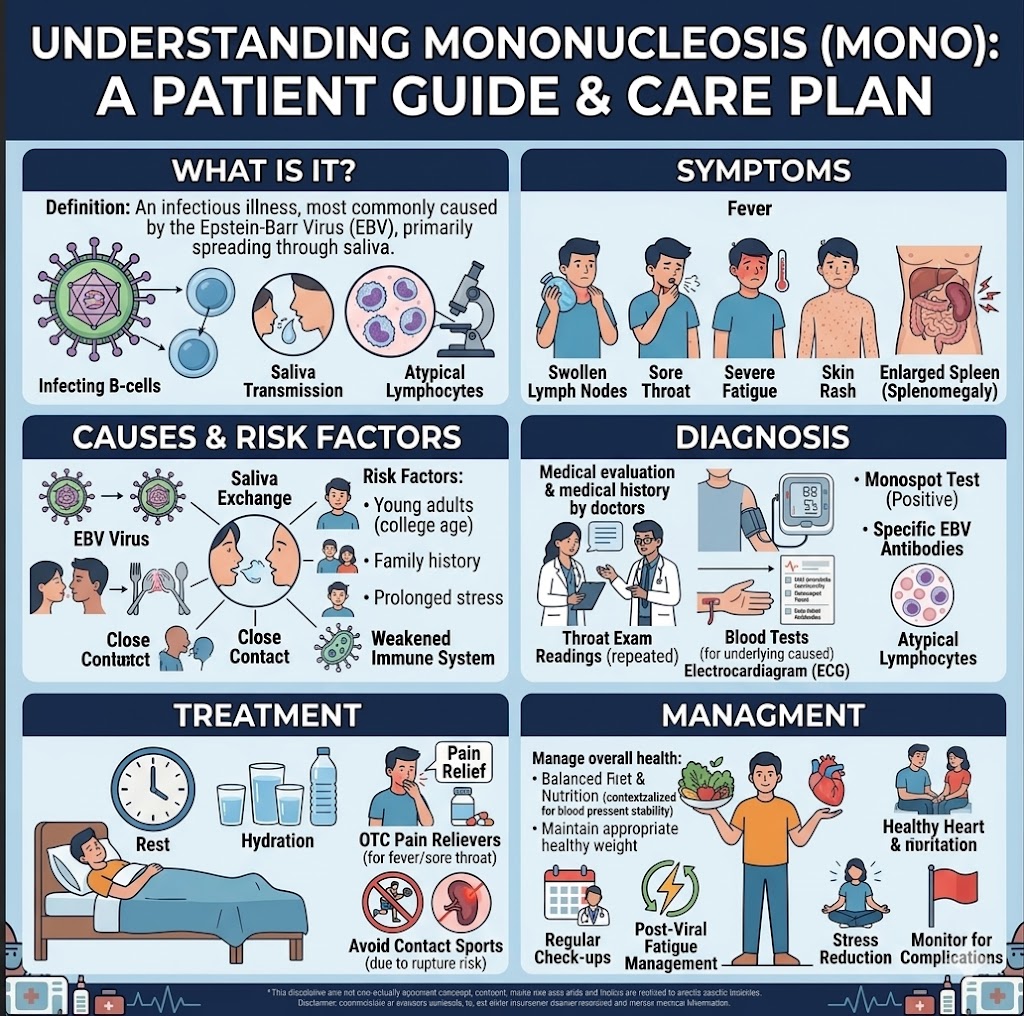
Mononucleosis, commonly known as mono or 'the kissing disease,' is a viral infection primarily caused by the Epstein-Barr virus (EBV). This virus spreads through saliva, making close contact activities like kissing, or sharing drinks and utensils, common ways to catch it. While it's often called the kissing disease, it's not as contagious as many common infections, like the cold. Teens and young adults are most likely to develop noticeable symptoms, whereas young children often have mild or no symptoms and may go undiagnosed. Although the symptoms can be uncomfortable, mono typically resolves on its own without lasting health problems. Most adults have been exposed to EBV and have developed immunity, meaning they won't get mono again from this virus. However, some people might develop complications, such as an enlarged spleen, making careful monitoring important. Recovery focuses on rest and hydration.
Understanding the Condition
Mononucleosis (Mono): Understanding 'The Kissing Disease'
Understanding the Condition
Mononucleosis, commonly known as mono or 'the kissing disease,' is a viral infection primarily caused by the Epstein-Barr virus (EBV). This virus spreads through saliva, making close contact activities like kissing, or sharing drinks and utensils, common ways to catch it. While it's often called the kissing disease, it's not as contagious as many common infections, like the cold. Teens and young adults are most likely to develop noticeable symptoms, whereas young children often have mild or no symptoms and may go undiagnosed. Although the symptoms can be uncomfortable, mono typically resolves on its own without lasting health problems. Most adults have been exposed to EBV and have developed immunity, meaning they won't get mono again from this virus. However, some people might develop complications, such as an enlarged spleen, making careful monitoring important. Recovery focuses on rest and hydration.
Common Symptoms
Fever: Elevated body temperature, often persistent.
Sore Throat: Can be severe, sometimes with swollen tonsils.
Swollen Lymph Nodes: Commonly felt in the neck and armpits.
Fatigue: Profound tiredness that can last for weeks or even months.
Headache: General head pain.
Muscle Aches: Generalized body discomfort.
Rash: A skin eruption, less common but can occur.
Enlarged Spleen: The spleen may swell, which can be dangerous if injured.
Liver Swelling: Less common, but the liver can also become inflamed.
Consultation Guide
Which Specialist to Meet
Initially, you should consult your primary care physician (PCP) or a general practitioner. If complications arise, your doctor may refer you to a specialist, such as an infectious disease expert or a hematologist (blood disorder specialist) for spleen-related issues.
Preparations Before Your Visit
Before your visit, it's helpful to:* Make a list of all your symptoms, including when they started and how severe they are.* Note any recent exposures to sick individuals.* List all medications, vitamins, and supplements you are currently taking.* Prepare a list of questions you have for your doctor.* Be ready to discuss your medical history.
Book a doctor visit near me
Pain and Fever Relief: Over-the-counter pain relievers can help manage fever, headache, muscle aches, and sore throat discomfort. Avoid certain medications like aspirin in children and teenagers due to the risk of Reye's syndrome. (Duration: As needed for symptom management.)
Sore Throat Relief: Gargling with salt water, consuming soft foods, and using throat lozenges can help soothe a sore throat. (Duration: As needed for symptom relief.)
Activity Restrictions
Avoid Sharing Saliva: The virus that causes mono is spread through saliva. To prevent transmission, avoid kissing or sharing drinks, food, and eating utensils with others, especially if you or they are experiencing symptoms.
Monitor for Recurring Symptoms: While rare, mono-like symptoms can recur, potentially due to other viruses. If you experience symptoms again, consult your doctor for proper diagnosis.
Manage Persistent Fatigue: Fatigue can be a lingering symptom for months. Prioritize rest, maintain a balanced diet, and engage in light activities as tolerated to help manage and overcome this post-viral tiredness.
Consultation Guide
A healthcare professional will draw a small sample of blood, usually from a vein in your arm, using a needle. The process is quick and may cause a brief pinch or sting. The blood sample is then sent to a lab for analysis.
Avoid Contact Sports and Strenuous Activities: Due to the risk of an enlarged spleen, it's vital to avoid contact sports, heavy lifting, and any activity that could cause trauma to the abdomen. An enlarged spleen is fragile and can rupture, leading to a medical emergency. (Duration: Typically for at least one month, or until a doctor confirms the spleen has returned to its normal size, which can sometimes take longer.)
Hand Hygiene: Regular handwashing with soap and water can help reduce the spread of viruses, including those that cause mono.
Long-Term Monitoring & Health Management
Diagnostic Procedures
Monospot Test (Heterophile Antibody Test)
This is a common blood test used to help diagnose mononucleosis. It detects specific antibodies (proteins produced by the immune system) that appear in the blood during an active EBV infection. It's relatively quick but may not be accurate in the very early stages of the illness or in young children.
What to Expect
Epstein-Barr Virus (EBV) Antibody Tests
If a Monospot test is negative but suspicion of mono remains, or to determine past exposure versus active infection, specific EBV antibody tests may be performed. These tests look for different types of antibodies (e.g., IgM and IgG) that indicate whether an infection is recent, active, or happened in the past, providing a more detailed picture of your immune response to EBV.
What to Expect
Similar to the Monospot test, this involves a routine blood draw from a vein in your arm. The procedure is fast, and the sample is sent to a lab for more detailed antibody analysis.
Alanine Aminotransferase (ALT) Blood Test
The ALT test is a blood test primarily used to check the health of your liver. ALT is an enzyme found mostly in liver cells. When liver cells are damaged or irritated, ALT can leak into the bloodstream, causing its level to rise. While not directly diagnosing mono, an elevated ALT level can indicate that the mononucleosis infection is affecting your liver, which can be a potential complication. It's often part of a broader 'liver panel' of tests.
What to Expect
A healthcare professional will take a blood sample from a vein, typically in your arm. This is a standard procedure and feels like a slight pinch. The sample is then sent to a laboratory to measure the ALT enzyme levels.
Treatment Options
Home Remedies & Supportive Care
Prevention & Long-Term Wellbeing
Rest: Adequate rest is crucial for recovery, especially during the initial phase of severe fatigue. Avoid strenuous activities. (Duration: Continue until fatigue significantly improves, which can take several weeks to months.)
Fluid Intake: Drink plenty of water and other fluids to prevent dehydration, especially if you have a fever or sore throat. (Duration: Throughout the illness and recovery.)
Prevention
Follow Medical Advice on Activity: Adhere strictly to your doctor's recommendations regarding returning to physical activities, particularly if your spleen was enlarged. Gradual return to activity ensures safe recovery and prevents complications.
Tags & Topics
Notice an error or need an update?
Help us keep medical information accurate. Report incorrect info or suggest an edit.


