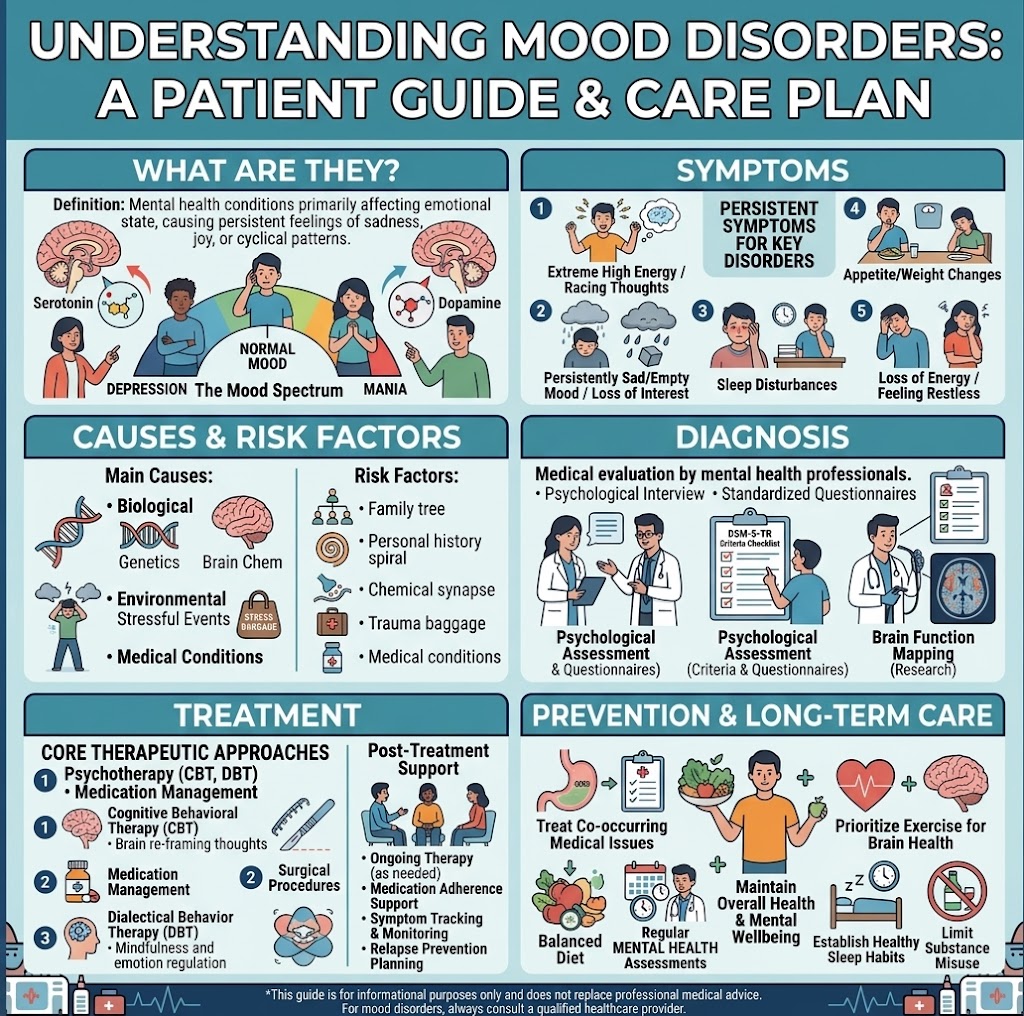
Mood disorders are health conditions that deeply affect a person's emotions, thoughts, and behavior. These conditions go beyond typical mood changes and can make daily life very challenging. The two main types are depression, which often involves persistent sadness and lack of energy, and bipolar disorder, characterized by extreme shifts between periods of very high energy or mood and periods of deep sadness. If you are experiencing thoughts of harming yourself, please seek immediate help. In the U.S., you can call or text 988 anytime to reach the 988 Suicide & Crisis Lifeline. Services are free, confidential, and available 24/7.
Understanding the Condition
Mood Disorders: A Guide to Understanding Emotional Health
Understanding the Condition
Mood disorders are health conditions that deeply affect a person's emotions, thoughts, and behavior. These conditions go beyond typical mood changes and can make daily life very challenging. The two main types are depression, which often involves persistent sadness and lack of energy, and bipolar disorder, characterized by extreme shifts between periods of very high energy or mood and periods of deep sadness. If you are experiencing thoughts of harming yourself, please seek immediate help. In the U.S., you can call or text 988 anytime to reach the 988 Suicide & Crisis Lifeline. Services are free, confidential, and available 24/7.
Common Symptoms
Persistent Sadness: Feeling down, empty, or anxious most of the time.
Loss of Interest: No longer enjoying activities you once loved.
Energy Changes: Feeling unusually tired or, conversely, having excessive energy and restlessness.
Sleep Disturbances: Difficulty sleeping, sleeping too much, or feeling rested after very little sleep (especially in bipolar's elevated mood).
Appetite and Weight Changes: Noticeable shifts in eating habits, leading to weight gain or loss.
Concentration Problems: Trouble focusing, remembering, or making decisions.
Feelings of Worthlessness or Guilt: Believing you are not good enough or feeling overly guilty.
Irritability: Being easily annoyed, agitated, or short-tempered.
Extreme Mood Swings: Experiencing severe shifts from sadness to intense elation or irritability (typical of bipolar disorder).
Racing Thoughts/Rapid Speech: Thoughts coming quickly, often hard to control, and speaking very fast (common in elevated bipolar moods).
Impulsive Behavior: Engaging in risky or unusual behaviors without considering consequences (can occur in bipolar disorder).
Thoughts of Self-Harm: Having thoughts about hurting yourself or ending your life, which requires immediate help.
Consultation Guide
Which Specialist to Meet
Before your visit, make a list of your symptoms, including when they started, how severe they are, and how they affect your daily life. Note any major life changes, stressors, or family history of mood disorders. Also, list all medications, supplements, and any alcohol or substance use. Prepare questions you have for the doctor.
Book a doctor visit near me
Your doctor will conduct a thorough physical examination and review your medical history. This helps rule out any underlying physical health problems or medications that could be causing or worsening your mood symptoms.
A mental health professional will have a detailed conversation with you about your thoughts, feelings, behaviors, and personal history. They will ask about your symptoms, their intensity, duration, and how they impact your relationships and daily functioning. Standardized questionnaires may also be used.
Antidepressants: These medications help balance brain chemicals linked to mood. They are used for depression and sometimes for bipolar disorder. (Duration: Effects typically begin within 2-4 weeks; often continued for 6-12 months after symptoms improve, or longer for recurrent conditions.)
Transcranial Magnetic Stimulation (TMS): Uses magnetic fields to stimulate nerve cells in the brain to improve symptoms of depression. Non-invasive. (Duration: Daily sessions for 4-6 weeks.)
Early Intervention: Seeking help early when symptoms first appear can prevent mood disorders from becoming more severe or chronic.
Adherence to Treatment Plan: Consistently taking medications as prescribed and attending therapy sessions are crucial for managing symptoms and preventing relapse.
Building a Support System: Connecting with family, friends, support groups, or mental health professionals can provide emotional support and reduce feelings of isolation.
Developing Coping Strategies: Learning healthy ways to manage stress, disappointment, and other difficult emotions helps build resilience.
Regular Monitoring and Check-ups: Routine visits with your doctor or therapist allow for ongoing assessment of your symptoms and adjustment of your treatment plan.
Mindfulness and Relaxation Practices: Engaging in activities like meditation, yoga, or deep breathing can help regulate emotions and reduce anxiety.
Consultation Guide
It's best to start by discussing your concerns with your primary care doctor, who can rule out physical causes and refer you to a mental health specialist. These specialists may include a psychiatrist (a medical doctor who can prescribe medication and provide therapy), a psychologist (who provides therapy and diagnostic assessments), or a licensed therapist or counselor (who provides various forms of talk therapy).
Preparations Before Your Visit
A small sample of blood will be drawn, usually from a vein in your arm. This is a quick procedure that may cause a brief pinch or sting.
Psychological Evaluation
Diagnostic Procedures
What to Expect
Blood tests are often ordered to rule out other medical conditions that can affect mood, such as thyroid problems or vitamin deficiencies.
What to Expect
What to Expect
You will meet with a psychiatrist, psychologist, or therapist in a confidential setting. They will ask a series of questions designed to understand your emotional state, energy levels, sleep patterns, appetite, and any thoughts of self-harm. You may complete written assessments during this session.
Treatment Options
The doctor will check your vital signs, listen to your heart and lungs, and may perform other general checks. You will answer questions about your overall health, any existing conditions, and all medications you are currently taking.
Mood Stabilizers: Primarily used for bipolar disorder to level out extreme mood swings, reducing both high (manic) and low (depressive) episodes. (Duration: Often ongoing, long-term treatment.)
Anti-anxiety Medications: Used for short-term relief of severe anxiety, often alongside other treatments, due to potential for dependency. (Duration: Short-term, as needed, typically not for long-term daily use.)
Antipsychotic Medications: Sometimes used for severe depression or bipolar disorder, especially if other medications haven't been effective. (Duration: Varies, can be short-term or ongoing.)
Psychotherapy (Talk Therapy)
Cognitive Behavioral Therapy (CBT): Helps identify and change negative thought patterns and behaviors contributing to mood problems. (Duration: Typically 12-20 weekly sessions, sometimes longer.)
Interpersonal Therapy (IPT): Focuses on improving relationships and social roles that may contribute to or worsen mood issues. (Duration: Usually 12-16 weekly sessions.)
Dialectical Behavior Therapy (DBT): Teaches skills for managing intense emotions, improving relationships, and coping with distress, often for severe mood dysregulation. (Duration: Typically a year or more, including individual and group sessions.)
Family Therapy: Involves family members in understanding and supporting the individual with a mood disorder. (Duration: Varies, often several months.)
Brain Stimulation Therapies
Electroconvulsive Therapy (ECT): A highly effective treatment for severe, treatment-resistant depression or bipolar disorder, involving a brief electrical stimulation of the brain under anesthesia. (Duration: Typically 6-12 sessions over a few weeks, followed by maintenance treatments if needed.)
Vagus Nerve Stimulation (VNS): Involves surgically implanting a device that sends regular electrical pulses to the brain via the vagus nerve, often for long-term treatment of chronic, severe depression. (Duration: Surgical procedure followed by ongoing stimulation, adjustments as needed.)
Avoiding Harmful Substances: Continued avoidance of alcohol and recreational drugs, which can interfere with mood and treatment effectiveness.
Prevention & Long-Term Wellbeing
Lifestyle Adjustments and Self-Care
Regular Physical Activity: Engaging in moderate exercise most days of the week can significantly improve mood. (Duration: Ongoing)
Balanced Diet: Eating nutritious foods can support overall brain health. (Duration: Ongoing)
Consistent Sleep Schedule: Aiming for 7-9 hours of quality sleep nightly can help stabilize mood. (Duration: Ongoing)
Stress Management Techniques: Practicing mindfulness, meditation, or deep breathing exercises to reduce daily stress. (Duration: Ongoing)
Avoiding Substances: Limiting or avoiding alcohol, recreational drugs, and excessive caffeine can prevent mood destabilization. (Duration: Ongoing)
Prevention and Long-Term Wellbeing
Healthy Lifestyle Maintenance: Continuing regular exercise, a balanced diet, and good sleep hygiene are fundamental for sustained emotional health.
Tags & Topics
Notice an error or need an update?
Help us keep medical information accurate. Report incorrect info or suggest an edit.


