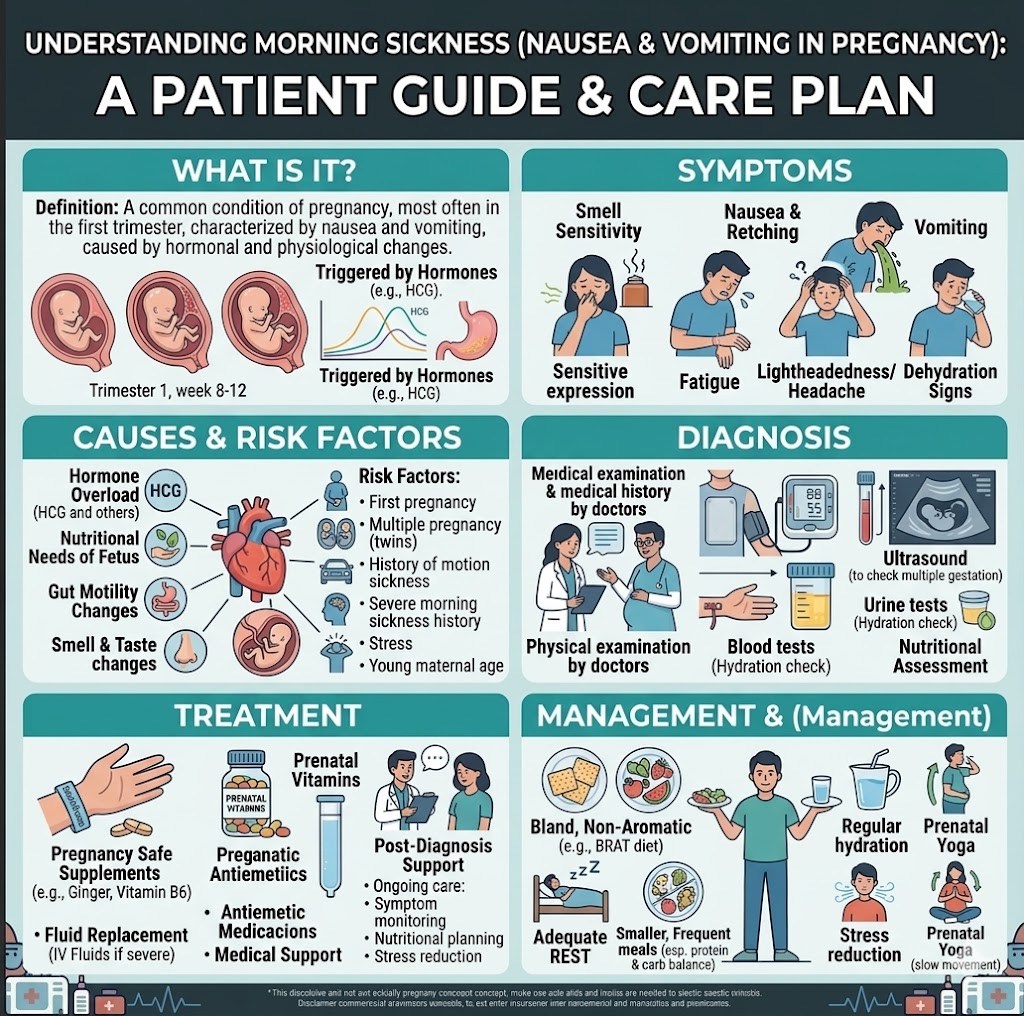
Morning sickness refers to feeling queasy (nausea) and throwing up (vomiting) that many people experience during pregnancy. Despite its name, these symptoms can occur at any time of day or night. It's very common, especially during the first three months of pregnancy, though some may experience it throughout their entire pregnancy. While the exact cause isn't fully understood, hormonal changes are believed to play a role. Certain factors like a history of motion sickness or migraines, previous morning sickness, or carrying multiples (twins or more) can increase the likelihood. Rarely, severe morning sickness, called hyperemesis gravidarum, leads to significant fluid loss or weight loss, potentially requiring hospital treatment.
Understanding the Condition
Understanding Morning Sickness During Pregnancy
Understanding the Condition
Morning sickness refers to feeling queasy (nausea) and throwing up (vomiting) that many people experience during pregnancy. Despite its name, these symptoms can occur at any time of day or night. It's very common, especially during the first three months of pregnancy, though some may experience it throughout their entire pregnancy. While the exact cause isn't fully understood, hormonal changes are believed to play a role. Certain factors like a history of motion sickness or migraines, previous morning sickness, or carrying multiples (twins or more) can increase the likelihood. Rarely, severe morning sickness, called hyperemesis gravidarum, leads to significant fluid loss or weight loss, potentially requiring hospital treatment.
Common Symptoms
Nausea and Vomiting: A feeling of sickness in the stomach, often leading to throwing up. This can happen at any time of day or night. Strong smells or certain foods commonly trigger these symptoms. While it typically starts before nine weeks of pregnancy and often improves by the middle or end of the second trimester, it can persist longer for some.
Signs of Severe Dehydration (Hyperemesis Gravidarum): In rare, severe cases, watch for critical symptoms that indicate you need immediate medical attention: producing very little or dark-colored urine, being unable to keep any liquids down, feeling dizzy or faint when standing up, or experiencing a racing heart. These symptoms suggest a serious loss of fluids and essential body salts.
Consultation Guide
Which Specialist to Meet
You should consult with your primary care provider or an obstetrician-gynecologist (OB-GYN) for persistent or worsening morning sickness. If symptoms are severe and suggest hyperemesis gravidarum, emergency care might be necessary.
Preparations Before Your Visit
Before your visit, make a list of your symptoms, including when they started, how often they occur, what makes them better or worse, and what you've tried to relieve them. Note down everything you typically eat and drink, and any medications or supplements you are currently taking.
Book a doctor visit near me
A healthcare provider will diagnose morning sickness primarily based on your symptoms and a physical examination. They will ask about the frequency and severity of your nausea and vomiting, your medical history, and any other symptoms you might be experiencing.
During the visit, your doctor will discuss your symptoms in detail. They may check your blood pressure and heart rate. For mild to moderate symptoms, no further tests are usually needed. The focus will be on managing symptoms and ensuring your well-being and that of your pregnancy.
If your symptoms are severe (indicating hyperemesis gravidarum), your doctor may order urine and blood tests. Urine tests can check for signs of dehydration or nutrient deficiencies. Blood tests can measure levels of electrolytes (essential salts in your body) and assess kidney function, which can be affected by severe vomiting.
Dietary Changes: Eating small, frequent snacks throughout the day, rather than large meals, can help. Bland foods like crackers, toast, or rice are often better tolerated. Avoid greasy, spicy, or fatty foods. Sipping on ginger ale or ginger tea may also soothe the stomach. (Duration: Throughout pregnancy, or as needed for symptoms)
Hydration: Drink plenty of fluids throughout the day, in small sips if large amounts are difficult to keep down. Water, clear broths, or fruit juices are good options. Avoid dehydration, which can worsen nausea. (Duration: Ongoing, throughout pregnancy)
Rest: Fatigue can intensify morning sickness. Ensure you get adequate rest and consider taking naps during the day. (Duration: As needed, throughout pregnancy)
Over-the-Counter Remedies: Certain non-prescription remedies, often containing vitamin B6, may be recommended to help relieve mild to moderate nausea. (Duration: As directed by your doctor, usually for the duration of symptoms)
Prescription Anti-Nausea Medication: For more severe or persistent symptoms, your doctor may prescribe anti-nausea medications that are safe to use during pregnancy. (Duration: As prescribed by your doctor, typically for the duration of severe symptoms)
Acupuncture: A traditional Chinese medicine technique involving the insertion of very thin needles into specific points on the body to help balance energy flow. Some Western practitioners believe it stimulates nerves, muscles, and connective tissue to boost the body's natural pain relievers and can help alleviate nausea. (Duration: Multiple sessions, as recommended by a qualified practitioner, for symptom relief)
Intravenous (IV) Fluids and Nutrition: For hyperemesis gravidarum, severe dehydration and nutrient loss may require hospitalization. Treatment includes receiving fluids and essential nutrients directly into a vein to restore hydration and electrolyte balance. (Duration: Usually a few days, until hydration and symptoms improve)
Recognize Warning Signs: Be aware of severe symptoms like extreme dizziness, inability to keep down liquids for 24 hours, or very dark urine. These require prompt medical attention to prevent complications such as severe dehydration or electrolyte imbalance.
Consultation Guide
An ultrasound uses sound waves to create pictures of the baby and your reproductive organs. While not directly for diagnosing morning sickness, it's a routine prenatal scan to monitor the health and development of your pregnancy, check for multiples, and rule out other conditions that might cause severe nausea.
Manage Stress: While not a direct cause, stress can worsen feelings of nausea. Practicing relaxation techniques like deep breathing or gentle walks may be beneficial.
Regular Prenatal Check-ups: Continue with your scheduled prenatal appointments. Your doctor will monitor your weight, hydration status, and overall health to ensure both you and your baby are thriving throughout the pregnancy.
Diagnostic Procedures
What to Expect
Urine and Blood Tests
What to Expect
For a urine test, you'll be asked to provide a urine sample. For a blood test, a healthcare professional will draw a small amount of blood, usually from a vein in your arm, using a needle. These tests help your doctor understand the severity of dehydration and electrolyte imbalances, guiding necessary treatment.
What to Expect
You will lie on an examination table, and a gel will be applied to your abdomen. A small handheld device, called a transducer, will be moved over the gelled area to transmit sound waves and capture images. Sometimes, an internal (transvaginal) ultrasound may be used in early pregnancy. You may be asked to have a full bladder for some types of ultrasound. The procedure is generally painless and takes about 15-30 minutes. You may need to remove jewelry.
Treatment Options
Medications
Prevention & Long-Term Wellbeing
Home Remedies and Lifestyle Adjustments
Prevention and Management
Prenatal Vitamins: Taking a daily vitamin supplement designed for pregnancy (prenatal vitamins) before and during pregnancy might help reduce the severity of morning sickness. These vitamins contain essential nutrients beneficial for both you and your baby.
Identify Triggers: Pay attention to specific smells, foods, or situations that tend to trigger your nausea and vomiting, and try to avoid them as much as possible.
Stay Hydrated: Consistent, small sips of fluid throughout the day can prevent dehydration, which often exacerbates nausea. Keep a bottle of water or other clear fluids handy.
Tags & Topics
Notice an error or need an update?
Help us keep medical information accurate. Report incorrect info or suggest an edit.


