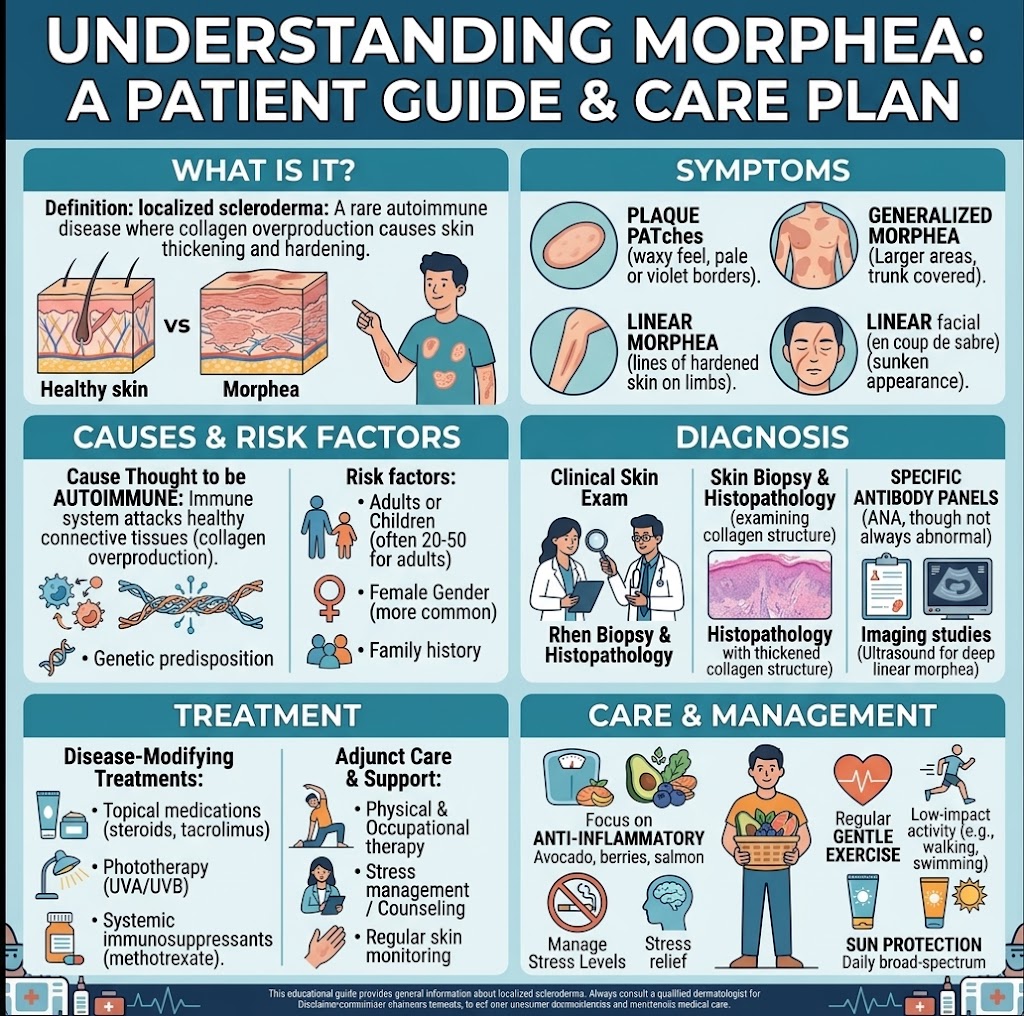
Morphea (mor-FEE-uh) is a rare skin condition characterized by painless, discolored patches on the skin. These patches commonly appear on the belly, chest, or back, but can also affect the face, arms, and legs. Over time, the affected skin typically becomes firm, dry, and smooth. While morphea usually impacts only the outer layers of the skin, certain forms can extend to deeper tissues, potentially restricting joint movement.Although the exact cause of morphea is unknown, it is thought to stem from an unusual reaction of the immune system. Triggers in susceptible individuals might include skin injuries, certain medications, exposure to chemical toxins, infections, or radiation therapy. Morphea is not contagious. The condition often improves on its own over several years, but recurrences are common. Various medications and therapies are available to manage the skin changes and other effects.
Understanding the Condition
Morphea: A Guide to Understanding Hardened Skin Patches
Understanding the Condition
Common Symptoms
Oval-shaped Patches: Reddish or purplish oval patches of skin, often appearing on the torso (belly, chest, or back).
Changing Patch Color: Patches that gradually develop a lighter or whitish center as they evolve.
Linear Patches: Straight, line-like patches that are especially common on the arms, legs, forehead, or scalp.
Skin Texture Changes: A gradual change in the affected skin, which becomes firm, thickened, dry, and shiny to the touch.
Consultation Guide
Which Specialist to Meet
Before your appointment, gather information to help your doctor: list all your symptoms, including when they started and how they've changed. Note any recent injuries, new medications, chemical exposures, or infections. If possible, bring photos of the skin patches over time. Mention any other medical conditions you have and all medications or supplements you are taking. Prepare a list of questions you want to ask your doctor.
Book a doctor visit near me
Consultation Guide
Morphea (mor-FEE-uh) is a rare skin condition characterized by painless, discolored patches on the skin. These patches commonly appear on the belly, chest, or back, but can also affect the face, arms, and legs. Over time, the affected skin typically becomes firm, dry, and smooth. While morphea usually impacts only the outer layers of the skin, certain forms can extend to deeper tissues, potentially restricting joint movement.Although the exact cause of morphea is unknown, it is thought to stem from an unusual reaction of the immune system. Triggers in susceptible individuals might include skin injuries, certain medications, exposure to chemical toxins, infections, or radiation therapy. Morphea is not contagious. The condition often improves on its own over several years, but recurrences are common. Various medications and therapies are available to manage the skin changes and other effects.
Protect from Injury and Sun: Avoid injuries to the skin, as this can sometimes trigger new patches. Protect affected areas from excessive sun exposure, which can worsen discoloration or cause sensitivity, especially during certain treatments.
Managing Physical Complications
Maintain Joint Mobility: If morphea affects areas near joints, regularly perform gentle stretching and exercises to maintain flexibility and prevent stiffness. Consider working with a physical therapist to develop a suitable routine.
Monitor for Eye Changes: For children with morphea on the head or neck, regular eye exams by an ophthalmologist are crucial. This helps to detect and address any potential eye damage early, even if it's not immediately noticeable.
Emotional and Mental Health
Seek Support: Living with a visible skin condition like morphea can impact self-esteem and body image. Connecting with support groups, counselors, or mental health professionals can provide valuable coping strategies and emotional support.
Educate Yourself and Others: Understanding morphea and communicating openly about it with friends, family, and colleagues can help reduce feelings of isolation and foster a supportive environment.
Diagnostic Procedures
If you notice persistent reddish patches of hardening or thickening skin, start by consulting your primary care doctor. They may refer you to a dermatologist (a skin specialist) for diagnosis and treatment. If morphea affects your joints, an orthopedist or rheumatologist may be involved. For morphea on the head or neck in children, an ophthalmologist (eye specialist) may also be consulted to check for eye damage.
Preparations Before Your Visit
A skin biopsy is the primary diagnostic procedure to confirm morphea. A small tissue sample is taken from an affected skin patch and sent to a laboratory for microscopic examination. This helps distinguish morphea from other skin conditions and determines how deeply the skin layers are involved.
What to Expect
The procedure is typically performed in a doctor's office or clinic. The area to be biopsied will be cleaned, and a local anesthetic will be injected to numb the skin, so you will feel minimal to no pain during the sample collection. Using a fine needle or a small blade, a tiny piece of skin (often just a few millimeters) is removed. You might feel a slight pressure or tugging sensation. The site will then be bandaged, and stitches might be used depending on the size of the sample. You will receive instructions on how to care for the biopsy site to prevent infection and promote healing. Results typically take several days to a couple of weeks.
Treatment Options
Medications
Topical Creams and Ointments: Medications applied directly to the skin to reduce inflammation and soften hardened patches. These may include creams containing corticosteroids or vitamin D derivatives. (Duration: Typically applied once or twice daily for several weeks to months, or as directed by a doctor.)
Oral Anti-inflammatory or Immunomodulating Drugs: For more widespread or severe morphea, medications taken by mouth may be prescribed to reduce inflammation and suppress an overactive immune response throughout the body. (Duration: Can vary from several months to a few years, depending on the severity and individual response to treatment.)
Therapies
Phototherapy (Light Treatment): This therapy uses specific wavelengths of ultraviolet (UV) light to help reduce skin hardening and discoloration. It may involve exposure to broad-band or narrow-band UVB light, or a combination of medication with UVA light (PUVA). (Duration: Usually involves multiple sessions per week over several months, with ongoing maintenance sessions potentially needed.)
Photodynamic Therapy (PDT): A two-step treatment that involves applying a special light-sensitizing medication to the skin, which is then activated by a specific type of light, often a laser. This process helps to target and treat affected cells in the skin, reducing patch size and improving texture. (Duration: Typically involves a series of treatment sessions, often weeks apart, over several months.)
Physical and Occupational Therapy: For morphea affecting areas near joints, these therapies can help maintain flexibility, range of motion, and muscle strength. Therapists guide specific exercises and stretches to prevent stiffness and improve overall function. (Duration: Ongoing as needed, often for months or longer, particularly if joint movement is restricted.)
Prevention & Long-Term Wellbeing
Skin Care and Protection
Moisturize Regularly: Keep affected skin well-moisturized to reduce dryness, cracking, and discomfort. Use gentle, fragrance-free lotions or ointments to maintain skin hydration.
Tags & Topics
Notice an error or need an update?
Help us keep medical information accurate. Report incorrect info or suggest an edit.


